🦍
The Emoji
Gorilla
U+1F98D · :gorilla:
Trend 75
Meaning layers
- interpretation
- Used to signal raw strength, dominance, or someone acting chaotically aggressive. Also used humorously to call someone or oneself a beast, an absolute unit, or wildly unhinged in a fun way.
- tiktok usage
- Appears in gym content, hype videos, and bro culture. Used when someone does something insanely impressive or stupidly reckless. Also tied to Harambe meme legacy.
- irony level
- 7 / 10
Platform meanings
- meaning
- Symbol of raw power, gym grind, or unhinged chaotic energy. Frequently paired with gym content, hype edits, and Harambe callbacks.
- trend usage
- Used in 'sigma male' and gym-bro content, Beast Mode videos, and ironically in any content about doing something extremely dumb but impressive.
- hashtags
- #gorillamode#harambe#beastmode#gymtok#apetogether
- virality score
- 78 / 100
Cultural meanings
🇺🇸
Western / Gen-Z
Primarily associated with Harambe meme legacy and gym-bro 'gorilla mode' culture; used to signal raw strength, chaos, or unhinged impressive behavior with high irony.
🇵🇰
Pakistan & India
Used mainly in literal contexts for wildlife and nature content; among younger urban users, the gym-bro 'beast mode' usage is gaining traction via Western social media influence.
🌍
Middle East
Predominantly used literally for animal or wildlife contexts; among Gulf youth familiar with Western internet culture, it carries gym and strength connotations.
🌐
Global Neutral
Universally understood as representing the gorilla animal; secondary meanings of strength and power are broadly comprehensible across cultures.
🇧🇩
Bangladesh
Primarily literal use in wildlife, nature, and educational contexts; internet-savvy youth may recognize the meme usage from exposure to global platforms.
🇱🇰
Sri Lanka
Used in nature and wildlife contexts; limited meme adoption, though gym culture influence is slowly bringing in the 'beast mode' interpretation.
🇨🇳
China
Used in wildlife and zoo-related content; the strength connotation resonates in fitness communities (健身), though Harambe-specific meme culture has limited penetration.
🇯🇵
Japan
Applied to gorilla-related content including the beloved gorilla exhibits at Japanese zoos; Shabani the gorilla became a cultural celebrity, giving this emoji extra positive weight in Japan.
🇰🇷
South Korea
Used for wildlife and zoo content; in fitness and gaming communities, the 'beast' connotation is understood; K-pop fan communities may use it to hype powerful stage performances.
🇹🇼
Taiwan
Similar to broader East Asian usage — nature and zoo contexts dominate; younger users familiar with Western meme culture apply it in hype and strength contexts.
🇭🇰
Hong Kong
Used in wildlife contexts and, among digitally connected youth, carries the Western internet 'beast mode' energy; Harambe meme awareness is moderate.
🇵🇭
Philippines
Wide usage in nature content and humorous contexts; Filipino internet culture has adopted the gorilla as a hype emoji for strong or chaotic moments, blending local humor with global memes.
🇮🇩
Indonesia
Primarily literal for wildlife; in gaming and gym communities, the strength and beast connotations are recognized; used humorously in group chats for wild behavior.
🇹🇭
Thailand
Used in zoo and nature content; Thai youth use it humorously to describe someone acting wildly or being impressively strong, influenced by global social media trends.
🇻🇳
Vietnam
Mostly literal usage in nature and educational content; meme culture adoption is growing among younger Vietnamese users who follow international internet trends.
🇲🇾
Malaysia
Used for wildlife content and, in urban youth culture, adopted for hype and strength contexts; Malaysian meme culture blends local flavor with global gorilla meme references.
🇸🇦
Saudi Arabia
Primarily literal for animal and nature content; fitness-oriented youth may use it in gym contexts; cultural sensitivity around primate-human comparisons means it's used carefully.
🇦🇪
UAE
Used in nature contexts and, given the cosmopolitan population, Western meme interpretations (Harambe, beast mode) are well understood among expatriate and youth communities.
🇪🇬
Egypt
Mostly literal in wildlife contexts; Egyptian internet humor sometimes adopts global meme formats, so the chaos and strength usage appears in younger online communities.
🇹🇷
Turkey
Used in wildlife contexts and sports/gym communities where 'beast mode' energy is appreciated; Turkish meme culture has selectively adopted global internet symbols.
🇮🇷
Iran
Primarily literal usage in nature and educational content; given internet restrictions, meme culture penetration is more limited but exists among VPN-using youth.
🇳🇬
Nigeria
Strong adoption in hype culture — used to signal someone is an absolute powerhouse, dominant, or operating at peak levels; Nigerian internet culture embraces strong animal symbolism enthusiastically.
🇿🇦
South Africa
Used in wildlife and nature contexts (authentic African wildlife connection) and also in sports hype contexts; the strength connotation fits well with rugby and football cultures.
🇬🇧
UK & Ireland
Full awareness of Harambe meme and gym-bro usage; British humor applies it with characteristic irony — calling someone a gorilla is simultaneously a roast and a compliment.
🇫🇷
France
Used in nature contexts and, among younger French internet users, carries the global meme interpretations; French internet humor often applies it sarcastically to describe uncultured behavior.
🇩🇪
Germany
Primarily literal or fitness-related; German gym culture has embraced 'beast mode' energy, making this emoji a legitimate hype symbol in sports and fitness contexts.
🇪🇸
Spain & Italy
Used in sports hype (especially football), gym content, and wildlife; Southern European expressiveness makes this a strong hype emoji with relatively straightforward positive power connotations.
🇧🇷
Brazil
Enthusiastically used in sports hype, gym culture, and meme contexts; Brazilian internet culture fully embraces the chaotic energy of the gorilla emoji with characteristic intensity.
🇲🇽
Mexico
Used in sports, gym, and meme contexts with high energy; Mexican internet culture has adapted the gorilla into local hype language, often paired with regional slang.
🌎
Latin America
Broadly used across Latin America for sports hype, strength celebration, and chaotic meme energy; widely understood as a symbol of raw, unstoppable force.
🇦🇺
Australia & NZ
Full adoption of Harambe meme and beast mode usage; Australian humor applies it with irreverent energy — calling someone or something a gorilla is high-energy affection and roasting simultaneously.
How its meaning shifted
- 2010
Pre-emoji existence as a concept; gorilla imagery in early internet was mostly literal, appearing in wildlife forums, zoo photography communities, and nature content without the current cultural weight.
- 2015
Emoji added to Unicode in 2016, so just pre-launch; gorilla imagery was gaining meme traction with early 'absolute unit' and strength memes, setting the stage for the emoji's eventual cultural dominance.
- 2020
Peak multi-layer meaning period: Harambe meme had matured into ironic internet mythology, WallStreetBets 'apes' movement gave it financial subculture meaning, and gym 'gorilla mode' was solidifying as a phrase.
- 2026
Established multi-purpose emoji with stable cultural meanings: gym hype, Harambe legacy, financial ape culture, and general chaos/power signaling — all layers coexist with high generational literacy.
See it on every platform
Compare with
Adjacent emojis
- Opposite
- mousebaby chicksnail
- Often confused with
- monkey faceorangutanperson gesturing no
- Can replace
- flexed bicepslionmonkey face
Share & embed
Frequently asked
01What does the 🦍 Gorilla emoji mean?
A large, powerful primate — the gorilla — depicted in a realistic or semi-realistic style, typically shown in a side or front-facing stance.
02What does 🦍 mean on TikTok?
Symbol of raw power, gym grind, or unhinged chaotic energy. Frequently paired with gym content, hype edits, and Harambe callbacks.
03What does 🦍 mean on WhatsApp?
Calling someone strong, wild, or chaotic. Used in group chats to hype someone up or roast them for acting feral.
04What does 🦍 mean in Gen-Z slang?
Used to signal raw strength, dominance, or someone acting chaotically aggressive. Also used humorously to call someone or oneself a beast, an absolute unit, or wildly unhinged in a fun way.
05Is the 🦍 emoji safe to use?
Wildlife appreciation, animal content, gym and fitness hype, strength celebration, Harambe memorial culture, and general beast mode enthusiasm.
06What does 🦍 mean in texting?
The gorilla taps into primal archetypes of strength and authority. Its use often signals a desire to project or celebrate raw, unfiltered power — sometimes with comedic self-awareness.
07What is the shortcode for 🦍?
The shortcode for Gorilla is :gorilla:
08What does 🦍 mean in dating?
Used to compliment someone's physical build or intensity — 'you're built like a 🦍' is a backhanded gym compliment that can be flirtatious in the right context.
Safety & usage
- Safe meaning
- Wildlife appreciation, animal content, gym and fitness hype, strength celebration, Harambe memorial culture, and general beast mode enthusiasm.
- Caution
- Has historically been weaponized as a racist slur to dehumanize Black people by comparing them to primates — one of the most serious potential misuses of this emoji.
CRITICAL WARNING: Using this emoji directed at a Black person or in racial contexts can constitute a severe racist attack. Platforms have policies against this use. Context is everything — benign in nature/gym contexts, potentially deeply harmful when racially directed. Always consider recipient and context carefully.
How it looks across platforms
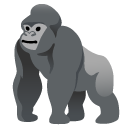


Appearance varies by platform and device. Google Noto, Twemoji, and OpenMoji are open-source.