🉐
The Emoji
Japanese “bargain” Button
U+1F250 · :japanese_bargain_button:
Trend 12
Meaning layers
- interpretation
- Gen Z rarely uses this emoji organically. When it appears, it is usually deployed ironically to signal that something is surprisingly good, a steal, or unexpectedly advantageous — like scoring free food or getting away with something.
- tiktok usage
- Used in video captions when sharing a life hack, discount find, or a situation where someone got something for way less than expected. Often paired with money-bag or shocked-face emojis.
- irony level
- 7 / 10
Platform meanings
- meaning
- Signals a deal, hack, or unexpected win; used to caption moments where someone got something valuable for cheap or free.
- trend usage
- Featured in 'budget life' and 'thrift finds' trends, sometimes used in Japan/anime aesthetic content purely for visual flair.
- hashtags
- #bargain#dealoftheday#budgetlife#thriftfinds#japaneseasthetic
- virality score
- 18 / 100
Cultural meanings
🇺🇸
Western / Gen-Z
Mostly encountered as an obscure or exotic emoji; used ironically to signal a bargain or deployed in aesthetic contexts without knowing its specific meaning.
🇵🇰
Pakistan & India
Rarely used organically; when it appears it is typically in deal-alert WhatsApp groups or by users who follow Japanese pop culture and use it to flag discounts.
🌍
Middle East
Uncommon outside of Japanese culture enthusiast circles; occasionally seen in deal-sharing groups or by anime fans who appreciate its Japanese origins.
🌐
Global Neutral
Universally understood at a surface level as a 'Japanese symbol button' though the specific meaning of 'bargain' is lost on most non-Japanese users.
🇧🇩
Bangladesh
Very niche usage; may appear in social media posts by Japanese culture fans or in deal-sharing communities without strong cultural resonance.
🇱🇰
Sri Lanka
Rarely used; occasional appearances in anime fan communities or by users who picked it up from Japanese media content.
🇨🇳
China
Recognized as a Japanese kanji (the character 得 is also used in Chinese with similar meaning of 'gain'), giving it slightly more semantic recognition than in Western contexts.
🇯🇵
Japan
Fully understood and used naturally to indicate a deal, special offer, or bargain — the intended cultural and commercial usage is intact and widely recognized.
🇰🇷
South Korea
Recognized among younger users familiar with Japanese pop culture; associated with deals and Japanese commercial aesthetics, sometimes used in shopping contexts.
🇹🇼
Taiwan
The kanji 得 is familiar in Traditional Chinese contexts meaning 'gain' or 'benefit', so Taiwanese users may grasp its meaning more readily than Western audiences.
🇭🇰
Hong Kong
Similar to Taiwan — the character resonates in Traditional Chinese reading and can be used in commercial or deal-highlighting contexts.
🇵🇭
Philippines
Primarily encountered through anime and Japanese pop culture fandom; used decoratively or ironically rather than for its literal bargain meaning.
🇮🇩
Indonesia
Used mostly within Japanese pop culture fan communities; the literal bargain meaning is less known but the Japanese aesthetic is appreciated.
🇹🇭
Thailand
Recognized in Japanese-influenced youth culture; used in social media by fans of Japanese products, food, or anime to signal deals or Japanese-themed content.
🇻🇳
Vietnam
Seen in anime fan groups and Japanese product discussions; the meaning 'bargain' is understood by those with Japanese language exposure.
🇲🇾
Malaysia
Used in deal-sharing groups and anime communities; the dual familiarity with Chinese characters helps Mandarin-speaking Malaysians grasp its meaning.
🇸🇦
Saudi Arabia
Largely unfamiliar outside of Japanese culture enthusiasts; may appear in tech or gaming deal posts shared by younger users.
🇦🇪
UAE
In the cosmopolitan UAE digital space, it surfaces in deal-hunting contexts or among Japanese expat and anime fan communities.
🇪🇬
Egypt
Very niche; mainly used by anime fans or those familiar with Japanese culture, often without knowing the precise meaning.
🇹🇷
Turkey
Recognized among the large anime fan base in Turkey; sometimes used in thrift or deal posts by younger social media users.
🇮🇷
Iran
Appears in anime fan communities and Japanese culture appreciation groups; the bargain meaning is secondary to its aesthetic appeal.
🇳🇬
Nigeria
Rare and exotic; may appear in social media posts by users who encountered it through anime or Japanese content, used more for novelty than meaning.
🇿🇦
South Africa
Used occasionally in deal or thrift communities online; more broadly encountered as a curiosity among emoji enthusiasts.
🇬🇧
UK & Ireland
Mostly unknown outside of anime fans and emoji collectors; occasionally used ironically in deal posts or Japanese food/culture content.
🇫🇷
France
France's strong manga and anime fandom means the emoji appears in Japanese culture contexts; the bargain meaning is known to dedicated fans.
🇩🇪
Germany
Appears in deal-focused online communities and among the significant anime fan base; sometimes used in posts about Japanese products or sales.
🇪🇸
Spain & Italy
Used within anime/manga fan communities and occasionally in posts about Japanese culture or imported goods deals.
🇧🇷
Brazil
Brazil's huge anime fan community means this emoji circulates in otaku spaces; the bargain meaning is understood by those with Japanese language exposure.
🇲🇽
Mexico
Similar to Brazil — seen in anime communities and pop culture spaces; sometimes used humorously in deal or 'great find' contexts.
🌎
Latin America
Across Latin America, strong anime fandom means this emoji is recognizable culturally but its precise 'bargain' meaning is known mainly to Japanese language learners.
🇦🇺
Australia & NZ
Appears in deal-hunting communities and anime circles; used ironically or for novelty by Gen Z users unfamiliar with its precise meaning.
How its meaning shifted
- 2010
Existed primarily as a Japanese carrier emoji used in legitimate commercial contexts — tagging deals on Japanese e-commerce and mobile platforms, mostly invisible to non-Japanese audiences.
- 2015
Gained mild international visibility after Unicode standardization; appeared in emoji keyboard explorations and 'weird emoji' listicles; used ironically in early meme culture.
- 2020
Adopted by anime fans, Japanese culture enthusiasts, and irony-driven internet communities; began appearing in deal-sharing contexts across WhatsApp and Instagram globally.
- 2026
Remains a niche emoji used mostly ironically, in Japanese aesthetic content, or in deal-sharing communities; its obscurity is its primary cultural currency in Western digital spaces.
See it on every platform
Adjacent emojis
- Can replace
- shopping cartmoney baglabel
Share & embed
Frequently asked
01What does the 🉐 Japanese “bargain” Button emoji mean?
The 🉐 emoji represents the Japanese kanji character '得' (toku), meaning 'gain', 'profit', or 'bargain'. It is displayed inside an orange or red square button, originally designed to indicate a special deal, discount, or advantageous offer.
02What does 🉐 mean on TikTok?
Signals a deal, hack, or unexpected win; used to caption moments where someone got something valuable for cheap or free.
03What does 🉐 mean on WhatsApp?
Sent to highlight a great deal found while shopping, often in group chats dedicated to coupons, sales, or group buys.
04What does 🉐 mean in Gen-Z slang?
Gen Z rarely uses this emoji organically. When it appears, it is usually deployed ironically to signal that something is surprisingly good, a steal, or unexpectedly advantageous — like scoring free food or getting away with something.
05Is the 🉐 emoji safe to use?
Indicates a deal, bargain, or advantageous offer; completely benign in commercial and casual contexts.
06What does 🉐 mean in texting?
Triggers a mild dopamine response associated with getting a good deal or feeling financially savvy. The 'bargain' psychology taps into loss aversion — the joy of not overpaying amplified by visual reinforcement.
07What is the shortcode for 🉐?
The shortcode for Japanese “bargain” Button is :japanese_bargain_button:
08What does 🉐 mean in dating?
Rarely used in flirting, but could humorously suggest 'you're getting a great deal with me' in a playful, self-deprecating or confident way.
Safety & usage
- Safe meaning
- Indicates a deal, bargain, or advantageous offer; completely benign in commercial and casual contexts.
- Caution
- No known toxic or harmful usage patterns; extremely unlikely to be weaponized or misused.
Non-Japanese users should be aware that using this emoji in formal Japan-facing communications carries specific commercial connotations; using it flippantly may seem culturally uninformed to Japanese audiences.
How it looks across platforms
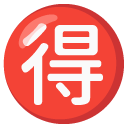


Appearance varies by platform and device. Google Noto, Twemoji, and OpenMoji are open-source.