㊙️
The Emoji
Japanese “secret” Button
U+3299 U+FE0F · :japanese_secret_button:
Trend 58
Meaning layers
- interpretation
- Used ironically or dramatically to signal gossip, tea, or exclusive information being shared — often paired with spill-the-tea moments or fake mystery.
- tiktok usage
- Placed in video captions or comments to tease unrevealed drama, hidden lore, or insider knowledge before a reveal.
- irony level
- 6 / 10
Platform meanings
- meaning
- Signals that a creator is about to reveal something exclusive, scandalous, or hidden — often used to bait viewers into watching until the end.
- trend usage
- Used in 'secret hack' trends, drama reveals, lore drops, and gossip storytimes to build suspense.
- hashtags
- #secret#spill#hiddenlore#secretrevealed#teasingdrama
- virality score
- 62 / 100
Cultural meanings
🇺🇸
Western / Gen-Z
Used ironically and frequently to signal gossip or teased reveals — carries a fun, low-stakes meaning detached from its Japanese origin.
🇵🇰
Pakistan & India
Employed in WhatsApp chats to mark sensitive family or social gossip as private; also used humorously in meme pages for dramatic reveals.
🌍
Middle East
Used cautiously to mark private or family-only information in group chats; the concept of 'sirr' (secret) resonates culturally making it relatable.
🌐
Global Neutral
Universally understood as 'secret' or 'confidential' due to its visual design, even by users unfamiliar with Japanese kanji.
🇧🇩
Bangladesh
Commonly used in meme culture and friend group chats to tease gossip or label private news shared within trusted circles.
🇱🇰
Sri Lanka
Used in WhatsApp and Facebook to signal private news or exclusive group information, especially in family and neighborhood group chats.
🇨🇳
China
While the kanji '秘' is recognizable to Chinese speakers as meaning 'secret/confidential,' it's sometimes seen as distinctly Japanese in styling and used accordingly.
🇯🇵
Japan
Carries direct and clear meaning as the word for 'secret' — used straightforwardly in digital communication to label private or restricted content.
🇰🇷
South Korea
Recognized as a Japanese-origin symbol; used digitally to represent secrets or confidential information, sometimes playfully in K-pop fandom spaces for teaser culture.
🇹🇼
Taiwan
Understood clearly due to Traditional Chinese familiarity with the character; used to label private content or tease exclusive announcements.
🇭🇰
Hong Kong
Recognized and used similarly to Taiwan — often seen in professional or organizational contexts to flag sensitive information.
🇵🇭
Philippines
Used in internet culture and group chats to signal gossip or 'chika' (tea/gossip) being spilled among friends.
🇮🇩
Indonesia
Popular in meme communities and Twitter/X culture to tease reveals and mark content as exclusive or not-for-sharing.
🇹🇭
Thailand
Used in LINE and Facebook chats to signal private or members-only information, especially in fan communities and group gossip threads.
🇻🇳
Vietnam
Employed in Zalo and Facebook group chats to label sensitive or private posts; also used humorously in meme culture for dramatic pauses.
🇲🇾
Malaysia
Used across WhatsApp and Twitter to flag gossip, private announcements, or exclusive content, often paired with dramatic storytelling.
🇸🇦
Saudi Arabia
Used in private group chats to mark messages as confidential; the cultural value of privacy (khusūsiyya) makes this emoji resonate in serious contexts.
🇦🇪
UAE
Popular in multicultural digital spaces to label exclusive or restricted content; used by influencers to tease unrevealed brand deals or announcements.
🇪🇬
Egypt
Used humorously in Arabic meme culture and Twitter to signal 'open secrets' about politics, celebrities, or social dynamics.
🇹🇷
Turkey
Used in Twitter/X and WhatsApp to tease reveals or gossip, particularly popular in celebrity and political commentary communities.
🇮🇷
Iran
Used in private Telegram groups and Instagram to mark sensitive or politically cautious content; carries extra weight given digital surveillance context.
🇳🇬
Nigeria
Used in Twitter and WhatsApp to signal that the real 'gist' (gossip/truth) is about to drop — high energy usage in social commentary threads.
🇿🇦
South Africa
Used in WhatsApp groups and Twitter to tease drama or label exclusive community information, especially in social and political commentary.
🇬🇧
UK & Ireland
Used with dry humor to label obviously not-secret information as 'classified' — fits neatly into British irony and sarcasm culture.
🇫🇷
France
Used sparingly but meaningfully to indicate private or exclusive content; appreciated in artistic and intellectual circles as a symbol of hidden knowledge.
🇩🇪
Germany
Used in a more literal sense to flag confidential or private content in professional and personal chats; ironic usage is less common.
🇪🇸
Spain & Italy
Used in social media and group chats to tease gossip or personal secrets — fits naturally into expressive and dramatic communication styles.
🇧🇷
Brazil
Extremely popular in meme culture and Twitter/X to signal gossip drops, exclusive reveals, or 'segredo' (secret) moments in highly animated fashion.
🇲🇽
Mexico
Used in meme communities and WhatsApp groups to tease secrets or label exclusive group knowledge — combined with dramatic humor.
🌎
Latin America
Broadly used across Latin American countries to signal private information, gossip, or teased reveals in an expressive and playful manner.
🇦🇺
Australia & NZ
Used with casual irony to label obvious or known information as secret — fits Australian deadpan humor and relaxed internet communication style.
How its meaning shifted
- 2010
Rarely used outside of Japan; primarily appeared in early smartphone emoji sets as a literal label for confidential content in Japanese digital communication.
- 2015
Began appearing in Western internet culture as an exotic or quirky emoji, often used without understanding its meaning purely for aesthetic novelty.
- 2020
Became more widely understood as 'secret' due to cross-cultural emoji literacy; adopted in gossip, meme, and drama communities across platforms.
- 2026
Firmly embedded in global internet culture as a go-to emoji for teasing secrets, gossip drops, and ironic 'classified information' humor across all major platforms.
See it on every platform
Adjacent emojis
- Opposite
- loudspeakermegaphoneopen book
- Often confused with
- japanese secret buttonjapanese congratulations buttonjapanese passing grade button
- Can replace
- shushing facelockedzipper mouth face
Share & embed
Frequently asked
01What does the ㊙️ Japanese “secret” Button emoji mean?
The ㊙️ emoji displays the Japanese kanji character '秘' (hi/himitsu) meaning 'secret' inside a red circle, used as a symbol for confidential or restricted information.
02What does ㊙️ mean on TikTok?
Signals that a creator is about to reveal something exclusive, scandalous, or hidden — often used to bait viewers into watching until the end.
03What does ㊙️ mean on WhatsApp?
Signals that the message contains private or sensitive information not meant for forwarding — 'keep this between us' energy.
04What does ㊙️ mean in Gen-Z slang?
Used ironically or dramatically to signal gossip, tea, or exclusive information being shared — often paired with spill-the-tea moments or fake mystery.
05Is the ㊙️ emoji safe to use?
Signaling confidentiality, sharing private good news, teasing harmless surprises, or labeling exclusive content.
06What does ㊙️ mean in texting?
Triggers curiosity and the psychology of exclusivity — the desire to be 'in the know.' It activates FOMO (fear of missing out) and social bonding through shared secrets.
07What is the shortcode for ㊙️?
The shortcode for Japanese “secret” Button is :japanese_secret_button:
08What does ㊙️ mean in dating?
Sent when someone wants to hint they have something private or intimate to share, often teasing a crush with 'I have a secret about you ㊙️'.
Safety & usage
- Safe meaning
- Signaling confidentiality, sharing private good news, teasing harmless surprises, or labeling exclusive content.
- Caution
- Could be used to imply hidden agendas, conceal manipulative intentions, or pressure someone to keep secrets about harmful behavior.
Rarely problematic on its own; context-dependent. In controlling relationship dynamics, it could be used to enforce unhealthy secrecy. Generally considered safe.
How it looks across platforms
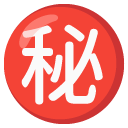


Appearance varies by platform and device. Google Noto, Twemoji, and OpenMoji are open-source.