👨🏿❤️💋👨🏿
The Emoji
Kiss: Man, Man, Dark Skin Tone
U+1F468 U+1F3FF U+200D U+2764 U+FE0F U+200D U+1F48B U+200D U+1F468 U+1F3FF · :kiss_man_man_dark_skin_tone:
Trend 58
Meaning layers
- interpretation
- Used to celebrate Black gay love, queer pride, and romantic affection between dark-skinned men. Often used unapologetically as a statement of visibility and pride.
- tiktok usage
- Appears in queer Black creator content, pride videos, relationship milestones, and LGBTQ+ advocacy posts celebrating Black gay identity.
- irony level
- 2 / 10
Platform meanings
- meaning
- Symbol of Black gay love and queer joy; used in couple reveal videos, pride duets, and LGBTQ+ storytelling by Black creators.
- trend usage
- Appears in #BlackPride, #QueerTikTok, and #BlackLove TikTok trends; used in videos showcasing Black same-sex couples and relationship milestones.
- hashtags
- #BlackPride#QueerTikTok#BlackLove#BlackGayCouple#PrideTikTok
- virality score
- 62 / 100
Cultural meanings
🇺🇸
Western / Gen-Z
Widely celebrated as a symbol of Black queer love and LGBTQ+ visibility; Gen Z uses it unapologetically in pride content, couple posts, and allyship messaging.
🇵🇰
Pakistan & India
Largely taboo and rarely used publicly due to conservative social attitudes toward homosexuality; may appear in private LGBTQ+ spaces or activist communities in urban areas.
🌍
Middle East
Highly sensitive and avoided in most public digital spaces due to legal prohibitions and strong cultural stigma against same-sex relationships across the region.
🌐
Global Neutral
Recognized as a symbol of same-sex romantic love between dark-skinned men; interpretation varies widely based on local cultural and legal attitudes toward LGBTQ+ identities.
🇧🇩
Bangladesh
Rarely used and socially discouraged due to deeply conservative attitudes toward homosexuality; LGBTQ+ communities may use it privately in encrypted messaging spaces.
🇱🇰
Sri Lanka
Uncommon in public use due to social conservatism; small LGBTQ+ activist communities may use it as a symbol of identity and resistance.
🇨🇳
China
Infrequently used and subject to platform censorship; while some queer Chinese communities use it privately, public expression of same-sex love faces heavy restriction.
🇯🇵
Japan
Used within Japan's visible gay community and ally spaces; generally treated with curiosity or acceptance in youth culture, though public displays of gay affection remain understated.
🇰🇷
South Korea
Occasionally used by LGBTQ+ Koreans and allies, particularly in online queer spaces; mainstream reception remains mixed given conservative social attitudes.
🇹🇼
Taiwan
Widely accepted and positively received in Taiwan, which legalized same-sex marriage in 2019; used freely to celebrate queer love and pride.
🇭🇰
Hong Kong
Used in LGBTQ+ communities and among younger, progressive users; visibility has been affected by recent political changes but queer culture remains vibrant underground.
🇵🇭
Philippines
Used by the sizable and visible Filipino LGBTQ+ community; Filipinos are generally expressive with pride emojis, though conservative religious contexts may limit use.
🇮🇩
Indonesia
Rarely used publicly due to strong religious conservatism and growing legal pressure on LGBTQ+ expression; used privately within underground queer communities.
🇹🇭
Thailand
Positively received in Thailand's relatively open LGBTQ+ culture; used freely to express queer love, though legal recognition of same-sex relationships is still evolving.
🇻🇳
Vietnam
Used in growing urban LGBTQ+ communities; societal acceptance is increasing but traditional family values still limit public expression in many contexts.
🇲🇾
Malaysia
Very rarely used publicly due to strict religious laws criminalizing same-sex relations; LGBTQ+ Malaysians may use it privately or in diaspora spaces.
🇸🇦
Saudi Arabia
Effectively prohibited in public digital expression due to extreme legal and religious prohibitions on homosexuality; use would be considered a serious social and legal offense.
🇦🇪
UAE
Avoided in public digital spaces due to criminalization of same-sex relationships; expatriate LGBTQ+ communities may use it privately with caution.
🇪🇬
Egypt
Rarely used openly due to social conservatism and legal risks for LGBTQ+ individuals; may circulate in private or underground queer digital spaces.
🇹🇷
Turkey
Used in Turkey's LGBTQ+ communities, particularly in Istanbul, though increasing government crackdowns on Pride have created a more hostile climate for open expression.
🇮🇷
Iran
Extremely rare and dangerous to use publicly; Iran criminalizes homosexuality severely, and this emoji is associated with illegal identity in public digital spaces.
🇳🇬
Nigeria
Largely avoided due to severe legal penalties for same-sex relationships and strong social stigma; Nigerian LGBTQ+ diaspora may use it freely in international spaces.
🇿🇦
South Africa
Positively used in South Africa, which has constitutional protections for LGBTQ+ rights and a visible queer Black community, particularly in Cape Town and Johannesburg.
🇬🇧
UK & Ireland
Widely celebrated; used in Black LGBTQ+ spaces, Pride events, and mainstream social media as a symbol of inclusive love and representation.
🇫🇷
France
Generally accepted and used in LGBTQ+ and ally communities; France's tradition of laïcité supports visible queer expression, and Black French queer communities use it actively.
🇩🇪
Germany
Well-received in Germany's progressive LGBTQ+ culture; used in pride content, queer Black community spaces, and diverse urban social media communities.
🇪🇸
Spain & Italy
Common in Spain's very open LGBTQ+ culture; less uniform in Italy where LGBTQ+ rights progress has been slower, but younger generations use it freely.
🇧🇷
Brazil
Enthusiastically used in Brazil, home to one of the world's largest Pride parades; Afro-Brazilian queer communities use this emoji prominently in love and pride content.
🇲🇽
Mexico
Used in Mexico's growing LGBTQ+ visibility movement, particularly among younger urbanites; carries extra cultural significance in celebrating Black and Indigenous queer identities.
🌎
Latin America
Usage varies by country; generally more accepted in urban, youth-driven contexts and growing LGBTQ+ movements across Latin America, especially in Argentina, Chile, and Colombia.
🇦🇺
Australia & NZ
Widely celebrated in both countries' inclusive LGBTQ+ cultures; used freely in pride content, Black LGBTQ+ community spaces, and mainstream social media.
How its meaning shifted
- 2010
This specific emoji sequence did not exist; same-sex couple emojis with skin tone modifiers were not yet part of Unicode, and LGBTQ+ representation in emoji was nearly absent.
- 2015
Basic same-sex couple emojis were introduced but lacked skin tone diversity; LGBTQ+ advocates began pushing for more representative options, setting the stage for this sequence.
- 2020
The emoji became available with full skin tone modifier support; gained traction during Black Lives Matter and Pride Month convergence, used in calls for intersectional visibility.
- 2026
Established symbol of Black queer love used routinely by Black LGBTQ+ creators and allies; appears in mainstream brand Pride campaigns, media, and everyday couple communication.
See it on every platform
Compare with
Adjacent emojis
- Often confused with
- kiss marktwo heartscouple with heart
- Can replace
- red heartrainbow flagkiss mark
Share & embed
Frequently asked
01What does the 👨🏿❤️💋👨🏿 Kiss: Man, Man, Dark Skin Tone emoji mean?
A kiss between two men, both with dark skin tone, represented by two male faces joined by a heart and kiss mark. This is a ZWJ sequence combining 👨🏿 + ❤️ + 💋 + 👨🏿.
02What does 👨🏿❤️💋👨🏿 mean on TikTok?
Symbol of Black gay love and queer joy; used in couple reveal videos, pride duets, and LGBTQ+ storytelling by Black creators.
03What does 👨🏿❤️💋👨🏿 mean on WhatsApp?
Sent between gay male partners of dark skin tone to express love, affection, or romantic greetings in private chats.
04What does 👨🏿❤️💋👨🏿 mean in Gen-Z slang?
Used to celebrate Black gay love, queer pride, and romantic affection between dark-skinned men. Often used unapologetically as a statement of visibility and pride.
05Is the 👨🏿❤️💋👨🏿 emoji safe to use?
Expression of love and romantic affection between two men with dark skin tone; a positive symbol of Black LGBTQ+ identity and relationship visibility.
06What does 👨🏿❤️💋👨🏿 mean in texting?
Carries dual weight of romantic love and identity affirmation — for Black gay men, using this emoji can be an act of visibility and self-celebration in spaces that historically erased both Blackness and queerness.
07What is the shortcode for 👨🏿❤️💋👨🏿?
The shortcode for Kiss: Man, Man, Dark Skin Tone is :kiss_man_man_dark_skin_tone:
08What does 👨🏿❤️💋👨🏿 mean in dating?
Used by gay men with dark skin tone to signal romantic interest, flirt openly, or confirm mutual attraction in DMs and dating profiles.
Safety & usage
- Safe meaning
- Expression of love and romantic affection between two men with dark skin tone; a positive symbol of Black LGBTQ+ identity and relationship visibility.
- Caution
- In hostile contexts, this emoji may be sent to harass or mock LGBTQ+ individuals; homophobic users may weaponize it in hate speech or trolling.
While inherently a positive symbol, it can attract homophobic harassment in comment sections or be used provocatively in anti-LGBTQ+ trolling campaigns. Users in countries where homosexuality is criminalized should exercise caution when using this emoji publicly.
How it looks across platforms
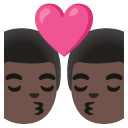
Appearance varies by platform and device. Google Noto, Twemoji, and OpenMoji are open-source.