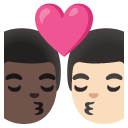
👨🏿❤️💋👨🏻
The Emoji
Kiss: Man, Man, Dark Skin Tone, Light Skin Tone
U+1F468 U+1F3FF U+200D U+2764 U+FE0F U+200D U+1F48B U+200D U+1F468 U+1F3FB · :kiss_man_man_dark_skin_tone_light_skin_tone:
Trend 68
Meaning layers
- interpretation
- Used to celebrate queer love, interracial relationships, and LGBTQ+ pride. Gen Z uses it casually to show support for gay couples or to represent their own relationship without hesitation or shame.
- tiktok usage
- Appears in videos about LGBTQ+ couples, pride month content, and commentary on queer joy. Often used in captions celebrating Black and white gay relationships.
- irony level
- 1 / 10
Platform meanings
- meaning
- Symbol of gay interracial love and LGBTQ+ pride; used in couple content, coming out videos, and queer joy compilations.
- trend usage
- Placed in captions of couple POVs, pride duets, and 'meet my boyfriend' videos showcasing interracial gay relationships.
- hashtags
- #QueerLove#GayCouple#InterracialLove#PrideMonth#LGBTQJoy
- virality score
- 72 / 100
Cultural meanings
🇺🇸
Western / Gen-Z
Widely embraced and used casually as a celebration of queer interracial love; Gen Z in the US, Canada, and Western Europe treat it as a normalized relationship emoji with strong positive connotations.
🇵🇰
Pakistan & India
Considered highly sensitive and culturally taboo; same-sex relationships are stigmatized or criminalized in parts of both countries, so this emoji is rarely used positively and may provoke strong negative reactions.
🌍
Middle East
Generally avoided or viewed negatively across most Middle Eastern countries where homosexuality is legally or socially prohibited; use is largely confined to underground LGBTQ+ communities or expat circles.
🌐
Global Neutral
On globally neutral platforms it reads as a romantic kiss between two men of different skin tones; the reception varies entirely by the cultural context of the viewer, with no universally agreed interpretation.
🇧🇩
Bangladesh
Extremely uncommon in mainstream use due to strong religious and social prohibitions on same-sex relationships; within small underground LGBTQ+ communities it may be used cautiously as a symbol of identity.
🇱🇰
Sri Lanka
Rarely used publicly given conservative social attitudes toward homosexuality; LGBTQ+ activists in Sri Lanka have begun using it more openly as part of gradual awareness campaigns.
🇨🇳
China
Used cautiously by LGBTQ+ individuals in China, especially after increased censorship of queer content; often replaced by more subtle or coded symbols to avoid platform removal.
🇯🇵
Japan
In Japan's relatively accepting but reserved culture, this emoji appears in LGBTQ+ spaces and pride contexts but is less common in casual mainstream chat due to general reticence about overt romantic expression.
🇰🇷
South Korea
Used within K-queer communities and LGBTQ+ ally spaces; mainstream use is still limited by prevailing conservative attitudes, though younger generations are becoming more accepting.
🇹🇼
Taiwan
Frequently and positively used in Taiwan, which is known for being the most LGBTQ+-inclusive country in Asia, having legalized same-sex marriage; this emoji reflects genuine cultural acceptance.
🇭🇰
Hong Kong
Used in LGBTQ+ communities in Hong Kong with some openness, though increasingly cautious given political climate changes; pride communities still actively use it in their digital spaces.
🇵🇭
Philippines
Mixed reception — urban, younger Filipinos use it warmly and with acceptance, while rural and religious communities may view it negatively given the Catholic-influenced cultural norms.
🇮🇩
Indonesia
Strongly avoided in mainstream Indonesian culture due to religious and legal pressures against homosexuality; its use is primarily confined to private conversations among LGBTQ+ individuals.
🇹🇭
Thailand
Moderately positive reception in Thailand's relatively tolerant culture toward LGBTQ+ identities; the gay community in Bangkok and other urban areas uses it freely in digital communication.
🇻🇳
Vietnam
Used quietly within Vietnamese LGBTQ+ communities; while Vietnam has seen growing acceptance, public displays of same-sex affection remain culturally sensitive, so digital use stays relatively discreet.
🇲🇾
Malaysia
Rarely used openly due to strong legal and religious prohibitions on homosexuality; within private LGBTQ+ networks it carries deep significance as a symbol of forbidden but felt love.
🇸🇦
Saudi Arabia
Effectively prohibited in cultural and digital expression; homosexuality is criminalized and this emoji would be considered deeply offensive or dangerous to display in Saudi Arabian social contexts.
🇦🇪
UAE
Similar to Saudi Arabia, this emoji is avoided in UAE mainstream culture due to legal prohibitions; expat LGBTQ+ communities may use it privately but with significant caution.
🇪🇬
Egypt
Strongly taboo in Egyptian society where homosexuality is socially and legally persecuted; use is limited to underground LGBTQ+ spaces and is associated with significant personal risk.
🇹🇷
Turkey
Reception has become increasingly conservative as LGBTQ+ rights have faced government restriction; younger, urban Turks may use it supportively but mainstream display carries social risk.
🇮🇷
Iran
Extremely sensitive and dangerous context given Iran's criminalization of homosexuality; this emoji is used only in the most private digital spaces among LGBTQ+ individuals, if at all.
🇳🇬
Nigeria
Carries significant taboo in Nigeria where same-sex relationships are criminalized; use is almost entirely absent from mainstream digital culture and confined to very private LGBTQ+ communications.
🇿🇦
South Africa
South Africa has one of the most LGBTQ+-inclusive legal frameworks in Africa; this emoji is used openly and positively, particularly in urban centers like Cape Town and Johannesburg.
🇬🇧
UK & Ireland
Broadly accepted and positively used in both the UK and Ireland, especially after marriage equality; it appears casually in queer couple social media content and ally messaging without controversy.
🇫🇷
France
Viewed positively in France's secular and historically liberal culture; used in LGBTQ+ contexts with ease, and French social media culture embraces it without significant controversy.
🇩🇪
Germany
Welcomed openly in Germany's progressive and LGBTQ+-inclusive society; frequently used during CSD (Christopher Street Day) and in everyday queer relationship expression without stigma.
🇪🇸
Spain & Italy
In Spain, widely accepted and used freely given the country's long-standing marriage equality and LGBTQ+ rights; in Italy, reception is slightly more mixed due to lingering conservative influence, though younger generations use it positively.
🇧🇷
Brazil
Brazil has a large and vibrant LGBTQ+ community and one of the world's biggest Pride parades; this emoji is used enthusiastically and is a common symbol of gay love and celebration despite the country's political divisions.
🇲🇽
Mexico
Usage varies by region — urban Mexico, especially Mexico City, is increasingly open and this emoji flows freely in LGBTQ+ spaces, while rural and conservative areas remain less accepting.
🌎
Latin America
Across Latin America broadly, use is growing among younger urban LGBTQ+ communities, but social and religious conservatism in many countries means it is still used cautiously outside of pride and activist spaces.
🇦🇺
Australia & NZ
Enthusiastically used in both Australia and New Zealand following their marriage equality legislation; it's a mainstream symbol of gay love with no significant social taboo among younger and urban demographics.
How its meaning shifted
- 2010
This specific skin tone combination did not exist in 2010; basic couple kiss emojis were just emerging and same-sex variants were nonexistent, limiting any representation of this relationship type.
- 2015
Same-sex couple emojis began appearing following Unicode updates and growing LGBTQ+ visibility momentum after marriage equality advances; skin tone modifiers were just being introduced but interracial combinations were still limited.
- 2020
By 2020 this emoji was available and seeing growing use during Pride Month and amid global conversations about racial justice and LGBTQ+ rights intersecting; used prominently in Black Lives Matter and LGBTQ+ crossover advocacy spaces.
- 2026
Now a normalized and widely recognized symbol of queer interracial love; used daily by gay couples, allies, and LGBTQ+ content creators across all major platforms with significantly reduced shock value and increased cultural acceptance.
See it on every platform
Adjacent emojis
- Often confused with
- kiss markcouple with hearthandshake
Share & embed
Frequently asked
01What does the 👨🏿❤️💋👨🏻 Kiss: Man, Man, Dark Skin Tone, Light Skin Tone emoji mean?
A kiss emoji sequence depicting two men sharing a romantic kiss, with the first man having a dark skin tone and the second man having a light skin tone. The sequence combines the man emoji, heart, kiss mark, and another man emoji using zero-width joiners.
02What does 👨🏿❤️💋👨🏻 mean on TikTok?
Symbol of gay interracial love and LGBTQ+ pride; used in couple content, coming out videos, and queer joy compilations.
03What does 👨🏿❤️💋👨🏻 mean on WhatsApp?
Sent between gay male partners as a kiss goodbye or romantic expression, or shared by allies in group chats during pride discussions.
04What does 👨🏿❤️💋👨🏻 mean in Gen-Z slang?
Used to celebrate queer love, interracial relationships, and LGBTQ+ pride. Gen Z uses it casually to show support for gay couples or to represent their own relationship without hesitation or shame.
05Is the 👨🏿❤️💋👨🏻 emoji safe to use?
A wholesome expression of romantic love and affection between two men of different skin tones; represents LGBTQ+ inclusion and interracial relationship visibility.
06What does 👨🏿❤️💋👨🏻 mean in texting?
This emoji carries deep emotional weight for LGBTQ+ individuals, especially those in interracial relationships, as it provides rare digital visibility. Seeing one's identity reflected in an emoji can reinforce feelings of acceptance, belonging, and social validation.
07What is the shortcode for 👨🏿❤️💋👨🏻?
The shortcode for Kiss: Man, Man, Dark Skin Tone, Light Skin Tone is :kiss_man_man_dark_skin_tone_light_skin_tone:
08What does 👨🏿❤️💋👨🏻 mean in dating?
Used between gay male partners to signify deep romantic affection or as a flirtatious signal of interest in men of a different skin tone. Sending this in a chat signals clear romantic intent.
Safety & usage
- Safe meaning
- A wholesome expression of romantic love and affection between two men of different skin tones; represents LGBTQ+ inclusion and interracial relationship visibility.
- Caution
- Could be used to taunt or provoke homophobic individuals, or deployed sarcastically in toxic online spaces targeting LGBTQ+ people as mockery depending on context.
This emoji may be considered offensive or culturally inappropriate in countries and communities where homosexuality is criminalized or heavily stigmatized. Sending it in contexts where the recipient has expressed homophobic views may escalate conflict. Use with awareness of your audience's cultural and social background.
How it looks across platforms
Appearance varies by platform and device. Google Noto, Twemoji, and OpenMoji are open-source.