👨🏼❤️💋👨🏼
The Emoji
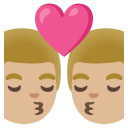
Kiss: Man, Man, Medium-light Skin Tone
U+1F468 U+1F3FC U+200D U+2764 U+FE0F U+200D U+1F48B U+200D U+1F468 U+1F3FC · :kiss_man_man_mediumlight_skin_tone:
Trend 68
Meaning layers
- interpretation
- Used to celebrate gay relationships, bromance elevated to romance, or as an ally signal. Also used ironically between male friends to signal closeness without shame.
- tiktok usage
- Appears in pride content, gay couple vlogs, 'gay best friend' culture posts, and wholesome LGBTQ+ storytelling videos.
- irony level
- 3 / 10
Platform meanings
- meaning
- Signals gay couple content, pride representation, or LGBTQ+ ally support in video captions and comments.
- trend usage
- Used heavily during Pride Month, in gay couple day-in-my-life videos, and in reaction comments on LGBTQ+ visibility content.
- hashtags
- #GayCouple#PrideMonth#LGBTQTikTok#GayTikTok#LoveIsLove
- virality score
- 72 / 100
Cultural meanings
🇺🇸
Western / Gen-Z
Widely accepted and celebrated as a symbol of gay love and LGBTQ+ pride; used freely and proudly in social media contexts.
🇵🇰
Pakistan & India
Rarely used publicly due to social stigma and legal concerns in some regions; primarily used in private LGBTQ+ communities or by progressive urban youth.
🌍
Middle East
Highly sensitive and generally avoided due to legal prohibitions on homosexuality in many countries; used only in private or by diaspora communities.
🌐
Global Neutral
Universally understood as representing a kiss between two men; reception varies widely based on local cultural and legal attitudes toward LGBTQ+ relationships.
🇧🇩
Bangladesh
Extremely rare in public use due to legal and social prohibition of homosexuality; used only in hidden LGBTQ+ circles or by diaspora.
🇱🇰
Sri Lanka
Largely avoided in public discourse due to social conservatism; slowly gaining visibility among younger LGBTQ+ advocates in urban areas.
🇨🇳
China
Used cautiously given censorship of LGBTQ+ content; more common in private chats and on platforms with less censorship, especially among younger users.
🇯🇵
Japan
Used in LGBTQ+ communities and among allies; Japan has a growing acceptance culture, and the emoji appears in pride events and yaoi/BL fan communities.
🇰🇷
South Korea
Gaining traction in urban LGBTQ+ communities and among progressive youth, though social conservatism limits mainstream usage.
🇹🇼
Taiwan
Widely and proudly used; Taiwan is the most LGBTQ+-affirming country in Asia, having legalized same-sex marriage, and this emoji is common in pride contexts.
🇭🇰
Hong Kong
Used within LGBTQ+ communities; acceptance exists but is tempered by recent political changes and social conservatism in some demographics.
🇵🇭
Philippines
Mixed reception; while Filipino culture has visible gay communities, social conservatism and religious influence limit widespread positive use.
🇮🇩
Indonesia
Very rarely used openly due to significant social and religious opposition to homosexuality; confined to private LGBTQ+ spaces.
🇹🇭
Thailand
Used with moderate frequency; Thailand has visible LGBTQ+ communities, and the emoji appears in pride and relationship contexts, though full legal recognition is still emerging.
🇻🇳
Vietnam
Emerging use among progressive youth and LGBTQ+ advocates; Vietnam has become more tolerant, but public display remains cautious.
🇲🇾
Malaysia
Extremely sensitive; homosexuality is criminalized, so this emoji is only used privately or by diaspora communities outside the country.
🇸🇦
Saudi Arabia
Essentially taboo; homosexuality is illegal and severely punishable, making this emoji virtually absent from local public use.
🇦🇪
UAE
Similarly restricted due to laws against homosexuality; used only in very private or anonymous online spaces.
🇪🇬
Egypt
Avoided in public contexts due to social and legal hostility toward LGBTQ+ expression; used in underground or diaspora communities.
🇹🇷
Turkey
Increasingly sensitive given rising conservative social policies; once more open in urban areas, but now more cautiously used even in Istanbul's LGBTQ+ community.
🇮🇷
Iran
Virtually unused publicly due to severe legal penalties for homosexuality; entirely confined to anonymous or diaspora usage.
🇳🇬
Nigeria
Highly sensitive given strong social, religious, and legal opposition; same-sex relationships are criminalized, making this emoji largely absent from public use.
🇿🇦
South Africa
One of the most LGBTQ+-affirming countries in Africa with constitutional protections; this emoji is used openly in urban and online LGBTQ+ communities.
🇬🇧
UK & Ireland
Widely accepted and celebrated; both countries have strong LGBTQ+ rights cultures, and this emoji is used freely in all social contexts.
🇫🇷
France
Used openly and positively; France has a strong tradition of LGBTQ+ rights and visibility, and this emoji appears frequently in pride and romantic contexts.
🇩🇪
Germany
Commonly used in LGBTQ+ communities and by allies; Germany has strong legal protections and an active pride culture supporting open use.
🇪🇸
Spain & Italy
Spain uses it openly with strong LGBTQ+ acceptance; Italy has a more mixed reception with less legal protection, though urban communities use it freely.
🇧🇷
Brazil
Widely used in one of the world's largest LGBTQ+ communities; Brazil has massive pride parades and a vibrant gay culture supporting open use despite political tensions.
🇲🇽
Mexico
Used increasingly openly in urban areas and LGBTQ+ communities; acceptance varies significantly between cities and rural conservative regions.
🌎
Latin America
Varies greatly by country; more accepted in Argentina and Chile which have marriage equality, less so in more conservative Central American nations.
🇦🇺
Australia & NZ
Widely accepted and celebrated following marriage equality legislation; both countries have strong LGBTQ+ communities and this emoji is used freely and proudly.
How its meaning shifted
- 2010
Emoji did not exist in this form; same-sex couple representation was entirely absent from standard emoji sets, causing advocacy demands for inclusion.
- 2015
Early versions of couple emojis with same-sex representation began appearing; usage was primarily by LGBTQ+ advocates and early adopters celebrating the inclusion.
- 2020
Widespread adoption following expanded skin tone variants; used heavily during Pride Month, in LGBTQ+ activism tied to social justice movements, and in mainstream media.
- 2026
Normalized across most Western and progressive global platforms; used casually by gay couples, allies, and in corporate Pride campaigns alongside continued advocacy use.
See it on every platform
Adjacent emojis
- Often confused with
- kiss markheart decorationpeople hugging
Share & embed
Frequently asked
01What does the 👨🏼❤️💋👨🏼 Kiss: Man, Man, Medium-light Skin Tone emoji mean?
A kiss between two men with medium-light skin tone, represented as a sequence combining two man emojis with heart and kiss mark symbols.
02What does 👨🏼❤️💋👨🏼 mean on TikTok?
Signals gay couple content, pride representation, or LGBTQ+ ally support in video captions and comments.
03What does 👨🏼❤️💋👨🏼 mean on WhatsApp?
Sent between gay partners as an affectionate kiss emoji in private chats.
04What does 👨🏼❤️💋👨🏼 mean in Gen-Z slang?
Used to celebrate gay relationships, bromance elevated to romance, or as an ally signal. Also used ironically between male friends to signal closeness without shame.
05Is the 👨🏼❤️💋👨🏼 emoji safe to use?
A positive representation of romantic love and affection between two men; used to celebrate LGBTQ+ relationships and pride.
06What does 👨🏼❤️💋👨🏼 mean in texting?
Represents validated romantic love between men; seeing this emoji can evoke feelings of representation, belonging, and joy for LGBTQ+ individuals, as well as allyship affirmation.
07What is the shortcode for 👨🏼❤️💋👨🏼?
The shortcode for Kiss: Man, Man, Medium-light Skin Tone is :kiss_man_man_mediumlight_skin_tone:
08What does 👨🏼❤️💋👨🏼 mean in dating?
Sent between men who are flirting or confirming mutual romantic interest; signals openness to a gay relationship.
Safety & usage
- Safe meaning
- A positive representation of romantic love and affection between two men; used to celebrate LGBTQ+ relationships and pride.
- Caution
- Can be used by bad actors to mock, harass, or send unsolicited content to individuals as a form of homophobic baiting.
While the emoji itself is positive, its use in certain cultural or legal contexts can expose senders or receivers to social or legal risk. Monitor for context in regions where LGBTQ+ expression is criminalized.
How it looks across platforms
Appearance varies by platform and device. Google Noto, Twemoji, and OpenMoji are open-source.