👨🏼❤️💋👨🏾
The Emoji
Kiss: Man, Man, Medium-light Skin Tone, Medium-dark Skin Tone
U+1F468 U+1F3FC U+200D U+2764 U+FE0F U+200D U+1F48B U+200D U+1F468 U+1F3FE · :kiss_man_man_mediumlight_skin_tone_mediumdark_skin_tone:
Trend 68
Meaning layers
- interpretation
- Used to celebrate queer male relationships, bromances taken to the next level, or to signal allyship and pride. Gen Z uses it openly and without irony as a positive affirmation of love between men.
- tiktok usage
- Appears in LGBTQ+ coming-out videos, couple content between two men, pride month videos, and wholesome relationship storytelling.
- irony level
- 1 / 10
Platform meanings
- meaning
- Represents same-sex male couples or LGBTQ+ affirmation content, often used in couple reveal videos or pride content.
- trend usage
- Trending during Pride Month, used in #couplegoals videos between two men, relationship check-in trends, and coming-out storytelling.
- hashtags
- #GayCouple#PrideMonth#LGBTQLove#CoupleGoals#GayTikTok
- virality score
- 72 / 100
Cultural meanings
🇺🇸
Western / Gen-Z
Widely accepted and celebrated as a symbol of LGBTQ+ love and inclusivity; used freely and positively without stigma by Gen Z in the US, Canada, and Western Europe.
🇵🇰
Pakistan & India
Rarely used openly due to social and legal stigma around same-sex relationships; may be used privately within LGBTQ+ communities or urban progressive spaces in major cities.
🌍
Middle East
Largely avoided or used covertly due to legal prohibitions on same-sex relationships in many countries; use is confined to private LGBTQ+ networks or diaspora communities.
🌐
Global Neutral
Internationally recognized as a same-sex male kiss emoji representing LGBTQ+ love; reception varies significantly by cultural and legal context.
🇧🇩
Bangladesh
Extremely rare in public use due to strong social and legal taboos around same-sex relationships; private LGBTQ+ communities may use it discreetly.
🇱🇰
Sri Lanka
Used covertly within LGBTQ+ communities; public use is uncommon due to conservative social attitudes and legal restrictions on homosexuality.
🇨🇳
China
Usage is limited and often censored on major Chinese platforms; may appear on VPN-accessed platforms within LGBTQ+ circles in urban areas like Shanghai and Beijing.
🇯🇵
Japan
Used within Japan's relatively open LGBTQ+ community, especially in Tokyo's Shinjuku Ni-chome area culture; BL (Boys' Love) fandom also uses it in fictional shipping contexts.
🇰🇷
South Korea
Used within LGBTQ+ communities and progressive youth spaces; K-pop fan communities also use it for shipping male idols, sometimes divorced from its literal meaning.
🇹🇼
Taiwan
Widely celebrated and used openly, especially since Taiwan legalized same-sex marriage in 2019; appears frequently in pride content and couple posts.
🇭🇰
Hong Kong
Used within the active LGBTQ+ community; context-dependent but generally accepted in cosmopolitan social circles and pride events.
🇵🇭
Philippines
Has a somewhat accepting cultural context given Filipino openness toward gay men (bakla culture); used in LGBTQ+ spaces and among younger generations freely.
🇮🇩
Indonesia
Rarely used publicly due to growing conservatism and social restrictions on LGBTQ+ expression; confined to private or underground queer communities.
🇹🇭
Thailand
Used relatively openly given Thailand's reputation for LGBTQ+ tolerance; common in gay tourism, pride events, and among younger urban populations.
🇻🇳
Vietnam
Used within urban LGBTQ+ communities with moderate acceptance; public visibility has grown but conservative social attitudes still limit widespread use.
🇲🇾
Malaysia
Used only within private LGBTQ+ networks due to legal prohibitions on same-sex relationships; public use is highly discouraged and risky.
🇸🇦
Saudi Arabia
Essentially absent from public use due to strict laws against homosexuality; any use would be exclusively private and highly discreet.
🇦🇪
UAE
Not used publicly due to legal prohibitions; may appear in private expat or tourist communities but is socially and legally risky for residents.
🇪🇬
Egypt
Used only in very private LGBTQ+ spaces; public use would carry significant social and legal risk given Egypt's harsh treatment of LGBTQ+ individuals.
🇹🇷
Turkey
Used within Istanbul's LGBTQ+ community and among progressive youth, though increasing crackdowns on Pride events have made public expression more cautious.
🇮🇷
Iran
Essentially unseen in public digital spaces due to severe legal penalties; may exist in diaspora communities abroad or encrypted private communications.
🇳🇬
Nigeria
Extremely limited due to some of the world's strictest anti-LGBTQ+ laws; use is confined to diaspora or highly private communities with significant risk.
🇿🇦
South Africa
Used openly and positively as South Africa is the only African country with constitutional LGBTQ+ protections; common in Cape Town's vibrant pride scene.
🇬🇧
UK & Ireland
Widely used and celebrated; appears freely in everyday social media use, couple announcements, and pride content in both countries.
🇫🇷
France
Used positively in LGBTQ+ communities and ally spaces; France's secular and liberal social values support open use, especially during Paris Pride events.
🇩🇪
Germany
Used openly and positively; Germany's strong LGBTQ+ rights culture and vibrant communities in Berlin make this emoji common in pride and relationship contexts.
🇪🇸
Spain & Italy
Spain uses it freely given progressive LGBTQ+ laws; Italian usage is more regionally varied with urban progressive areas being more open than rural conservative regions.
🇧🇷
Brazil
Used enthusiastically given Brazil's massive and vibrant LGBTQ+ community; São Paulo hosts one of the world's largest Pride parades and this emoji is common in that culture.
🇲🇽
Mexico
Used openly in LGBTQ+ communities in Mexico City and other urban centers; acceptance is growing especially among younger generations, though regional variation exists.
🌎
Latin America
Usage varies widely across Latin America; urban progressive communities in Argentina, Chile, and Colombia use it openly while more conservative regions are less accepting.
🇦🇺
Australia & NZ
Used freely and positively following same-sex marriage legalization in Australia (2017) and New Zealand's earlier legalization (2013); common in everyday LGBTQ+ content.
How its meaning shifted
- 2010
Did not exist; the emoji was not yet part of Unicode and same-sex couple emojis were largely absent from digital communication.
- 2015
Emerging in usage following increased LGBTQ+ rights milestones like the US Supreme Court marriage equality ruling; still novel and sometimes controversial.
- 2020
Significantly more mainstream with widespread LGBTQ+ visibility on social media; skin tone variants added representation for interracial same-sex couples.
- 2026
Normalized and widely used across major social platforms; a standard symbol of LGBTQ+ affirmation, couple identity, and pride culture with no significant controversy in progressive spaces.
See it on every platform
Adjacent emojis
- Often confused with
- people huggingtwo heartskiss mark
- Can replace
- red heartrainbow flagkiss mark
Share & embed
Frequently asked
01What does the 👨🏼❤️💋👨🏾 Kiss: Man, Man, Medium-light Skin Tone, Medium-dark Skin Tone emoji mean?
A kiss between two men with medium-light and medium-dark skin tones, represented by two male faces with a heart and lips symbol between them.
02What does 👨🏼❤️💋👨🏾 mean on TikTok?
Represents same-sex male couples or LGBTQ+ affirmation content, often used in couple reveal videos or pride content.
03What does 👨🏼❤️💋👨🏾 mean on WhatsApp?
Expresses romantic affection between two men in private chats, used by gay or bisexual men texting a partner or crush.
04What does 👨🏼❤️💋👨🏾 mean in Gen-Z slang?
Used to celebrate queer male relationships, bromances taken to the next level, or to signal allyship and pride. Gen Z uses it openly and without irony as a positive affirmation of love between men.
05Is the 👨🏼❤️💋👨🏾 emoji safe to use?
A celebration of same-sex male love and LGBTQ+ relationships; a positive symbol of affection, pride, and representation.
06What does 👨🏼❤️💋👨🏾 mean in texting?
Carries deep emotional weight for LGBTQ+ individuals as a symbol of visibility and validation. For allies, it signals active support. The skin tone combination adds a layer of celebrating racial diversity within queer relationships.
07What is the shortcode for 👨🏼❤️💋👨🏾?
The shortcode for Kiss: Man, Man, Medium-light Skin Tone, Medium-dark Skin Tone is :kiss_man_man_mediumlight_skin_tone_mediumdark_skin_tone:
08What does 👨🏼❤️💋👨🏾 mean in dating?
Used by gay or bisexual men to flirt, express interest, or signal attraction to another man on dating platforms and social media.
Safety & usage
- Safe meaning
- A celebration of same-sex male love and LGBTQ+ relationships; a positive symbol of affection, pride, and representation.
- Caution
- Can be weaponized by bad-faith actors or homophobes to mock, harass, or troll gay individuals or LGBTQ+ content creators.
In regions with anti-LGBTQ+ laws, using this emoji publicly could expose individuals to social or legal risk. On platforms with immature communities, it may attract homophobic responses.
How it looks across platforms
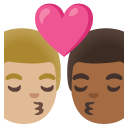
Appearance varies by platform and device. Google Noto, Twemoji, and OpenMoji are open-source.