👨🏽❤️💋👨🏽
The Emoji
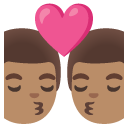
Kiss: Man, Man, Medium Skin Tone
U+1F468 U+1F3FD U+200D U+2764 U+FE0F U+200D U+1F48B U+200D U+1F468 U+1F3FD · :kiss_man_man_medium_skin_tone:
Trend 65
Meaning layers
- interpretation
- Used to celebrate gay relationships, show support for queer love, or express platonic bromance affection in an ironic or wholesome way.
- tiktok usage
- Appears in LGBTQ+ couple content, pride edits, and gay relationship TikToks; also used humorously between straight male friends to be playfully chaotic.
- irony level
- 3 / 10
Platform meanings
- meaning
- Represents gay love, LGBTQ+ pride, and couple affection; also used in chaotic straight-male-friendship humor.
- trend usage
- Featured in LGBTQ+ couple reveal videos, pride month countdowns, and 'rating my friends' bromance level' trend content.
- hashtags
- #GayCouple#LGBTQTikTok#PrideMonth#GayLove#QueerTikTok
- virality score
- 72 / 100
Cultural meanings
🇺🇸
Western / Gen-Z
Widely embraced as a positive symbol of gay love and LGBTQ+ pride; used freely and often in both sincere and ironic contexts by Gen Z.
🇵🇰
Pakistan & India
Largely taboo due to conservative social and legal attitudes toward same-sex relationships; rarely used and may provoke negative reactions, though urban LGBTQ+ communities use it privately.
🌍
Middle East
Considered highly inappropriate or offensive in most Middle Eastern contexts due to legal prohibitions and strong religious opposition to same-sex relationships; avoided in public digital spaces.
🌐
Global Neutral
Recognized internationally as a same-sex couple emoji; reception varies widely by cultural context, from celebration to discomfort.
🇧🇩
Bangladesh
Extremely rare and socially sensitive due to conservative religious norms; predominantly avoided and considered offensive in mainstream digital communication.
🇱🇰
Sri Lanka
Used very rarely given conservative social norms; LGBTQ+ individuals may use it in private spaces while it remains broadly avoided in public discourse.
🇨🇳
China
Subject to content moderation on Chinese platforms; used quietly within LGBTQ+ communities but largely suppressed in mainstream digital spaces.
🇯🇵
Japan
Used within LGBTQ+ communities and yaoi/BL fan culture; broader society is becoming more accepting though traditional values still limit mainstream use.
🇰🇷
South Korea
Growing use among LGBTQ+ youth and K-pop fan communities celebrating gay ships; still controversial in broader Korean society.
🇹🇼
Taiwan
Widely accepted and celebrated given Taiwan's status as the first Asian country to legalize same-sex marriage; used freely in progressive digital spaces.
🇭🇰
Hong Kong
Used among LGBTQ+ communities and younger progressive populations; broader use is growing but still faces social conservatism.
🇵🇭
Philippines
Mixed reception — LGBTQ+ communities use it openly, but deeply religious and conservative mainstream culture views it with discomfort.
🇮🇩
Indonesia
Rarely used publicly due to strong religious and cultural opposition to same-sex relationships; LGBTQ+ Indonesians may use it privately.
🇹🇭
Thailand
Relatively accepted in Thailand's LGBTQ+-friendly culture; used openly, particularly in Bangkok's vibrant queer community.
🇻🇳
Vietnam
Used within LGBTQ+ communities but avoided in mainstream contexts due to social conservatism; attitudes are slowly shifting among younger urban populations.
🇲🇾
Malaysia
Highly sensitive due to both civil and Sharia law opposition to same-sex relationships; essentially avoided in public digital communication.
🇸🇦
Saudi Arabia
Considered deeply offensive and prohibited; same-sex relationships are criminalized, making this emoji virtually unused in public Saudi digital spaces.
🇦🇪
UAE
Similar to Saudi Arabia — same-sex relationships are illegal and this emoji is avoided in public contexts; only used privately by LGBTQ+ individuals.
🇪🇬
Egypt
Strongly avoided due to conservative religious and social norms; LGBTQ+ expression is legally and socially suppressed.
🇹🇷
Turkey
Increasingly restricted as Turkey has grown more conservative; LGBTQ+ communities use it privately while public use faces social backlash.
🇮🇷
Iran
Not used in public digital spaces given the criminalization of same-sex relationships; extremely sensitive and potentially dangerous to display openly.
🇳🇬
Nigeria
Largely avoided due to strong religious opposition and legal prohibitions; LGBTQ+ individuals use it privately with significant caution.
🇿🇦
South Africa
More openly used than most African nations given South Africa's constitutional LGBTQ+ protections; celebrated in urban queer communities.
🇬🇧
UK & Ireland
Widely accepted and celebrated; used freely by LGBTQ+ individuals and allies in a culture with strong legal and social support for gay rights.
🇫🇷
France
Used openly in France's progressive social climate; associated with romantic love and LGBTQ+ pride in French digital culture.
🇩🇪
Germany
Widely accepted and used freely; Germany's supportive LGBTQ+ legal framework encourages open use of this emoji in digital communication.
🇪🇸
Spain & Italy
Spain is very accepting and uses it freely; Italy has a more mixed reception with progressive youth using it openly but traditional communities showing resistance.
🇧🇷
Brazil
Used openly in Brazil's large and vibrant LGBTQ+ community; one of the most active nations globally for Pride events and gay culture.
🇲🇽
Mexico
Used by LGBTQ+ communities in urban areas like Mexico City; broader acceptance is growing but regional conservatism influences reception.
🌎
Latin America
Varies significantly by country — more accepting in Argentina and Chile, more conservative in Central American nations; LGBTQ+ communities use it actively across the region.
🇦🇺
Australia & NZ
Widely accepted and celebrated following marriage equality legalization; used freely by gay couples and allies in a broadly progressive digital culture.
How its meaning shifted
- 2010
This specific emoji did not yet exist; same-sex couple representation in emoji was virtually absent and LGBTQ+ digital expression relied on text-based symbols.
- 2015
Introduced as part of Unicode 8.0's expanded couple emoji set; initially used primarily by LGBTQ+ advocates and gay couples celebrating new digital representation.
- 2020
Significantly more mainstream use following growing LGBTQ+ visibility; widely adopted during Pride Month content creation and as social media profile identifiers for gay couples.
- 2026
Fully normalized in LGBTQ+-accepting digital cultures; used casually by gay couples, allies, and in meme culture; skin tone variants like medium tone are increasingly specified for personal accuracy.
See it on every platform
Compare with
Adjacent emojis
- Often confused with
- kiss markbeating heartcouple with heart
- Can replace
- rainbow flagred heartkiss mark
Share & embed
Frequently asked
01What does the 👨🏽❤️💋👨🏽 Kiss: Man, Man, Medium Skin Tone emoji mean?
A kiss between two men with medium skin tone, represented by two male figures with a heart and lips emoji between them.
02What does 👨🏽❤️💋👨🏽 mean on TikTok?
Represents gay love, LGBTQ+ pride, and couple affection; also used in chaotic straight-male-friendship humor.
03What does 👨🏽❤️💋👨🏽 mean on WhatsApp?
Sent between gay partners as a digital kiss or expression of love; also used by supportive friends to celebrate a gay friend's relationship.
04What does 👨🏽❤️💋👨🏽 mean in Gen-Z slang?
Used to celebrate gay relationships, show support for queer love, or express platonic bromance affection in an ironic or wholesome way.
05Is the 👨🏽❤️💋👨🏽 emoji safe to use?
A celebration of gay romantic love and LGBTQ+ affection; used positively by couples, allies, and pride communities.
06What does 👨🏽❤️💋👨🏽 mean in texting?
This emoji carries significant emotional weight for LGBTQ+ individuals as it provides visible representation in digital communication, validating same-sex love in everyday contexts.
07What is the shortcode for 👨🏽❤️💋👨🏽?
The shortcode for Kiss: Man, Man, Medium Skin Tone is :kiss_man_man_medium_skin_tone:
08What does 👨🏽❤️💋👨🏽 mean in dating?
Used by gay men to signal romantic interest, affection, or to celebrate a new relationship milestone with a partner.
Safety & usage
- Safe meaning
- A celebration of gay romantic love and LGBTQ+ affection; used positively by couples, allies, and pride communities.
- Caution
- Can be used mockingly or as bait in homophobic online harassment; occasionally weaponized to provoke reactions from anti-LGBTQ+ users.
In regions where same-sex relationships are criminalized or heavily stigmatized, displaying this emoji publicly could expose individuals to social or legal risk. Content moderation may restrict this emoji on some platforms in conservative-country app versions.
How it looks across platforms
Appearance varies by platform and device. Google Noto, Twemoji, and OpenMoji are open-source.