👨🏽❤️💋👨🏻
The Emoji
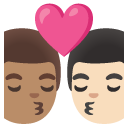
Kiss: Man, Man, Medium Skin Tone, Light Skin Tone
U+1F468 U+1F3FD U+200D U+2764 U+FE0F U+200D U+1F48B U+200D U+1F468 U+1F3FB · :kiss_man_man_medium_skin_tone_light_skin_tone:
Trend 68
Meaning layers
- interpretation
- Used to express queer male romance, ship culture, or solidarity with gay couples. Also deployed ironically in bromance contexts or to celebrate 'gay icons' among friend groups.
- tiktok usage
- Appears in LGBTQ+ couple content, 'ship' edits, pride montages, and comments celebrating queer relationships or fictional male pairings.
- irony level
- 3 / 10
Platform meanings
- meaning
- Represents queer male romance, pride, and ship culture; used in couple duets and LGBTQ+ storytelling videos.
- trend usage
- Placed in video captions and comments during Pride Month, in 'couples reacting' content, or in ship-edit compilations of male characters or celebrities.
- hashtags
- #GayCouple#PrideMonth#LGBTQTikTok#BoysLove#QueerTikTok
- virality score
- 72 / 100
Cultural meanings
🇺🇸
Western / Gen-Z
Widely embraced as a normalized and celebratory symbol of queer male love; used freely in social media and dating contexts without stigma among progressive Gen Z communities.
🇵🇰
Pakistan & India
Highly sensitive and rarely used openly due to social and legal stigma around homosexuality; may appear in private LGBTQ+ digital spaces but is largely avoided in public-facing content.
🌍
Middle East
Considered taboo and potentially dangerous to display in most Middle Eastern contexts due to criminalization of same-sex relationships; use is confined to anonymous or diaspora digital spaces.
🌐
Global Neutral
Represents same-sex male romantic affection; interpretation varies widely by local cultural and legal norms around LGBTQ+ rights.
🇧🇩
Bangladesh
Rarely used publicly due to strong social and legal prohibitions against homosexuality; its appearance online is mostly limited to hidden or anonymous LGBTQ+ communities.
🇱🇰
Sri Lanka
Infrequently used in public contexts given conservative social attitudes; slowly appearing in urban youth digital spaces influenced by global LGBTQ+ visibility.
🇨🇳
China
Used cautiously within LGBTQ+ communities on platforms like Weibo or private messaging apps; censorship and social pressure limit its open display but it exists in underground queer digital culture.
🇯🇵
Japan
Associated with the Boys' Love (BL) manga and anime culture as well as real gay relationships; accepted in fan communities and increasingly visible in urban youth culture.
🇰🇷
South Korea
Gaining visibility in queer fan communities, especially around K-drama ship culture and idol fandoms, though general social acceptance of same-sex relationships remains limited.
🇹🇼
Taiwan
Embraced openly given Taiwan's status as the first Asian country to legalize same-sex marriage; used freely to celebrate gay relationships and LGBTQ+ milestones.
🇭🇰
Hong Kong
Used in LGBTQ+ communities and among progressive urban youth; visibility has been complicated by the political climate but queer digital spaces remain active.
🇵🇭
Philippines
Used within LGBTQ+ communities which are culturally visible in Filipino society; while same-sex marriage is not yet legal, gay affection emojis are used relatively openly in digital spaces.
🇮🇩
Indonesia
Sensitive in use due to strong conservative religious attitudes; largely confined to private messaging or anonymous online queer communities.
🇹🇭
Thailand
Relatively accepted in urban and youth digital culture given Thailand's culturally visible LGBTQ+ community, though formal legal protections are still emerging.
🇻🇳
Vietnam
Used quietly within growing urban LGBTQ+ communities; social acceptance is increasing but traditional norms mean it is rarely displayed in mainstream or family-facing contexts.
🇲🇾
Malaysia
Rarely used openly due to strong religious and legal prohibitions; exists in private and anonymous LGBTQ+ digital communities.
🇸🇦
Saudi Arabia
Effectively prohibited in public digital expression due to strict laws against homosexuality; any usage carries significant social and legal risk.
🇦🇪
UAE
Similar to Saudi Arabia, its public use is avoided due to legal restrictions on homosexuality; limited to private and diaspora digital spaces.
🇪🇬
Egypt
Very rarely used openly; LGBTQ+ expression is heavily suppressed socially and legally, limiting this emoji to clandestine online communities.
🇹🇷
Turkey
Used in Istanbul's LGBTQ+ communities and online queer spaces, though increasing social conservatism has made public display more cautious.
🇮🇷
Iran
Essentially absent from public digital expression due to severe criminalization of homosexuality; any use is deeply underground.
🇳🇬
Nigeria
Rarely used openly due to strict anti-homosexuality laws and strong social stigma; confined to diaspora communities or anonymous online spaces.
🇿🇦
South Africa
One of the most LGBTQ+-inclusive countries in Africa with constitutional protections; this emoji is used freely and openly in queer and allied communities.
🇬🇧
UK & Ireland
Freely and commonly used to express gay male romance and pride; widely accepted across social media with strong cultural normalization following marriage equality.
🇫🇷
France
Used openly in one of Europe's most LGBTQ+-accepting countries; appears naturally in couple content, pride celebrations, and mainstream social media.
🇩🇪
Germany
Used freely in a socially progressive context; common in couple posts, pride content, and LGBTQ+ advocacy given Germany's strong legal protections.
🇪🇸
Spain & Italy
Openly used in Spain, which has a strong LGBTQ+ rights tradition; more cautious usage in parts of Italy where conservative social attitudes remain, though legal protections exist.
🇧🇷
Brazil
Used widely given Brazil's vibrant LGBTQ+ culture and one of the world's largest Pride parades; appears freely across social media despite ongoing political tensions.
🇲🇽
Mexico
Increasingly used in urban and youth digital culture following expanding marriage equality recognition; still navigates conservative regional attitudes in some areas.
🌎
Latin America
Usage varies widely across Latin America — openly used in progressive urban centers and among youth, while more cautious in rural or politically conservative regions.
🇦🇺
Australia & NZ
Used openly and without stigma following marriage equality legislation in both countries; a normalized part of queer and allied digital expression.
How its meaning shifted
- 2010
Emoji of this complexity did not exist; same-sex couple representation was entirely absent from standard emoji sets, and LGBTQ+ digital expression relied on text-based symbols like <3 or rainbow ASCII art.
- 2015
Basic same-sex couple emojis began appearing following Unicode 8.0 updates spurred by advocacy; skin tone modifiers were introduced, though multi-person skin tone combinations were not yet available.
- 2020
Fully available with dual skin tone combinations following Unicode updates; usage surged during the global Pride Month digital celebrations and increased visibility of LGBTQ+ rights discourse online.
- 2026
Normalized and widely used across platforms by LGBTQ+ individuals and allies; incorporated naturally into couple communication, pride content, and fandom culture with steadily growing cross-cultural acceptance.
See it on every platform
Compare with
Adjacent emojis
- Opposite
- broken heartno entryhandshake
- Often confused with
- kiss marktwo men holding handssmiling face with hearts
Share & embed
Frequently asked
01What does the 👨🏽❤️💋👨🏻 Kiss: Man, Man, Medium Skin Tone, Light Skin Tone emoji mean?
A kiss emoji depicting two men with medium and light skin tones, joined by a heart and kiss mark, representing a romantic kiss between two male-presenting individuals with distinct skin tone representation.
02What does 👨🏽❤️💋👨🏻 mean on TikTok?
Represents queer male romance, pride, and ship culture; used in couple duets and LGBTQ+ storytelling videos.
03What does 👨🏽❤️💋👨🏻 mean on WhatsApp?
Sent between male partners to express love and affection; a digital kiss in conversation.
04What does 👨🏽❤️💋👨🏻 mean in Gen-Z slang?
Used to express queer male romance, ship culture, or solidarity with gay couples. Also deployed ironically in bromance contexts or to celebrate 'gay icons' among friend groups.
05Is the 👨🏽❤️💋👨🏻 emoji safe to use?
A loving, romantic expression between two men; a positive representation of LGBTQ+ relationships used by couples, allies, and communities to celebrate queer love.
06What does 👨🏽❤️💋👨🏻 mean in texting?
Representation matters psychologically — seeing one's identity reflected in an emoji can affirm belonging and reduce social invisibility for LGBTQ+ individuals. The dual skin tones further signal inclusive diversity.
07What is the shortcode for 👨🏽❤️💋👨🏻?
The shortcode for Kiss: Man, Man, Medium Skin Tone, Light Skin Tone is :kiss_man_man_medium_skin_tone_light_skin_tone:
08What does 👨🏽❤️💋👨🏻 mean in dating?
Sent between two men to signal romantic interest, seal a flirtatious exchange, or affirm mutual attraction without words.
Safety & usage
- Safe meaning
- A loving, romantic expression between two men; a positive representation of LGBTQ+ relationships used by couples, allies, and communities to celebrate queer love.
- Caution
- In rare cases, weaponized by bad-faith actors to mock, harass, or troll anti-LGBTQ+ individuals, or used sarcastically in homophobic contexts to demean.
Displaying this emoji in regions with anti-LGBTQ+ laws or strongly hostile social environments could expose users to real-world harm. Platform moderation should protect its use from harassment.
How it looks across platforms
Appearance varies by platform and device. Google Noto, Twemoji, and OpenMoji are open-source.