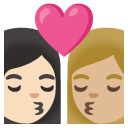
👩🏻❤️💋👩🏼
The Emoji
Kiss: Woman, Woman, Light Skin Tone, Medium-light Skin Tone
U+1F469 U+1F3FB U+200D U+2764 U+FE0F U+200D U+1F48B U+200D U+1F469 U+1F3FC · :kiss_woman_woman_light_skin_tone_mediumlight_skin_tone:
Trend 68
Meaning layers
- interpretation
- Used to express deep affection between two women, celebrate WLW (women-loving-women) relationships, or show intense platonic love between best friends. Also used by allies as a gesture of support.
- tiktok usage
- Appears in WLW couple content, pride celebration videos, 'bestie appreciation' posts, and sapphic aesthetic reels.
- irony level
- 2 / 10
Platform meanings
- meaning
- Represents WLW couple content, sapphic love, pride celebration, or deep platonic female friendship.
- trend usage
- Used heavily during Pride Month, in 'girlfriend reveal' videos, sapphic aesthetic compilations, and couple transition trends.
- hashtags
- #WLW#SapphicTikTok#GirlsWhoLikeGirls#PrideTikTok#LesbianCouple
- virality score
- 72 / 100
Cultural meanings
🇺🇸
Western / Gen-Z
Widely celebrated and normalized as a symbol of WLW love and sapphic identity, frequently used in social media without hesitation. Carries strong positive connotations of Pride, visibility, and queer joy.
🇵🇰
Pakistan & India
Rarely used openly due to social conservatism and legal or cultural stigma around same-sex relationships, though used within private LGBTQ+ circles and progressive urban communities. Online usage exists in underground queer digital spaces.
🌍
Middle East
Largely avoided in public digital communication due to strong religious and cultural prohibitions against same-sex relationships. Used cautiously and privately among LGBTQ+ individuals in the region.
🌐
Global Neutral
Universally recognized as representing a romantic kiss between two women, interpreted as a symbol of WLW love regardless of cultural context. Reaction varies based on local cultural attitudes toward LGBTQ+ relationships.
🇧🇩
Bangladesh
Not commonly used in mainstream digital culture due to conservative social norms. Reserved for private communication among LGBTQ+ individuals in Bangladesh's small but growing queer digital community.
🇱🇰
Sri Lanka
Used rarely in public contexts given societal conservatism, but present in private messages between LGBTQ+ individuals and in online support communities.
🇨🇳
China
Usage is carefully self-censored on domestic platforms due to government content restrictions on LGBTQ+ material. Present on international platforms and in private messages among Chinese LGBTQ+ users.
🇯🇵
Japan
Used in yuri (girl-on-girl) fan communities, BL and GL manga fandoms, and among LGBTQ+ Japanese youth. Japan's blend of pop culture openness and social conservatism means it's embraced online but rarely public.
🇰🇷
South Korea
Gaining visibility in K-pop fan communities and among younger LGBTQ+ Koreans, particularly in online spaces. Social stigma still limits public use, but digital queer communities are growing.
🇹🇼
Taiwan
Widely and positively used, as Taiwan is Asia's most progressive country on LGBTQ+ rights and legalized same-sex marriage in 2019. A celebrated symbol of love and equality in Taiwanese digital culture.
🇭🇰
Hong Kong
Used within LGBTQ+ communities and among progressive youth, especially in digital spaces. Post-2019 political climate has made some LGBTQ+ expression more cautious, but online usage persists.
🇵🇭
Philippines
Used in growing Filipino LGBTQ+ online communities and among WLW youth, though family-oriented Catholic cultural norms create some public hesitancy. Social media WLW communities use it frequently.
🇮🇩
Indonesia
Rarely used publicly due to strong Islamic cultural and legal pressures against LGBTQ+ expression. Exists in private digital spaces among Indonesian LGBTQ+ youth seeking community.
🇹🇭
Thailand
Used in Thai BL/GL fan culture and among LGBTQ+ Thai youth, with Thailand's relatively open attitude toward gender and sexuality making it more visible than in neighboring countries.
🇻🇳
Vietnam
Becoming more visible among younger Vietnamese LGBTQ+ users online, though traditional family values limit public expression. Used in private messages and in Vietnam's small but active queer digital community.
🇲🇾
Malaysia
Avoided in public digital communication due to legal and religious restrictions. Used privately among LGBTQ+ Malaysians in discreet online spaces.
🇸🇦
Saudi Arabia
Extremely rare in public digital use due to strict Islamic law and severe penalties for same-sex relationships. Not used outside of very private encrypted communication among LGBTQ+ individuals.
🇦🇪
UAE
Not used publicly due to legal prohibitions on same-sex relationships. May appear in private messages or among expatriate LGBTQ+ communities in more cosmopolitan circles.
🇪🇬
Egypt
Avoided publicly due to social conservatism and legal risk. Used in private among Egyptian LGBTQ+ individuals, often on international platforms with privacy settings.
🇹🇷
Turkey
Usage has decreased in public digital spaces as social and political attitudes toward LGBTQ+ have become more restrictive. Used within Turkish LGBTQ+ underground communities and diaspora online spaces.
🇮🇷
Iran
Essentially absent from public digital communication due to severe legal penalties. Used only in highly private or anonymous digital contexts among Iranian LGBTQ+ individuals.
🇳🇬
Nigeria
Rarely used publicly due to strong anti-LGBTQ+ laws and social norms. Used privately in Nigeria's small underground LGBTQ+ community and in diaspora communities abroad.
🇿🇦
South Africa
Used openly and positively, as South Africa has constitutional protections for LGBTQ+ individuals and a visible WLW community. Common in Cape Town's and Johannesburg's digital LGBTQ+ spaces.
🇬🇧
UK & Ireland
Commonly used and celebrated, with the UK and Ireland having strong LGBTQ+ rights and active queer communities. A normalized part of WLW digital expression on all major platforms.
🇫🇷
France
Used freely and positively in French digital culture, reflecting France's generally liberal attitudes toward sexual identity. Seen in WLW couple content and Pride-related posts.
🇩🇪
Germany
Used openly in German digital spaces, reflecting Germany's progressive LGBTQ+ rights landscape. Common in queer communities, Pride events, and WLW relationship content.
🇪🇸
Spain & Italy
Widely used in Spain with its strong LGBTQ+ culture, particularly around Madrid Pride. More nuanced in Italy where Catholic cultural influence creates regional variation in acceptance.
🇧🇷
Brazil
Widely used in Brazil's large and vibrant LGBTQ+ community, one of the most active globally. Common in São Paulo Pride content and WLW social media, though juxtaposed with ongoing anti-LGBTQ+ political tensions.
🇲🇽
Mexico
Used in Mexico's growing LGBTQ+ digital communities, especially in urban centers like Mexico City. Increasing visibility but mixed reception due to traditional machismo and Catholic cultural norms.
🌎
Latin America
Usage varies widely across Latin America — more open in Argentina and Uruguay, more guarded in conservative Central American nations. Generally growing among urban LGBTQ+ youth across the region.
🇦🇺
Australia & NZ
Openly and positively used in Australian and New Zealand digital culture, reflecting both countries' strong LGBTQ+ rights records and visible queer communities. A normalized symbol of WLW love.
How its meaning shifted
- 2010
Emoji sequences of this complexity did not yet exist in 2010. Same-sex couple representation in emoji was nonexistent, and WLW digital expression relied on text symbols or simple heart emojis.
- 2015
Basic couple emojis began appearing but lacked gender-specific same-sex options. WLW users often used workarounds like two woman emojis side by side to signal relationships.
- 2020
The emoji gained meaningful traction as Unicode and platform vendors expanded LGBTQ+ emoji support. Used frequently during Pride Month 2020 and amid broader LGBTQ+ visibility conversations.
- 2026
A well-established and normalized emoji used daily by WLW individuals globally. Skin tone variations are actively chosen to reflect individual identity, and the emoji appears across all major platforms without controversy in progressive digital spaces.
See it on every platform
Adjacent emojis
- Opposite
- kiss man manno entrybroken heart
- Often confused with
- two women holding handspeople huggingsmiling face with hearts
- Can replace
- red heartkiss marksparkling heart
Share & embed
Frequently asked
01What does the 👩🏻❤️💋👩🏼 Kiss: Woman, Woman, Light Skin Tone, Medium-light Skin Tone emoji mean?
A kiss emoji depicting two women with light skin tone and medium-light skin tone, joined by a red heart and kiss mark. It is a ZWJ sequence combining woman, light skin tone, heavy heart mark, kiss mark, and woman with medium-light skin tone.
02What does 👩🏻❤️💋👩🏼 mean on TikTok?
Represents WLW couple content, sapphic love, pride celebration, or deep platonic female friendship.
03What does 👩🏻❤️💋👩🏼 mean on WhatsApp?
Sent between female partners to express love and affection, or between close female friends in a deeply affectionate way.
04What does 👩🏻❤️💋👩🏼 mean in Gen-Z slang?
Used to express deep affection between two women, celebrate WLW (women-loving-women) relationships, or show intense platonic love between best friends. Also used by allies as a gesture of support.
05Is the 👩🏻❤️💋👩🏼 emoji safe to use?
A positive and loving representation of a romantic kiss between two women, celebrating WLW relationships and same-sex love.
06What does 👩🏻❤️💋👩🏼 mean in texting?
Carries strong emotional weight for WLW individuals as it directly represents their identity and relationship visibility. For allies, it signals acceptance and celebration of queer love.
07What is the shortcode for 👩🏻❤️💋👩🏼?
The shortcode for Kiss: Woman, Woman, Light Skin Tone, Medium-light Skin Tone is :kiss_woman_woman_light_skin_tone_mediumlight_skin_tone:
08What does 👩🏻❤️💋👩🏼 mean in dating?
Used by women to signal romantic interest in other women, confirm a relationship, or flirt openly with a female partner.
Safety & usage
- Safe meaning
- A positive and loving representation of a romantic kiss between two women, celebrating WLW relationships and same-sex love.
- Caution
- In rare hostile contexts, may be used mockingly or to harass WLW individuals or LGBTQ+ content creators by bad actors.
This emoji is entirely safe and positive in intent. Use caution when sharing in regions or platforms where LGBTQ+ expression faces legal or social risk. Not suitable for professional contexts outside of explicit diversity and inclusion communication.
How it looks across platforms
Appearance varies by platform and device. Google Noto, Twemoji, and OpenMoji are open-source.