👩🏾❤️💋👩🏼
The Emoji
Kiss: Woman, Woman, Medium-dark Skin Tone, Medium-light Skin Tone
U+1F469 U+1F3FE U+200D U+2764 U+FE0F U+200D U+1F48B U+200D U+1F469 U+1F3FC · :kiss_woman_woman_mediumdark_skin_tone_mediumlight_skin_tone:
Trend 68
Meaning layers
- interpretation
- Represents WLW (women loving women) relationships, sapphic love, or queer female affection. Used to celebrate lesbian and bisexual relationships with interracial or skin-tone diversity.
- tiktok usage
- Used in WLW TikTok content, sapphic couple videos, pride month content, and interracial couple appreciation posts.
- irony level
- 2 / 10
Platform meanings
- meaning
- Represents WLW love, sapphic couples, and queer female identity with skin tone diversity acknowledgment.
- trend usage
- Appears in pride month compilations, WLW couple POVs, interracial sapphic relationship content, and queer visibility campaigns.
- hashtags
- #WLW#SapphicTikTok#LesbianCouple#PrideTikTok#QueerLove
- virality score
- 72 / 100
Cultural meanings
🇺🇸
Western / Gen-Z
Widely celebrated as a proud symbol of WLW love and LGBTQ+ visibility; used freely and positively in everyday digital communication by Gen Z queer communities.
🇵🇰
Pakistan & India
Largely taboo due to cultural and legal attitudes toward same-sex relationships; rarely used positively and may attract negative attention or be misunderstood in mainstream usage.
🌍
Middle East
Highly sensitive given legal prohibitions on homosexuality across much of the region; usage is limited to private LGBTQ+ underground communities or diaspora groups.
🌐
Global Neutral
Recognized internationally as a same-sex romantic emoji; reception varies dramatically by cultural context but its meaning as queer female love is broadly understood.
🇧🇩
Bangladesh
Same-sex relationships are criminalized and heavily stigmatized; this emoji is rarely used openly and would be considered provocative or inappropriate in mainstream digital spaces.
🇱🇰
Sri Lanka
Homosexuality faces significant social stigma; the emoji is largely avoided in public digital spaces but may be used in private queer circles or by progressive youth.
🇨🇳
China
Same-sex content faces heavy censorship on major platforms; this emoji may be filtered or draw negative attention, though it exists in private queer community spaces.
🇯🇵
Japan
Japan has a growing visible queer community and the emoji is used positively among LGBTQ+ youth, though public displays of same-sex romance remain culturally reserved.
🇰🇷
South Korea
Used within South Korea's active but marginalized LGBTQ+ community; mainstream usage is limited due to significant social conservatism around queer relationships.
🇹🇼
Taiwan
Taiwan is the most LGBTQ+-progressive country in Asia; this emoji is used openly and positively to celebrate same-sex relationships, reflecting the country's inclusive culture.
🇭🇰
Hong Kong
Used among Hong Kong's visible LGBTQ+ community, particularly among young people and activists, though broader social attitudes remain mixed.
🇵🇭
Philippines
The Philippines has a culturally visible but legally unprotected queer community; the emoji is used in LGBTQ+ spaces but may face conservative backlash in religious contexts.
🇮🇩
Indonesia
Highly sensitive due to strong Islamic social norms and increasing anti-LGBTQ+ sentiment; usage is confined to private digital spaces and underground queer communities.
🇹🇭
Thailand
Thailand's relatively visible queer culture means this emoji is used more openly, especially in Bangkok's LGBTQ+ community, despite no legal same-sex partnership recognition.
🇻🇳
Vietnam
Vietnam has moved toward greater LGBTQ+ tolerance in urban areas; the emoji is used in progressive youth and queer community spaces, though legal recognition lags.
🇲🇾
Malaysia
Same-sex relations are criminalized and LGBTQ+ expression is actively restricted; this emoji is used only in private queer networks or by diaspora communities.
🇸🇦
Saudi Arabia
Strictly taboo with severe legal consequences for homosexuality; this emoji would be considered highly offensive in mainstream Saudi digital spaces and is not publicly used.
🇦🇪
UAE
Homosexuality is criminalized and LGBTQ+ visibility is suppressed; the emoji is not used in public digital spaces and carries significant legal risk.
🇪🇬
Egypt
Deeply stigmatized in Egypt's conservative social and legal environment; this emoji is avoided in mainstream usage and may draw harassment or legal scrutiny.
🇹🇷
Turkey
Turkey's LGBTQ+ community has faced increasing suppression; the emoji is used within underground queer networks but is politically charged given recent Pride bans.
🇮🇷
Iran
Homosexuality is illegal and can result in severe punishment; this emoji is entirely hidden from mainstream usage and only appears in anonymous or diaspora queer spaces.
🇳🇬
Nigeria
Same-sex relationships are criminalized with harsh penalties; this emoji is deeply taboo in Nigerian mainstream digital culture and limited to private underground queer networks.
🇿🇦
South Africa
South Africa has constitutional LGBTQ+ protections and a visible queer community; the emoji is used positively in progressive spaces, especially in Cape Town and Johannesburg.
🇬🇧
UK & Ireland
Widely embraced and used positively in both countries, which have strong LGBTQ+ rights protections and visible Pride cultures; common in mainstream and queer digital spaces alike.
🇫🇷
France
Used positively in France's progressive social culture; French LGBTQ+ communities use it openly, and mainstream acceptance is high especially among younger generations.
🇩🇪
Germany
Germany's strong legal LGBTQ+ protections and vibrant queer culture mean this emoji is used freely and positively in both queer-specific and mainstream digital spaces.
🇪🇸
Spain & Italy
Spain embraces it enthusiastically given its progressive LGBTQ+ laws and culture; Italy's usage is more concentrated in urban queer communities due to slower legal progress.
🇧🇷
Brazil
Brazil has a massive and vibrant LGBTQ+ community and one of the world's largest Pride parades; this emoji is used extensively and joyfully in Brazilian queer digital spaces.
🇲🇽
Mexico
Used positively in Mexico City's visible LGBTQ+ community and among progressive youth; broader cultural attitudes remain mixed due to religious and regional conservatism.
🌎
Latin America
Usage varies widely across Latin America — more open in Argentina, Chile, and Uruguay with legal same-sex marriage, and more restricted in Central American conservative contexts.
🇦🇺
Australia & NZ
Both countries have strong LGBTQ+ rights and visible queer communities; this emoji is used freely and positively in everyday digital communication without significant stigma.
How its meaning shifted
- 2010
This specific emoji combination did not exist in 2010; same-sex couple emojis were not yet part of Unicode, and LGBTQ+ digital expression relied on text-based symbols like </3 or 'GF'.
- 2015
Following the introduction of skin tone modifiers and growing LGBTQ+ emoji representation, early versions of same-sex kiss emojis began appearing, though rendering was inconsistent across platforms.
- 2020
Widely adopted during the COVID-era surge in digital communication and amplified Pride Month content; became a staple in WLW TikTok culture and LGBTQ+ Instagram communities.
- 2026
A normalized and celebrated part of queer digital expression; used across all major platforms by WLW couples, allies, and LGBTQ+ advocates with broad cultural recognition.
See it on every platform
Adjacent emojis
- Often confused with
- two women holding handspeople huggingwoman gesturing ok
- Can replace
- red heartrainbow flagsparkling heart
Share & embed
Frequently asked
01What does the 👩🏾❤️💋👩🏼 Kiss: Woman, Woman, Medium-dark Skin Tone, Medium-light Skin Tone emoji mean?
A kiss emoji depicting two women with medium-dark and medium-light skin tones, shown with a heart and lips indicating a romantic kiss.
02What does 👩🏾❤️💋👩🏼 mean on TikTok?
Represents WLW love, sapphic couples, and queer female identity with skin tone diversity acknowledgment.
03What does 👩🏾❤️💋👩🏼 mean on WhatsApp?
Sent between female partners as an affectionate kiss, or used by friends celebrating a queer couple.
04What does 👩🏾❤️💋👩🏼 mean in Gen-Z slang?
Represents WLW (women loving women) relationships, sapphic love, or queer female affection. Used to celebrate lesbian and bisexual relationships with interracial or skin-tone diversity.
05Is the 👩🏾❤️💋👩🏼 emoji safe to use?
A loving, romantic kiss between two women of different skin tones, representing same-sex female love and LGBTQ+ inclusivity.
06What does 👩🏾❤️💋👩🏼 mean in texting?
The combination of the kiss gesture with specific skin tones signals both romantic attachment and identity pride, creating a deeply affirming emotional statement for many users.
07What is the shortcode for 👩🏾❤️💋👩🏼?
The shortcode for Kiss: Woman, Woman, Medium-dark Skin Tone, Medium-light Skin Tone is :kiss_woman_woman_mediumdark_skin_tone_mediumlight_skin_tone:
08What does 👩🏾❤️💋👩🏼 mean in dating?
Used by women to flirt with or express romantic interest in other women, often sent in DMs or captions to signal availability or interest in WLW relationships.
Safety & usage
- Safe meaning
- A loving, romantic kiss between two women of different skin tones, representing same-sex female love and LGBTQ+ inclusivity.
- Caution
- In rare cases, used to harass or mock heterosexual individuals in online discourse, or weaponized in troll campaigns targeting conservative spaces.
While safe and affirming in progressive contexts, this emoji can attract targeted harassment toward LGBTQ+ users in hostile online environments or conservative cultural settings. Users in countries with anti-LGBTQ+ laws should exercise caution.
How it looks across platforms
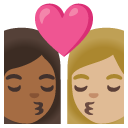
Appearance varies by platform and device. Google Noto, Twemoji, and OpenMoji are open-source.