👩🏾❤️💋👩🏽
The Emoji
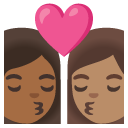
Kiss: Woman, Woman, Medium-dark Skin Tone, Medium Skin Tone
U+1F469 U+1F3FE U+200D U+2764 U+FE0F U+200D U+1F48B U+200D U+1F469 U+1F3FD · :kiss_woman_woman_mediumdark_skin_tone_medium_skin_tone:
Trend 68
Meaning layers
- interpretation
- Represents WLW (women loving women) affection, sapphic love, or queer relationship energy. Often used to celebrate queer identity, express love between girlfriends, or show solidarity with WLW couples.
- tiktok usage
- Appears in WLW couple content, sapphic POVs, 'girlfriend reveal' videos, and Pride-themed TikToks. Frequently paired with trending audio about queer love stories.
- irony level
- 1 / 10
Platform meanings
- meaning
- Represents WLW love and sapphic couple energy; a staple in queer TikTok culture for expressing romantic relationships between women.
- trend usage
- Featured in girlfriend reveal videos, 'my girlfriend is' trend formats, Pride month countdowns, WLW couple challenges, and sapphic aesthetic compilations.
- hashtags
- #WLW#SapphicTikTok#GirlfriendsOfTikTok#QueerCouple#PrideTikTok
- virality score
- 72 / 100
Cultural meanings
🇺🇸
Western / Gen-Z
Widely embraced as a positive symbol of WLW love and queer identity; Gen Z in the West treat it as a normalized, celebratory emoji with zero stigma.
🇵🇰
Pakistan & India
Rarely used openly due to social and legal taboos around same-sex relationships; when used, it tends to be in private chats among queer individuals as a coded expression of identity.
🌍
Middle East
Largely avoided in public digital communication given legal restrictions and social stigma around homosexuality; used only in private, encrypted contexts among LGBTQ+ individuals.
🌐
Global Neutral
Universally recognizable as a romantic kiss between two women; reception ranges from celebratory to controversial depending on local LGBTQ+ legal and cultural context.
🇧🇩
Bangladesh
Very rarely used in mainstream communication; same-sex relationships face legal prohibition, so this emoji is confined to private queer circles if used at all.
🇱🇰
Sri Lanka
Used cautiously; social stigma around same-sex relationships means this emoji is mostly confined to private or international queer online communities.
🇨🇳
China
Limited public usage due to censorship and social conservatism around LGBTQ+ content; more visible in private messaging and overseas Chinese queer communities.
🇯🇵
Japan
Used within Japanese LGBTQ+ communities and yuri (girls' love) fan culture; generally understood but not mainstream in everyday communication.
🇰🇷
South Korea
Gaining visibility in progressive and LGBTQ+ circles, especially among younger Koreans online; still considered niche relative to mainstream emoji usage.
🇹🇼
Taiwan
Widely accepted given Taiwan's progressive stance on LGBTQ+ rights and Asia's first legal same-sex marriage recognition; used openly and joyfully.
🇭🇰
Hong Kong
Used freely in queer digital spaces; LGBTQ+ visibility is growing despite ongoing political tensions affecting civil freedoms.
🇵🇭
Philippines
Used openly in LGBTQ+ communities which are vibrant and visible; Filipino culture has a complex but often accepting relationship with queer identity in urban areas.
🇮🇩
Indonesia
Used cautiously; growing anti-LGBTQ+ sentiment and regional regulations mean this emoji is primarily used in private queer networks.
🇹🇭
Thailand
Relatively accepted given Thailand's visible LGBTQ+ culture, though legal recognition of same-sex unions is still evolving; used in queer social media freely.
🇻🇳
Vietnam
Limited public use; while Vietnam has decriminalized homosexuality, social stigma persists, so this emoji is mostly used in private or activist queer spaces.
🇲🇾
Malaysia
Rarely used publicly due to strict legal and religious prohibitions on same-sex relationships; confined to private or diaspora-based queer digital communication.
🇸🇦
Saudi Arabia
Effectively taboo in public digital communication given strict legal and religious prohibitions; usage, if any, is entirely private and risk-laden.
🇦🇪
UAE
Not used openly due to legal restrictions on homosexuality; any usage is strictly private and among international or expat communities.
🇪🇬
Egypt
Rarely used publicly given strong social conservatism and legal risks around LGBTQ+ expression; limited to private queer digital spaces.
🇹🇷
Turkey
Used within Turkish LGBTQ+ activist and community spaces despite increasing political hostility toward queer rights and Pride events.
🇮🇷
Iran
Extremely limited due to severe legal penalties for homosexuality; usage, if any, is exclusively in highly private encrypted communications.
🇳🇬
Nigeria
Very rarely used publicly given criminalization of same-sex relationships and strong social stigma; exists only in underground queer digital communities.
🇿🇦
South Africa
More openly used than elsewhere on the continent given South Africa's constitutional LGBTQ+ protections and visible queer community; embraced in urban queer circles.
🇬🇧
UK & Ireland
Widely used and positively received; both countries have strong LGBTQ+ rights frameworks and active Pride cultures that normalize this emoji.
🇫🇷
France
Openly used in LGBTQ+ and general progressive social spaces; French culture's laïcité and social liberalism support comfortable usage.
🇩🇪
Germany
Accepted and visible in LGBTQ+ communities and among progressive Germans; used openly on social media especially during CSD (Pride) season.
🇪🇸
Spain & Italy
Freely used in Spain given strong LGBTQ+ rights; in Italy usage is more community-specific though growing with increasing queer visibility.
🇧🇷
Brazil
Enthusiastically used in Brazil's large and expressive LGBTQ+ community, one of the world's most active; common in Pride content, couple posts, and queer meme culture.
🇲🇽
Mexico
Used openly in urban LGBTQ+ communities especially in cities like Mexico City and Guadalajara; queer visibility is growing though regional attitudes vary.
🌎
Latin America
Variable across the region; widely used in LGBTQ+ circles in more progressive countries (Argentina, Chile, Colombia) and more cautiously in others.
🇦🇺
Australia & NZ
Fully normalized and positively embraced; both countries have strong LGBTQ+ rights records and active queer digital communities using this emoji freely.
How its meaning shifted
- 2010
This specific emoji did not exist; same-sex couple representation in emoji was completely absent, and skin tone modifiers had not yet been introduced.
- 2015
Basic same-sex couple emojis were introduced around this period but lacked skin tone diversity; this specific multi-skin-tone combination was not yet available.
- 2020
Multi-skin-tone couple emojis including WLW combinations were introduced (Unicode 13.1, 2021 rollout beginning); early adopters in LGBTQ+ communities celebrated the increased representation.
- 2026
Fully integrated into WLW digital culture; used naturally in everyday romantic communication, Pride content, and queer identity expression across all major platforms.
See it on every platform
Compare with
Adjacent emojis
- Often confused with
- woman medium dark skin tonekisskiss woman man
- Can replace
- red heartkiss markrevolving hearts
Share & embed
Frequently asked
01What does the 👩🏾❤️💋👩🏽 Kiss: Woman, Woman, Medium-dark Skin Tone, Medium Skin Tone emoji mean?
A kiss between two women, with the left woman having a medium-dark skin tone and the right woman having a medium skin tone. Composed of woman + medium-dark skin tone + zero-width joiner + red heart + zero-width joiner + kiss mark + zero-width joiner + woman + medium skin tone.
02What does 👩🏾❤️💋👩🏽 mean on TikTok?
Represents WLW love and sapphic couple energy; a staple in queer TikTok culture for expressing romantic relationships between women.
03What does 👩🏾❤️💋👩🏽 mean on WhatsApp?
A warm, direct expression of romantic love between two women in private messages; highly personal when skin tones match the senders.
04What does 👩🏾❤️💋👩🏽 mean in Gen-Z slang?
Represents WLW (women loving women) affection, sapphic love, or queer relationship energy. Often used to celebrate queer identity, express love between girlfriends, or show solidarity with WLW couples.
05Is the 👩🏾❤️💋👩🏽 emoji safe to use?
A positive, loving expression of a romantic kiss between two women; used to celebrate WLW relationships, queer identity, and LGBTQ+ affirmation.
06What does 👩🏾❤️💋👩🏽 mean in texting?
Carries significant weight for LGBTQ+ individuals as a form of digital visibility and self-expression. Seeing one's relationship mirrored in an emoji can validate identity and signal safe social spaces.
07What is the shortcode for 👩🏾❤️💋👩🏽?
The shortcode for Kiss: Woman, Woman, Medium-dark Skin Tone, Medium Skin Tone is :kiss_woman_woman_mediumdark_skin_tone_medium_skin_tone:
08What does 👩🏾❤️💋👩🏽 mean in dating?
Sent by one woman to another as a direct expression of romantic interest or deep affection. Signals clear romantic intent in WLW contexts.
Safety & usage
- Safe meaning
- A positive, loving expression of a romantic kiss between two women; used to celebrate WLW relationships, queer identity, and LGBTQ+ affirmation.
- Caution
- Could be used mockingly or fetishistically by bad-faith actors; may be deployed by harassers to taunt anti-LGBTQ+ individuals, though this is uncommon.
In countries where homosexuality is criminalized or heavily stigmatized, using this emoji publicly could expose individuals to social harm or legal risk. Platform content moderation should be aware of regional contexts when flagging or amplifying content containing this emoji.
How it looks across platforms
Appearance varies by platform and device. Google Noto, Twemoji, and OpenMoji are open-source.