👩🏾
The Emoji
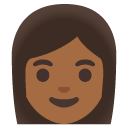
Woman: Medium-dark Skin Tone
U+1F469 U+1F3FE · :woman_mediumdark_skin_tone:
Trend 62
Meaning layers
- interpretation
- Used to represent oneself or a friend who is a woman of color, often paired with other emojis to express identity, solidarity, or aesthetic. Also used in 'girl math' or 'that girl' culture to signal a specific vibe or persona.
- tiktok usage
- Appears in 'that girl' aesthetic content, POC representation videos, and self-affirmation posts. Often stacked with crown or star emojis to express confidence.
- irony level
- 2 / 10
Platform meanings
- meaning
- Represents a woman of medium-dark skin tone; used for self-expression, POC representation, and identity-based content.
- trend usage
- Frequently appears in 'that girl' routines, afro-latina/black girl content, skin care representation videos, and empowerment duets.
- hashtags
- #melaninpoppin#thatgirl#representationmatters#womenofcolor#brownskingirl
- virality score
- 65 / 100
Cultural meanings
🇺🇸
Western / Gen-Z
Widely used as a self-identifier or reference to women of color, strongly tied to representation and identity movements. Frequently paired with empowerment language in digital spaces.
🇵🇰
Pakistan & India
Used to represent South Asian women, particularly those with medium-dark skin tones, in a context where colorism makes this emoji politically and emotionally significant. Gaining traction in body positivity and anti-colorism conversations.
🌍
Middle East
Used to represent Arab or Middle Eastern women, particularly in contexts celebrating natural beauty or identity. Skin tone representation resonates in cultures where lighter skin has historically been idealized.
🌐
Global Neutral
Universally recognized as a woman emoji with a darker skin tone, used for basic representation and identification across languages and cultures.
🇧🇩
Bangladesh
Used to represent Bangladeshi women in digital communication, especially significant as fair skin bias is prevalent and this emoji challenges conventional beauty norms.
🇱🇰
Sri Lanka
Represents Sri Lankan women in messaging and social media; meaningful in contexts pushing back against colorism prevalent in Sri Lankan society.
🇨🇳
China
Less commonly used due to cultural preference for lighter skin tones in mainstream Chinese beauty standards, but present in diversity-focused and global-facing content.
🇯🇵
Japan
Infrequently used in mainstream Japanese digital culture due to skin tone ideals, but found in diversity advocacy content and international communities.
🇰🇷
South Korea
Occasionally used in K-pop fan communities and diversity discussions, though Korean beauty standards historically favor lighter skin. Growing use in anti-colorism content.
🇹🇼
Taiwan
Used in international and multicultural online spaces; less common in everyday Taiwanese messaging but present in representation-focused content.
🇭🇰
Hong Kong
Appears in diverse online communities and international discussions; more common among younger, globally-minded users.
🇵🇭
Philippines
Significant in Filipino contexts given widespread colorism; used in 'morena pride' movements celebrating medium-to-dark skin tones. Empowering and culturally resonant.
🇮🇩
Indonesia
Used in representation and diversity content, meaningful in a country with diverse skin tones where lighter skin has been socially privileged.
🇹🇭
Thailand
Found in anti-colorism and body positivity content; Thai beauty standards often favor lighter skin, making this emoji a subtle statement of melanin pride.
🇻🇳
Vietnam
Used in global-facing and diversity content; less common in everyday Vietnamese messaging where lighter skin is culturally favored.
🇲🇾
Malaysia
Used by Malaysian women of darker skin tones for self-representation, particularly in Malay, Indian-Malaysian, and indigenous communities celebrating their identity.
🇸🇦
Saudi Arabia
Used among Saudi women on social media for self-representation; meaningful in a cultural context where appearance norms are strongly held but diversity is increasingly celebrated online.
🇦🇪
UAE
Common in the UAE's multicultural digital space, used by women from South Asian, African, and Arab backgrounds to represent themselves.
🇪🇬
Egypt
Used to represent Egyptian women, particularly relevant in discussions around beauty and identity in a diverse North African context.
🇹🇷
Turkey
Used by Turkish women with medium-dark skin tones for self-identification; Turkey's diverse ethnic makeup makes this emoji broadly relatable.
🇮🇷
Iran
Found in identity and self-expression posts by Iranian women; skin tone diversity is present in Iran and this emoji reflects that.
🇳🇬
Nigeria
Widely used and celebrated in Nigerian digital culture as a representation of Nigerian women; paired with pride and empowerment language. Common in everyday messaging.
🇿🇦
South Africa
Strongly resonant in South Africa's diverse cultural context; used across Zulu, Xhosa, Coloured, and Indian South African communities to represent women.
🇬🇧
UK & Ireland
Used by British and Irish women of color, particularly in South Asian, Black British, and mixed-heritage communities for self-representation.
🇫🇷
France
Used in French digital spaces by women from Afro-Caribbean, North African, and Sub-Saharan African backgrounds to represent their identity.
🇩🇪
Germany
Found in German social media among women of color, Turkish-German, and Afro-German communities; used in diversity and representation discussions.
🇪🇸
Spain & Italy
Used by women of Latin American heritage in Spain and African or South American heritage in Italy to represent themselves online.
🇧🇷
Brazil
Very commonly used in Brazil given the country's rich racial diversity; associated with 'mulher morena' identity and brown/Black Brazilian pride movements.
🇲🇽
Mexico
Used to represent Mexican women with medium-dark skin tones, particularly in 'morena pride' and indigenous identity movements celebrating non-European features.
🌎
Latin America
Broadly used across Latin America in 'morena' and Afro-Latina pride contexts; meaningful in regions where colorism is deeply embedded and pushback is growing.
🇦🇺
Australia & NZ
Used by Aboriginal, Torres Strait Islander, Pacific Islander, and South/Southeast Asian women in Australia and New Zealand to represent their identity digitally.
How its meaning shifted
- 2010
Skin tone modifier emojis did not yet exist; generic yellow woman emoji was the only option, leading to widespread calls for diversity in emoji design.
- 2015
Skin tone modifiers were introduced in Unicode 8.0, making this emoji newly available. Early adoption was enthusiastic among advocacy communities celebrating representation.
- 2020
Widespread normalization of skin tone selection; used heavily in Black Lives Matter movement content, diversity advocacy, and everyday self-expression by women of color.
- 2026
Fully integrated into everyday digital communication as a standard self-identifier; used across all social platforms in empowerment, beauty, professional, and casual contexts without special emphasis.
See it on every platform
Compare with
Adjacent emojis
Share & embed
Frequently asked
01What does the 👩🏾 Woman: Medium-dark Skin Tone emoji mean?
A woman emoji with medium-dark skin tone, represented as a female human figure using Fitzpatrick skin tone modifier type V.
02What does 👩🏾 mean on TikTok?
Represents a woman of medium-dark skin tone; used for self-expression, POC representation, and identity-based content.
03What does 👩🏾 mean on WhatsApp?
Used to refer to oneself or a specific woman in conversation, especially when skin tone identity is relevant or celebratory.
04What does 👩🏾 mean in Gen-Z slang?
Used to represent oneself or a friend who is a woman of color, often paired with other emojis to express identity, solidarity, or aesthetic. Also used in 'girl math' or 'that girl' culture to signal a specific vibe or persona.
05Is the 👩🏾 emoji safe to use?
A representation of a woman with medium-dark skin tone; used for identity expression, self-representation, diversity celebration, and everyday reference.
06What does 👩🏾 mean in texting?
Skin tone inclusive emojis carry significant psychological weight for users who see themselves represented. Using or receiving this emoji can signal acknowledgment and validation of identity, fostering a sense of belonging.
07What is the shortcode for 👩🏾?
The shortcode for Woman: Medium-dark Skin Tone is :woman_mediumdark_skin_tone:
08What does 👩🏾 mean in dating?
Used by or about a woman with medium-dark skin tone in a romantic context, sometimes to signal attraction or describe someone as beautiful. Occasionally stacked with heart emojis.
Safety & usage
- Safe meaning
- A representation of a woman with medium-dark skin tone; used for identity expression, self-representation, diversity celebration, and everyday reference.
- Caution
- In rare toxic contexts, could be used in racially charged commentary or mockery targeting women of color, though this is uncommon.
Generally safe and positive. Be mindful of context when pairing with other emojis, as combinations could unintentionally carry racial undertones in specific digital communities.
How it looks across platforms

Appearance varies by platform and device. Google Noto, Twemoji, and OpenMoji are open-source.