👩🏽❤️💋👩🏼
The Emoji
Kiss: Woman, Woman, Medium Skin Tone, Medium-light Skin Tone
U+1F469 U+1F3FD U+200D U+2764 U+FE0F U+200D U+1F48B U+200D U+1F469 U+1F3FC · :kiss_woman_woman_medium_skin_tone_mediumlight_skin_tone:
Trend 65
Meaning layers
- interpretation
- Used to express sapphic love, WLW (women-loving-women) relationships, or girl-girl affection. Also casually used by close female friends to express platonic love and closeness.
- tiktok usage
- Appears in WLW content, sapphic edits, pride videos, and 'girlfriend reveal' TikToks. Also used ironically in female friendship content.
- irony level
- 2 / 10
Platform meanings
- meaning
- Represents WLW relationships, sapphic content, and LGBTQ+ pride. Common in couple reveals and girlfriend appreciation videos.
- trend usage
- Heavily used in sapphic TikTok subculture, pride month trends, 'soft girl' aesthetic videos, and female friendship appreciation posts.
- hashtags
- #WLW#SapphicTikTok#GirlsWhoLikeGirls#PrideTikTok#LesbiansOfTikTok
- virality score
- 72 / 100
Cultural meanings
🇺🇸
Western / Gen-Z
Widely embraced and normalized as a symbol of WLW love and sapphic identity. Frequently used without hesitation in both romantic and ironic friendship contexts.
🇵🇰
Pakistan & India
Largely taboo due to social and legal attitudes toward same-sex relationships; rarely used openly and may cause controversy if posted publicly. Privately used by LGBTQ+ individuals in these regions within safe digital spaces.
🌍
Middle East
Considered highly inappropriate in most Middle Eastern contexts due to legal prohibitions and cultural stigma around same-sex relationships. Its use is confined to private LGBTQ+ communities.
🌐
Global Neutral
Recognized internationally as a symbol of same-sex female romance; interpretation varies widely based on local cultural and legal attitudes toward LGBTQ+ relationships.
🇧🇩
Bangladesh
Extremely rare in public use due to legal and social prohibitions on same-sex relationships. Known primarily among younger, digitally connected demographics who are aware of global LGBTQ+ culture.
🇱🇰
Sri Lanka
Rarely used publicly; same-sex relationships face social stigma, though a small urban LGBTQ+ community may use it in private digital spaces.
🇨🇳
China
Used cautiously due to state censorship of LGBTQ+ content. Within domestic LGBTQ+ communities, alternative coded language is often preferred, though the emoji itself may appear in less censored platforms.
🇯🇵
Japan
Understood clearly as a romantic WLW emoji. Japan has a visible yuri (girls' love) culture in manga and anime, so the emoji resonates with both LGBTQ+ individuals and yuri fandom communities.
🇰🇷
South Korea
Awareness is growing among younger Koreans influenced by global LGBTQ+ culture, though open use remains socially sensitive. Used within Korea's developing LGBTQ+ activist and community spaces.
🇹🇼
Taiwan
Widely accepted and positively received; Taiwan is the most LGBTQ+-inclusive country in Asia, having legalized same-sex marriage. This emoji is used freely and joyfully.
🇭🇰
Hong Kong
Used within Hong Kong's active LGBTQ+ community, though political climate shifts have added complexity. Still relatively open compared to mainland China.
🇵🇭
Philippines
Mixed reception; while LGBTQ+ culture is highly visible in Filipino media, legal recognition of same-sex relationships is lacking. Used openly by many younger Filipinos in casual digital communication.
🇮🇩
Indonesia
Rarely used publicly due to strong social and religious norms against same-sex relationships. Confined to private LGBTQ+ digital spaces and used with caution.
🇹🇭
Thailand
Used relatively openly, especially among younger Thais who consume Thai GL (Girls' Love) dramas. Thailand's visible LGBTQ+ community and entertainment industry normalize its use.
🇻🇳
Vietnam
Increasingly visible among younger Vietnamese LGBTQ+ individuals and K-pop/Thai GL drama fans. Public use remains cautious but is growing in urban digital spaces.
🇲🇾
Malaysia
Highly sensitive due to religious laws criminalizing same-sex behavior. Used only in private, safe digital spaces by LGBTQ+ individuals.
🇸🇦
Saudi Arabia
Essentially prohibited in public discourse due to strict laws and cultural norms. Knowledge of the emoji exists primarily among digitally savvy youth exposed to global content.
🇦🇪
UAE
Similar to Saudi Arabia, use is very restricted publicly. LGBTQ+ individuals in the UAE use such symbols only in highly private contexts.
🇪🇬
Egypt
Rarely used openly due to social conservatism and legal risks. Known in urban youth circles aware of global LGBTQ+ culture but avoided in public posts.
🇹🇷
Turkey
Increasingly contentious as LGBTQ+ rights have faced governmental pushback in recent years. Used within Turkey's resilient LGBTQ+ community but with growing caution.
🇮🇷
Iran
Essentially unused publicly due to severe legal consequences for same-sex relations. Known among digitally connected youth through VPN-accessed global content.
🇳🇬
Nigeria
Very rare in public use due to legal prohibitions and strong social stigma. A small urban LGBTQ+ community may use it in private encrypted communication.
🇿🇦
South Africa
Relatively openly used; South Africa has constitutional protections for LGBTQ+ rights and a visible queer community, especially in Cape Town and Johannesburg.
🇬🇧
UK & Ireland
Widely used and normalized across social media. Both the UK and Ireland have strong LGBTQ+ rights frameworks and culturally affirming communities. Used freely in both romantic and friendly contexts.
🇫🇷
France
Accepted and used openly as part of mainstream digital communication. France's cultural tradition of romantic expression and its legal equality framework make this emoji entirely unremarkable.
🇩🇪
Germany
Normalized and used freely within Germany's well-established LGBTQ+ community and broader progressive culture. Common in CSD (Christopher Street Day) content.
🇪🇸
Spain & Italy
In Spain, widely accepted and used openly due to strong LGBTQ+ rights. In Italy, usage is positive but slightly more reserved as legal rights for same-sex couples have been slower to advance.
🇧🇷
Brazil
Enthusiastically used in Brazil, which has one of the world's largest Pride events. WLW couples and LGBTQ+ advocates use this emoji freely, though regional disparities in acceptance exist.
🇲🇽
Mexico
Used openly in urban LGBTQ+ communities, particularly in Mexico City. Growing visibility of queer culture drives usage, though acceptance varies significantly by region.
🌎
Latin America
Usage varies by country; generally more open in urban areas of progressive nations like Argentina (which legalized same-sex marriage early) and more cautious in conservative regions.
🇦🇺
Australia & NZ
Freely and positively used across both countries. Australia's 2017 marriage equality vote and New Zealand's long history of LGBTQ+ rights make this emoji entirely mainstream.
How its meaning shifted
- 2010
This specific emoji did not exist. Same-sex couple representation in emoji was nonexistent, and users relied on creative combinations of heart and face emojis to suggest romantic pairs.
- 2015
Basic couple kiss emojis began appearing, but skin tone and same-sex variants were extremely limited. WLW couples had minimal emoji representation.
- 2020
Multi-skin-tone WLW kiss emojis became more widely available as Unicode expanded inclusive emoji sets. Usage surged during pandemic lockdowns and the Black Lives Matter/Pride intersectional wave.
- 2026
Fully normalized in LGBTQ+ digital spaces globally. Used freely in couple content, sapphic fandom, and pride advocacy. Increasingly common even in casual female friendship contexts among younger generations.
See it on every platform
Adjacent emojis
- Often confused with
- women holding handspeople huggingsmiling face with hearts
- Can replace
- two heartsrainbow flagred heart
Share & embed
Frequently asked
01What does the 👩🏽❤️💋👩🏼 Kiss: Woman, Woman, Medium Skin Tone, Medium-light Skin Tone emoji mean?
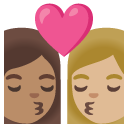
A kiss emoji depicting two women with medium skin tone and medium-light skin tone, shown as a couple sharing a kiss with a red heart between them.
02What does 👩🏽❤️💋👩🏼 mean on TikTok?
Represents WLW relationships, sapphic content, and LGBTQ+ pride. Common in couple reveals and girlfriend appreciation videos.
03What does 👩🏽❤️💋👩🏼 mean on WhatsApp?
Sent between female partners to express love and affection. Also used by close female friends in some cultural contexts to express strong platonic bonds.
04What does 👩🏽❤️💋👩🏼 mean in Gen-Z slang?
Used to express sapphic love, WLW (women-loving-women) relationships, or girl-girl affection. Also casually used by close female friends to express platonic love and closeness.
05Is the 👩🏽❤️💋👩🏼 emoji safe to use?
A positive, affirming emoji representing love and romance between two women. Used in LGBTQ+ communities to celebrate same-sex relationships and identity.
06What does 👩🏽❤️💋👩🏼 mean in texting?
Carries significant emotional weight for LGBTQ+ individuals as a symbol of visibility and validation. Represents not just romantic affection but also identity affirmation and pride.
07What is the shortcode for 👩🏽❤️💋👩🏼?
The shortcode for Kiss: Woman, Woman, Medium Skin Tone, Medium-light Skin Tone is :kiss_woman_woman_medium_skin_tone_mediumlight_skin_tone:
08What does 👩🏽❤️💋👩🏼 mean in dating?
Sent between women who are romantically interested in each other; signals clear romantic intent or attraction in a dating context.
Safety & usage
- Safe meaning
- A positive, affirming emoji representing love and romance between two women. Used in LGBTQ+ communities to celebrate same-sex relationships and identity.
- Caution
- Rarely weaponized negatively, but can be sent mockingly or as harassment toward LGBTQ+ individuals in hostile contexts.
May be flagged or restricted on platforms operating in countries with anti-LGBTQ+ legislation. Could attract negative attention or trolling when used publicly in culturally hostile environments. Should be used thoughtfully in professional contexts.
How it looks across platforms
Appearance varies by platform and device. Google Noto, Twemoji, and OpenMoji are open-source.