👨🏽🎨
The Emoji
Man Artist: Medium Skin Tone
U+1F468 U+1F3FD U+200D U+1F3A8 · :man_artist_medium_skin_tone:
Trend 58
Meaning layers
- interpretation
- Used to signal creative identity, aesthetic obsession, or someone who considers themselves artsy — often with a hint of self-aware pretentiousness. Also used to describe someone who sees the world differently or is perpetually broke but passionate.
- tiktok usage
- Appears in 'day in my life as an art student' content, creative process videos, and ironically in posts about starving artists or choosing passion over profit.
- irony level
- 5 / 10
Platform meanings
- meaning
- Symbol of creative identity, art student culture, and the romanticized chaos of being a visual artist.
- trend usage
- Used in 'art student POV' videos, timelapse drawing content, aesthetic grwm videos, and viral posts about the art world's absurdity.
- hashtags
- #ArtTok#ArtStudent#CreativeLife#ArtistCheck#PaletteVibes
- virality score
- 62 / 100
Cultural meanings
🇺🇸
Western / Gen-Z
Used authentically to claim creative identity and ironically to roast the 'I'm an artist' personality type. Strong presence in art school and indie creative culture.
🇵🇰
Pakistan & India
Represents the growing class of young digital artists, graphic designers, and illustrators — often used with pride by creatives breaking traditional career expectations.
🌍
Middle East
Symbolizes the rising generation of Arab and Persian visual artists navigating cultural expression through modern media, used with pride in creative communities.
🌐
Global Neutral
Universally understood as representing an artist or creative person, minimal ambiguity across cultures when used in professional or descriptive contexts.
🇧🇩
Bangladesh
Used by the emerging community of young Bangladeshi digital artists and illustrators who are building international freelance careers.
🇱🇰
Sri Lanka
Represents artisans and modern visual artists alike; used in social media by creatives who blend traditional Sri Lankan aesthetics with contemporary design.
🇨🇳
China
Used in contexts of creative professions and art school culture; also appears in posts by artists navigating the tension between commercial art and fine arts.
🇯🇵
Japan
In Japan, closely associated with manga artists, illustrators, and concept artists — a highly respected professional identity in popular culture.
🇰🇷
South Korea
Connected to the vibrant webtoon artist culture, K-pop fan art community, and the broader Korean wave of visual creativity. Used with genuine admiration.
🇹🇼
Taiwan
Common among Taiwan's prolific illustration and indie comic artist community, used both professionally and in casual creative identity expression.
🇭🇰
Hong Kong
Used by local artists and designers who blend East-West aesthetics; appears in content about the HK art scene and creative freelance life.
🇵🇭
Philippines
Widely used among Filipino digital artists, many of whom work internationally as freelance illustrators — a point of pride and community identity.
🇮🇩
Indonesia
Represents the booming Indonesian creative economy; used by artists, designers, and content creators who are reshaping the country's digital culture.
🇹🇭
Thailand
Associated with Thailand's vibrant street art scene, traditional art forms, and the growing community of Thai digital artists and animators.
🇻🇳
Vietnam
Used by Vietnamese graphic designers and fine artists who are increasingly visible in Southeast Asian creative communities and global platforms.
🇲🇾
Malaysia
Represents Malaysian artists navigating multicultural creative influences; common in local art communities and design school social media.
🇸🇦
Saudi Arabia
Increasingly used as the Saudi creative sector grows — represents young artists supported by Vision 2030's cultural investment and the expanding entertainment industry.
🇦🇪
UAE
Common in Dubai and Abu Dhabi's thriving arts scene, used by both local Emirati artists and the international creative community based in the UAE.
🇪🇬
Egypt
Represents Egypt's rich artistic heritage meeting its modern creative youth — used by muralists, graphic designers, and art school students.
🇹🇷
Turkey
Used by Turkish artists who blend Ottoman and contemporary aesthetics; appears frequently in Istanbul's vibrant arts and design community content.
🇮🇷
Iran
Used carefully but genuinely by Iranian artists, many of whom use social media to share work that bridges traditional Persian art and modern expression.
🇳🇬
Nigeria
Represents the booming Nigerian art scene — from Afrofuturist painters to digital illustrators — used with tremendous pride and community energy.
🇿🇦
South Africa
Used by South African creatives in a diverse art landscape; common among artists whose work addresses identity, heritage, and social commentary.
🇬🇧
UK & Ireland
Used in British and Irish creative communities with both sincerity and dry wit; common in art school culture and indie creative spaces.
🇫🇷
France
In France, associated with the deeply respected tradition of fine arts and the contemporary Parisian creative scene — used with cultural gravitas.
🇩🇪
Germany
Used in German creative and design communities; appears in content related to the Bauhaus legacy, contemporary art schools, and Berlin's art scene.
🇪🇸
Spain & Italy
Carries strong romantic and cultural weight in Spain and Italy, associated with centuries of artistic tradition meeting modern creative expression.
🇧🇷
Brazil
Represents Brazil's explosive street art, digital art, and graffiti culture — used with high energy and pride by a young, vibrant creative community.
🇲🇽
Mexico
Deeply resonant in Mexico where art is a national identity — used by artists inspired by muralism, folk art, and contemporary Mexican visual culture.
🌎
Latin America
Across Latin America, symbolizes the creative spirit of artists blending indigenous, colonial, and contemporary influences into powerful visual work.
🇦🇺
Australia & NZ
Used in Australian and New Zealand creative communities with a laid-back sincerity; common among artists who blend nature-inspired and urban aesthetics.
How its meaning shifted
- 2010
Emoji and skin tone variants did not exist in this form yet; generic smiley faces or basic object emojis were used to approximate the concept of being an artist.
- 2015
Early adoption after Unicode introduced profession emojis; primarily used literally to indicate someone was a painter or art student with little ironic usage.
- 2020
Gained ironic and identity-based usage, especially as art communities grew on TikTok and Instagram. Started being used to signal creative personality beyond just the literal profession.
- 2026
Multifaceted usage across sincere identity expression, ironic commentary on AI vs. human art debates, and as a cultural marker within the growing global digital art economy.
See it on every platform
Adjacent emojis
Share & embed
Frequently asked
01What does the 👨🏽🎨 Man Artist: Medium Skin Tone emoji mean?
A man with medium skin tone depicted as an artist, typically shown holding a palette and paintbrush, representing creativity, visual arts, and artistic profession.
02What does 👨🏽🎨 mean on TikTok?
Symbol of creative identity, art student culture, and the romanticized chaos of being a visual artist.
03What does 👨🏽🎨 mean on WhatsApp?
Indicates someone is being creative, working on an art project, or describing a person in their life who is artsy.
04What does 👨🏽🎨 mean in Gen-Z slang?
Used to signal creative identity, aesthetic obsession, or someone who considers themselves artsy — often with a hint of self-aware pretentiousness. Also used to describe someone who sees the world differently or is perpetually broke but passionate.
05Is the 👨🏽🎨 emoji safe to use?
Represents artists, creative professionals, and people passionate about visual arts. Completely benign in virtually all contexts.
06What does 👨🏽🎨 mean in texting?
Evokes themes of self-expression, identity through craft, and the emotional complexity of being a creative person — joy mixed with vulnerability and the need for validation.
07What is the shortcode for 👨🏽🎨?
The shortcode for Man Artist: Medium Skin Tone is :man_artist_medium_skin_tone:
08What does 👨🏽🎨 mean in dating?
Sending this to someone you're attracted to implies you find their creative side attractive or are trying to signal your own artsy identity as a personality trait worth noticing.
Safety & usage
- Safe meaning
- Represents artists, creative professionals, and people passionate about visual arts. Completely benign in virtually all contexts.
- Caution
- No significant toxic usage patterns identified. Could theoretically be used in mocking contexts about 'failed artists' but this is rare and mild.
No content warnings necessary. This is one of the safest profession emojis with no known association with harmful content or coded language.
How it looks across platforms
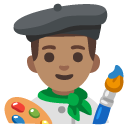


Appearance varies by platform and device. Google Noto, Twemoji, and OpenMoji are open-source.