🤸🏽♂️
The Emoji
Man Cartwheeling: Medium Skin Tone
U+1F938 U+1F3FD U+200D U+2642 U+FE0F · :man_cartwheeling_medium_skin_tone:
Trend 58
Meaning layers
- interpretation
- Used to express extra energy, showing off, doing the most, or being unbothered and carefree. Often signals someone is thriving or flexing casually.
- tiktok usage
- Appears in captions and comments when someone is hyping themselves up, celebrating a win, or showing they're living their best life with zero stress.
- irony level
- 5 / 10
Platform meanings
- meaning
- Symbol of carefree energy, thriving, or hype — dropped in comments to celebrate someone going off or living well.
- trend usage
- Used in 'it's giving main character energy' content, fitness transformation videos, and unbothered reaction memes.
- hashtags
- #maincharacter#cartwheelchallenge#gymlife#unbothered#gymmotivation
- virality score
- 62 / 100
Cultural meanings
🇺🇸
Western / Gen-Z
Used as a casual flex or hype symbol — signals carefree confidence, physical energy, and thriving vibes. Heavily ironic when paired with disaster scenarios.
🇵🇰
Pakistan & India
Associated with physical fitness, gymnastics, or school sports day energy. Occasionally used to show enthusiasm or excitement in casual chats.
🌍
Middle East
Generally interpreted as an athletic or sports-related emoji. Used in fitness and youth sports contexts, less common in casual conversations.
🌐
Global Neutral
Universally understood as representing gymnastics, acrobatics, or energetic physical movement. Safe, positive, and widely recognizable.
🇧🇩
Bangladesh
Primarily understood in a literal athletic sense — associated with school sports or physical activity. Rarely used in ironic or meme contexts.
🇱🇰
Sri Lanka
Associated with physical fitness events, school sports, or playful energy. Used straightforwardly in casual digital conversations.
🇨🇳
China
Often linked to gymnastics, a sport of national pride. Used to signal admiration for athletic ability or to express high-energy excitement.
🇯🇵
Japan
Seen as representing gymnastics or energetic play. Used in contexts of physical challenge, children's activities, or expressing boundless energy.
🇰🇷
South Korea
Associated with K-pop idol energy, fitness culture, and youthful exuberance. Used to signal charismatic, lively, and performance-ready vibes.
🇹🇼
Taiwan
Generally taken as a fun, sporty emoji. Used in casual chats to express high energy, excitement about physical activities, or playful moods.
🇭🇰
Hong Kong
Used in fitness and wellness contexts or to signal someone is energetic and feeling great. Occasionally ironic in digital humor circles.
🇵🇭
Philippines
Signals fun, carefree energy and enthusiasm. Used in casual social media to express excitement or celebrate an active, joyful lifestyle.
🇮🇩
Indonesia
Understood as representing gymnastics or playful physical activity. Used in youth and fitness communities to express energy and celebration.
🇹🇭
Thailand
Associated with physical performance and lively energy. Used in sports and fitness content as well as casual expressions of happiness.
🇻🇳
Vietnam
Taken literally as an athletic gesture. Used in gym, sports, and youth culture contexts to signal an active and energetic personality.
🇲🇾
Malaysia
Used in fitness and sports contexts. Occasionally appears in casual conversations to signal someone is in a great, energetic mood.
🇸🇦
Saudi Arabia
Primarily understood as a sports or gymnastics symbol. Used in youth fitness content and sports celebration contexts.
🇦🇪
UAE
Associated with active lifestyle and fitness culture. Used in wellness, gym, and sports content — fits the UAE's health and activity-focused branding.
🇪🇬
Egypt
Used in sports and physical education contexts. Generally interpreted literally with occasional playful usage in youth digital culture.
🇹🇷
Turkey
Signals energetic celebration or athletic achievement. Used in sports communities and casually to express a lively, carefree attitude.
🇮🇷
Iran
Interpreted as an athletic or sports-related emoji. Used in fitness and gymnastics contexts — less common in mainstream casual digital conversation.
🇳🇬
Nigeria
Used to signal high energy, confidence, and thriving. Fits naturally into Nigerian social media culture's celebration of success and boldness.
🇿🇦
South Africa
Associated with athletic energy and celebration. Used in sports culture and casual hype contexts to signal positivity and achievement.
🇬🇧
UK & Ireland
Used ironically as often as sincerely — can signal 'having an absolute mare but pushing through' or genuine athletic hype. Part of casual banter culture.
🇫🇷
France
Generally taken as a sporty or playful symbol. Used in fitness and youth culture with an occasional flair of ironic detachment.
🇩🇪
Germany
Interpreted pragmatically as an athletic or gymnastics emoji. Used in sports communities and fitness content in a straightforward manner.
🇪🇸
Spain & Italy
Associated with lively, physical expression of joy. Used to celebrate victories, express enthusiasm, and signal a fun, active personality.
🇧🇷
Brazil
Embraced enthusiastically to signal celebration, physical confidence, and carefree joy. Fits naturally into Brazil's culture of movement and festivity.
🇲🇽
Mexico
Used to express excitement, energy, and celebration. Common in youth culture and fitness spaces as a symbol of thriving and good vibes.
🌎
Latin America
Broadly used across Latin America to signal energetic celebration, physical pride, and the joy of living actively and boldly.
🇦🇺
Australia & NZ
Casually used to signal high energy, outdoor activity, and carefree vibes. Fits the active, sun-drenched lifestyle culture perfectly.
How its meaning shifted
- 2010
This emoji did not yet exist. Cartwheeling figures were not part of the Unicode emoji set in 2010.
- 2015
Introduced as part of Unicode 8.0 emoji expansion — used primarily in literal gymnastics and fitness contexts with little meme adoption.
- 2020
Gained ironic and meme usage — became a symbol of forced positivity, chaos navigation, and Gen Z's 'unbothered' aesthetic online.
- 2026
Firmly embedded in digital vernacular as a carefree confidence emoji — used across fitness flex, ironic thriving humor, and main character energy content.
See it on every platform
Adjacent emojis
- Often confused with
- person doing cartwheelperson runningman gymnastics
- Can replace
- man dancingflexed bicepsstar struck
Share & embed
Frequently asked
01What does the 🤸🏽♂️ Man Cartwheeling: Medium Skin Tone emoji mean?
A man performing a cartwheel, depicted with medium skin tone. The figure is shown mid-cartwheel with arms and legs extended.
02What does 🤸🏽♂️ mean on TikTok?
Symbol of carefree energy, thriving, or hype — dropped in comments to celebrate someone going off or living well.
03What does 🤸🏽♂️ mean on WhatsApp?
Someone is in a great mood, full of energy, or celebrating something enthusiastically.
04What does 🤸🏽♂️ mean in Gen-Z slang?
Used to express extra energy, showing off, doing the most, or being unbothered and carefree. Often signals someone is thriving or flexing casually.
05Is the 🤸🏽♂️ emoji safe to use?
Represents athletic activity, physical joy, gymnastics, and carefree energy. Completely safe and positive in most contexts.
06What does 🤸🏽♂️ mean in texting?
The cartwheel gesture psychologically signals freedom of movement, physical confidence, and uninhibited happiness — often associated with childhood joy and the release of social inhibition.
07What is the shortcode for 🤸🏽♂️?
The shortcode for Man Cartwheeling: Medium Skin Tone is :man_cartwheeling_medium_skin_tone:
08What does 🤸🏽♂️ mean in dating?
Used to signal playful energy, physical confidence, or showing off. Can imply 'I'm fun and spontaneous — come hang with me.'
Safety & usage
- Safe meaning
- Represents athletic activity, physical joy, gymnastics, and carefree energy. Completely safe and positive in most contexts.
- Caution
- No documented toxic or harmful usages. Extremely rare edge case: could theoretically be used mockingly toward someone's failed athletic attempt.
No significant warnings. This emoji is broadly safe, positive, and non-controversial across platforms and cultures.
How it looks across platforms
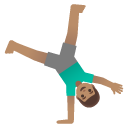
Appearance varies by platform and device. Google Noto, Twemoji, and OpenMoji are open-source.