🤸
The Emoji
Person Cartwheeling
U+1F938 · :person_cartwheeling:
Trend 61
Meaning layers
- interpretation
- Used to express being carefree, unbothered, thriving, or doing something spontaneous and fun. Often signals living your best life or doing something reckless with zero regrets.
- tiktok usage
- Appears in captions about doing something chaotic or extra — 'just quit my job and booked a flight 🤸' — or used to flex on haters with an unbothered energy.
- irony level
- 6 / 10
Platform meanings
- meaning
- Signals being carefree, thriving, or doing something wildly spontaneous. Used to express 'I'm living my best unbothered life' energy.
- trend usage
- Appears in POV videos, 'girl dinner' adjacent content, 'main character' trend posts, and gym/flexibility challenge videos.
- hashtags
- #cartwheel#gymtok#maincharacter#unbothered#gymnastics
- virality score
- 62 / 100
Cultural meanings
🇺🇸
Western / Gen-Z
Iconic 'unbothered and thriving' symbol, heavily ironic — used to signal chaotic positivity or carefree living despite life's difficulties.
🇵🇰
Pakistan & India
Primarily used literally for gymnastics, cheerleading, or fitness posts. Occasionally used among younger urban users to signal a carefree or spontaneous mood.
🌍
Middle East
Used mostly in a literal sports/fitness context, especially around gymnastics competitions or children's physical activities. Less ironic usage than in the West.
🌐
Global Neutral
Universally understood as representing physical movement, gymnastics, and active energy — a safe, positive, energetic emoji across cultures.
🇧🇩
Bangladesh
Largely literal usage around sports and physical activity, particularly youth fitness. Ironic usage is rare but growing among urban youth.
🇱🇰
Sri Lanka
Used in fitness and sports contexts, especially gymnastics and school sports days. Cheerful, energetic connotation without much irony.
🇨🇳
China
Associated with gymnastics, a culturally prestigious sport in China. Used with pride in sports content, especially during national competitions.
🇯🇵
Japan
Linked to rhythmic gymnastics and school sports festivals (undoukai). Used in kawaii athletic content and fitness influencer culture with a cheerful tone.
🇰🇷
South Korea
Common in K-pop fan content, cheerleading culture, and fitness influencer spaces. Used to signal bright, energetic idol-like energy.
🇹🇼
Taiwan
Used in cheerful fitness and wellness content. Popular among younger users to express carefree spontaneity and athletic enthusiasm.
🇭🇰
Hong Kong
Appears in youth fitness, gymnastics, and dance content. Urban youth may use it ironically in the same vein as Western Gen Z.
🇵🇭
Philippines
Used enthusiastically in gym content, cheerleading culture, and school sports posts. Cheerleading is particularly popular, making this emoji very relatable.
🇮🇩
Indonesia
Used in fitness and sports posts, increasingly adopted by young influencers to project a fun, active, aspirational lifestyle.
🇹🇭
Thailand
Linked to gymnastics, cheerleading, and general fitness activity. Used in positive, energetic contexts without significant ironic layering.
🇻🇳
Vietnam
Associated with physical education, gymnastics performances, and youth sports. Carefree and positive connotation in online spaces.
🇲🇾
Malaysia
Used in fitness and sports content, school activity posts, and among young users to signal a spontaneous, active vibe.
🇸🇦
Saudi Arabia
Usage has grown as fitness culture and women's sports participation have increased. Appears in gym posts and sports celebration content.
🇦🇪
UAE
Common in fitness influencer content, gymnastics academies, and active lifestyle branding — fits the UAE's growing wellness culture.
🇪🇬
Egypt
Used in sports and gymnastics content, particularly around regional competition highlights. Carefree energy resonates with younger users.
🇹🇷
Turkey
Appears in sports and fitness content, cheerleading culture, and increasingly in ironic 'keep going despite everything' posts among younger users.
🇮🇷
Iran
Used mainly in sports and fitness contexts, especially gymnastics. Less common in casual ironic usage due to different online communication norms.
🇳🇬
Nigeria
Used to signal excitement, spontaneity, and bold living. Fits the expressive, high-energy tone of Nigerian social media culture.
🇿🇦
South Africa
Appears in sports, fitness, and outdoor adventure content. Used among youth to signal carefree confidence and an active lifestyle.
🇬🇧
UK & Ireland
Used with dry humor — 'just got absolutely battered by life 🤸' — fitting British self-deprecating comedy culture. Also literal in sports contexts.
🇫🇷
France
Used in sporty, lifestyle, and wellness content. French social media users may use it to evoke a sense of joie de vivre or physical elegance.
🇩🇪
Germany
Primarily literal usage in gymnastics (Turnen), sports clubs, and fitness content. Less ironic layering than Anglophone cultures.
🇪🇸
Spain & Italy
Used in energetic, expressive posts about fitness, dancing, and living spontaneously. Fits the lively, physical communication culture of Southern Europe.
🇧🇷
Brazil
Highly relatable given Brazil's culture of physical activity, dance, and capoeira. Used enthusiastically in fitness, dance, and carefree lifestyle content.
🇲🇽
Mexico
Used in sports, dance, and fitness content. Among younger users, fits the 'vivir al máximo' (live to the fullest) social media aesthetic.
🌎
Latin America
Broadly represents active, joyful living across Latin American platforms. Common in fitness influencer content and spontaneous life update posts.
🇦🇺
Australia & NZ
Used casually in fitness, outdoor adventure, and beach lifestyle content. Also adopted ironically in the same carefree-chaos register as UK/US Gen Z.
How its meaning shifted
- 2010
Emoji did not yet exist; gymnastic activity was represented through text descriptions or 🏃 running emoji alternatives.
- 2015
Just introduced in Unicode 9.0 proposal stages; early adoption in gymnastics fan communities and fitness apps.
- 2020
Solidified as a fitness and carefree lifestyle emoji. Ironic usage began developing during pandemic-era 'everything is fine' humor waves.
- 2026
Fully dual-coded as both literal fitness emoji and ironic 'unbothered chaos' symbol. Core Gen Z vocabulary for toxic positivity jokes and spontaneous living posts.
See it on every platform
Compare with
Emoji combinations
Adjacent emojis
- Often confused with
- person doing handstandperson bouncing ballperson climbing
- Can replace
- dancerstar struckpartying face
Share & embed
Frequently asked
01What does the 🤸 Person Cartwheeling emoji mean?
A person performing a cartwheel, depicted mid-rotation with arms and legs extended. Represents gymnastics, acrobatics, physical activity, and fitness.
02What does 🤸 mean on TikTok?
Signals being carefree, thriving, or doing something wildly spontaneous. Used to express 'I'm living my best unbothered life' energy.
03What does 🤸 mean on WhatsApp?
Signals fun, excitement, or carefree energy in casual chat. 'We're going to the beach 🤸' = playful enthusiasm.
04What does 🤸 mean in Gen-Z slang?
Used to express being carefree, unbothered, thriving, or doing something spontaneous and fun. Often signals living your best life or doing something reckless with zero regrets.
05Is the 🤸 emoji safe to use?
Gymnastics, physical activity, fitness, carefree living, spontaneity, unbothered energy.
06What does 🤸 mean in texting?
The cartwheel symbolizes physical liberation and childlike freedom. Psychologically linked to uninhibited expression, carefree attitudes, and the release of stress through movement.
07What is the shortcode for 🤸?
The shortcode for Person Cartwheeling is :person_cartwheeling:
08What does 🤸 mean in dating?
Rarely used as a direct flirt, but can be used to show off a fun, athletic, adventurous personality — 'I'm the fun type, keep up 🤸'.
Safety & usage
- Safe meaning
- Gymnastics, physical activity, fitness, carefree living, spontaneity, unbothered energy.
- Caution
- Rarely weaponized; occasionally used to mock people masking serious emotional distress with performative positivity.
Extremely low risk emoji. No known toxic, NSFW, or hate-based usage patterns. Safe for all audiences and contexts.
How it looks across platforms
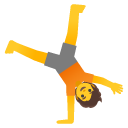


Appearance varies by platform and device. Google Noto, Twemoji, and OpenMoji are open-source.