🧞♂️
The Emoji
Man Genie
U+1F9DE U+200D U+2642 U+FE0F · :man_genie:
Trend 58
Meaning layers
- interpretation
- Used to express granting wishes, making things happen magically, or responding to someone who is being delusional about getting what they want. Also used ironically when someone thinks they can wish their problems away.
- tiktok usage
- Appears in 'wish granting' skits, manifesting content, and 'I wish' reaction videos. Often used sarcastically when someone has an unrealistic request.
- irony level
- 6 / 10
Platform meanings
- meaning
- Symbol of wish-granting, manifestation culture, and magical thinking. Used in skits where someone plays a genie or grants absurd wishes.
- trend usage
- Appears in 'POV you found a genie' trends, manifestation check-in videos, and sarcastic 'I'll just wish for it' commentary on life problems.
- hashtags
- #manifesting#wishgranted#genie#yourwishismycommand#manifest
- virality score
- 62 / 100
Cultural meanings
🇺🇸
Western / Gen-Z
Primarily used ironically in manifestation culture discourse and meme formats; Gen Z uses it to mock or celebrate wishful thinking with equal frequency.
🇵🇰
Pakistan & India
Strongly tied to the djinn mythology deeply rooted in Islamic and South Asian folklore; used both genuinely in storytelling contexts and humorously in everyday chats about impossible wishes.
🌍
Middle East
Carries genuine cultural resonance with the djinn (جن) tradition from Islamic cosmology and Arabian Nights heritage; used both reverently in cultural pride contexts and playfully in modern social media.
🌐
Global Neutral
Universally understood as a wish-granting magic figure; used across languages and cultures to represent magic, luck, and fantastical fulfillment.
🇧🇩
Bangladesh
Connected to Bengali folklore traditions involving supernatural beings; used in casual digital communication to express wishes or mock impossible expectations.
🇱🇰
Sri Lanka
Associated with local folklore about supernatural entities and also Bollywood/Hollywood genie narratives; used in chats to playfully grant or mock requests.
🇨🇳
China
Less culturally anchored but recognized through Disney Aladdin exposure; used mostly among younger generations familiar with Western pop culture to express wish-fulfillment or magical luck.
🇯🇵
Japan
Associated with Western fantasy tropes; used in anime and manga fan communities and general online culture to represent wish-granting characters akin to wish dragons or wish-spirits in Japanese media.
🇰🇷
South Korea
Used mostly in K-pop fan communities and general online humor; sometimes paired with idol content about making dream scenarios reality.
🇹🇼
Taiwan
Recognized through global pop culture; used in casual social media to express magic or whimsy, sometimes mixed with local supernatural storytelling contexts.
🇭🇰
Hong Kong
Used in bilingual social media contexts blending Western pop culture and Cantonese humor; often appears in sarcastic or comedic wish-granting commentary.
🇵🇭
Philippines
Widely recognized through Disney and local entertainment; used to express granting favors for friends or sarcastically when someone is asking too much — 'anong akala mo sa'kin, genie?'
🇮🇩
Indonesia
Connects to local djinn mythology (jin) from Islamic culture making it more personally resonant; used both in serious supernatural conversations and playful social media contexts.
🇹🇭
Thailand
Recognized through global media; used in social posts about wishes, luck, and fantasy, often alongside Thai spirit and luck-related content.
🇻🇳
Vietnam
Primarily understood through Disney exposure; used among younger demographics to express fun wish-granting scenarios or magical luck moments.
🇲🇾
Malaysia
Has cultural overlap with Malay and Islamic djinn folklore; used in both mystical/spiritual discussions and lighthearted social media to express wish fulfillment.
🇸🇦
Saudi Arabia
Deeply connected to Islamic theological discussions about djinn as real supernatural entities; online usage tends to be more cautious — younger users use it humorously while older users may view it with spiritual seriousness.
🇦🇪
UAE
Urban and cosmopolitan usage leans into the Arabian Nights cultural heritage with pride; commonly used in tourism and luxury lifestyle content as well as casual humor.
🇪🇬
Egypt
Tied to a rich tradition of djinn stories in Egyptian folklore and literature; used online to reference wishes, magic, and the supernatural with both humor and cultural familiarity.
🇹🇷
Turkey
Connected to Turkish djinn traditions (cin) from Islamic and Anatolian folklore; used humorously in social media when responding to outrageous requests or expressing magical good fortune.
🇮🇷
Iran
Linked to Persian djinn mythology (jinn/div) and the rich tradition of Persian magical literature; used online among younger Iranians to express wishes or magical thinking.
🇳🇬
Nigeria
Used in Afrobeats and pop culture contexts to express blessings, luck, and miraculous achievements; sometimes overlaid onto local spiritual metaphors about ancestors granting wishes.
🇿🇦
South Africa
Used mostly through global pop culture lens; appears in youth social media content about manifesting success and occasionally in humor about unrealistic expectations.
🇬🇧
UK & Ireland
Used with characteristic dry British humor to mock wishful thinking or sarcastically agree to an unreasonable request; also genuinely used in panto and fairy tale contexts.
🇫🇷
France
Used primarily as an ironic or whimsical symbol in online humor; French social media users deploy it to mock overly optimistic or unrealistic outlooks.
🇩🇪
Germany
Used functionally and pragmatically — mostly appears when expressing that something impossible was somehow achieved or sarcastically responding to wishful thinking.
🇪🇸
Spain & Italy
Used expressively and dramatically — often part of theatrical reactions to someone's crazy luck or an over-the-top request, fitting the emotive communication style of these cultures.
🇧🇷
Brazil
Used with high energy in social media to express granted wishes, amazing luck, or sarcastically mock someone who is delusional about getting what they want — 'acha que eu sou gênio?'
🇲🇽
Mexico
Used in colorful, expressive social media humor; often tied to the 'magical realism' aesthetic and jokes about wishing life were easier.
🌎
Latin America
Broadly used across Latin America to express luck, wishes, and magical moments; resonates with magical realism cultural traditions and vibrant fantasy storytelling.
🇦🇺
Australia & NZ
Used with casual Aussie/Kiwi humor — typically to mock someone for thinking they can wish their way out of a problem or to celebrate an improbably lucky outcome.
How its meaning shifted
- 2010
The genie emoji did not yet exist; the concept was represented through text like ':genie:' or described in words, mainly in gaming and fantasy roleplay contexts online.
- 2015
Still pre-emoji era for this character; the Aladdin genie meme format was gaining traction through image macros and the monkey's paw meme was becoming popular on early Reddit.
- 2020
Emoji now existed and was gaining traction in manifestation culture as that trend exploded on TikTok and Instagram; also widely used in monkey's paw style wish-twisting memes.
- 2026
Firmly embedded in manifestation and wish culture discourse; used across ironic, sincere, and sarcastic contexts with high fluency by Gen Z and younger millennials; associated with both genuine self-help energy and mocking magical thinking.
See it on every platform
Adjacent emojis
- Often confused with
- magefairyman in tuxedo
- Can replace
- sparklescrystal ballmagic wand
Share & embed
Frequently asked
01What does the 🧞♂️ Man Genie emoji mean?
A male genie emerging from or associated with a lamp, depicted as a magical wish-granting spirit from Middle Eastern folklore, typically shown with a blue or purple tone and floating lower body.
02What does 🧞♂️ mean on TikTok?
Symbol of wish-granting, manifestation culture, and magical thinking. Used in skits where someone plays a genie or grants absurd wishes.
03What does 🧞♂️ mean on WhatsApp?
Playfully agreeing to a request or saying 'I'll make it happen.' Can also mock someone for asking for too much.
04What does 🧞♂️ mean in Gen-Z slang?
Used to express granting wishes, making things happen magically, or responding to someone who is being delusional about getting what they want. Also used ironically when someone thinks they can wish their problems away.
05Is the 🧞♂️ emoji safe to use?
A playful, whimsical symbol of wish-granting, magic, and fantasy. Completely benign in most contexts.
06What does 🧞♂️ mean in texting?
Taps into wish-fulfillment psychology and escapism. When used sarcastically, it reflects frustration with unrealistic expectations. When used genuinely, it conveys helpfulness, magic, and desire to please.
07What is the shortcode for 🧞♂️?
The shortcode for Man Genie is :man_genie:
08What does 🧞♂️ mean in dating?
Used to say 'your wish is my command' in a flirty, submissive-but-playful way. Can imply the sender is willing to do anything for the person they're texting.
Safety & usage
- Safe meaning
- A playful, whimsical symbol of wish-granting, magic, and fantasy. Completely benign in most contexts.
- Caution
- Can be used condescendingly to mock someone for thinking they deserve special treatment or to imply someone is delusional. Rarely used in genuinely harmful ways.
In deeply conservative Islamic contexts, casual use of djinn imagery can be considered spiritually inappropriate or disrespectful by some community members. Otherwise very low risk.
How it looks across platforms
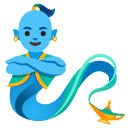
Appearance varies by platform and device. Google Noto, Twemoji, and OpenMoji are open-source.