🧞♀️
The Emoji
Woman Genie
U+1F9DE U+200D U+2640 U+FE0F · :woman_genie:
Trend 68
Meaning layers
- interpretation
- Used to express that someone is about to grant a wish, being a serving bestie, or doing something magical/clutch. Also used sarcastically when someone is asking too much of you — like 'do I look like your genie?'
- tiktok usage
- Appears in POV videos where creators act as genies granting absurd wishes, or in 'manifesting' content where users hype each other up as if they're making dreams come true.
- irony level
- 7 / 10
Platform meanings
- meaning
- Symbol of magical power, wish granting, or being someone's clutch helper. Also used in ironic 'I am NOT your genie' content.
- trend usage
- Frequently used in POV manifestation skits, 'granting your wishes' reaction videos, and fantasy aesthetic storytimes. Also in trending sounds about doing too much for people.
- hashtags
- #genie#manifestation#yourwishismycommand#magicvibes#geniecheck
- virality score
- 72 / 100
Cultural meanings
🇺🇸
Western / Gen-Z
Primarily ironic and meme-heavy — used to mock unrealistic expectations or playfully claim magical energy. Manifestation culture has also given it a sincere second life.
🇵🇰
Pakistan & India
Strongly associated with djinn folklore which is deeply embedded in South Asian culture — carries both mystical reverence and pop culture (Bollywood genie tropes) connotations.
🌍
Middle East
Culturally significant — djinn (jinn) are part of Islamic tradition and folklore. The emoji is used both lightly in pop culture contexts and more carefully given religious sensitivities around jinns.
🌐
Global Neutral
Widely understood as a wish-granting magical figure from global pop culture (Aladdin, etc.) — used universally to represent magic, wishes, and fantasy.
🇧🇩
Bangladesh
Associated with djinn mythology which is prevalent in Bengali folklore and Islamic cultural context. Used lightly in pop culture but carries supernatural weight for some users.
🇱🇰
Sri Lanka
Less culturally specific — interpreted primarily through global pop culture (Aladdin). Used in playful or fantasy contexts without strong local mythological ties.
🇨🇳
China
Primarily associated with Disney's Aladdin and Western fantasy concepts. No strong local mythological parallel, so used mostly in playful, pop-culture, or aesthetic contexts.
🇯🇵
Japan
Associated with wish-granting figures from anime and manga — resonates with characters like djinn from 'Magi: The Labyrinth of Magic'. Used in fantasy and otaku culture contexts.
🇰🇷
South Korea
Linked to K-drama fantasy tropes and anime wish-granting figures. Used in fan culture, aesthetic content, and manifestation trends popular among Korean youth.
🇹🇼
Taiwan
Interpreted through anime and pop culture lenses. Used in fantasy content and manifestation posts, often among younger users engaged with Japanese media.
🇭🇰
Hong Kong
Used in pop culture and entertainment contexts. Older users may associate with Middle Eastern folklore via media; younger users use it in meme and aesthetic contexts.
🇵🇭
Philippines
Popular in fantasy-themed content and manifestation culture, which is strong on Filipino social media. Also resonates with local folk beliefs in magical beings.
🇮🇩
Indonesia
Djinn (jin) figures are part of Islamic and local Javanese/Sundanese folklore — this emoji carries both playful pop-culture meaning and deeper supernatural associations for some users.
🇹🇭
Thailand
Interpreted mainly through global pop culture. Used in fantasy aesthetic and manifestation content, occasionally in humorous contexts about making wishes.
🇻🇳
Vietnam
Primarily a pop culture reference (Aladdin, anime). Used in playful or aesthetic contexts by younger users, with no strong local mythological equivalent.
🇲🇾
Malaysia
Djinn mythology exists in Malay Islamic folklore — the emoji has both light pop culture usage and deeper cultural resonance. Used carefully in religious communities.
🇸🇦
Saudi Arabia
Jinn are explicitly mentioned in the Quran — this emoji exists in a complex space between pop culture reference and religious concept. Often used lightly in entertainment contexts by youth.
🇦🇪
UAE
Used freely in pop culture, entertainment, and tourism-themed content (Arabian Nights branding). Younger users engage with it in meme and aesthetic contexts.
🇪🇬
Egypt
Jinn are part of both Islamic tradition and ancient Egyptian mystical history. Used playfully in memes and entertainment but carries cultural weight in traditional contexts.
🇹🇷
Turkey
Cin (djinn) are part of Turkish Islamic folklore. Used in humorous and pop culture contexts by youth, with some traditional associations remaining for older generations.
🇮🇷
Iran
Jinn are deeply embedded in Persian folklore and Islamic tradition. The emoji sees light usage in pop culture and internet humor, especially among younger Iranians online.
🇳🇬
Nigeria
Associated with Hausa/Islamic jinn mythology in northern Nigeria and with general magical beings in broader Nigerian pop culture. Used in spiritual and entertainment contexts.
🇿🇦
South Africa
Interpreted mainly through global pop culture. Used in playful or aesthetic social media contexts, with less local mythological connection.
🇬🇧
UK & Ireland
Used primarily in ironic and meme contexts — British humor lends itself well to the sarcastic 'do I look like your genie?' usage. Also appears in manifestation and spiritual content.
🇫🇷
France
Associated with 'génie' (the French word for genius as well as genie) — this creates an interesting dual meaning. Used in humor, aesthetic content, and the occasional intellectual pun.
🇩🇪
Germany
Used in fantasy, gaming, and pop culture contexts. Practical German internet culture means it often appears in ironic 'as if I can just grant that wish' contexts.
🇪🇸
Spain & Italy
Used in playful, expressive social media content. Associated with magic, wishes, and fantasy — fits well in the expressive emoji culture of these communities.
🇧🇷
Brazil
Very popular in manifestation culture which is huge on Brazilian social media. Also used in humorous contexts about doing too much for others — 'não sou sua gênio'.
🇲🇽
Mexico
Used in manifestation content, fantasy aesthetics, and humor. Also connects to Mesoamerican and syncretic spiritual traditions around magical beings in a broader sense.
🌎
Latin America
Across Latin America, used in manifestation culture, fantasy aesthetic content, and expressive humor about wish-granting and magical thinking.
🇦🇺
Australia & NZ
Used primarily in ironic and humorous contexts — fits dry Australian humor well. Also appears in spiritual and manifestation content popular among younger women.
How its meaning shifted
- 2010
Emoji did not exist yet. Djinn/genie concepts were represented through text or other fantasy emojis. No cultural emoji usage applicable.
- 2015
Still pre-release. Genie concepts occasionally referenced in early Instagram and Tumblr mystical/fantasy aesthetics using related emojis like ✨ and 🌟.
- 2020
Post-Unicode 10.0 adoption was widespread. Used in early manifestation TikTok trends, Disney+ Aladdin revival content, and feminist reclamation of the 'genie' trope. Manifestation culture began elevating its use.
- 2026
Firmly established in manifestation culture, feminist empowerment aesthetics, and ironic meme usage. Used across all platforms with layered meanings — from sincere spiritual content to sharp sarcasm about being over-relied upon.
See it on every platform
Compare with
Adjacent emojis
- Often confused with
- fairymagewoman in lotus position
- Can replace
- sparklesmagic wandstar struck
Share & embed
Frequently asked
01What does the 🧞♀️ Woman Genie emoji mean?
A female genie, depicted as a magical spirit from Middle Eastern folklore who grants wishes, shown as a woman with a supernatural or mystical appearance, often with a ponytail and flowing or translucent lower body.
02What does 🧞♀️ mean on TikTok?
Symbol of magical power, wish granting, or being someone's clutch helper. Also used in ironic 'I am NOT your genie' content.
03What does 🧞♀️ mean on WhatsApp?
Playfully used to say 'wish granted' or 'I got you', often in group chats when someone comes through big. Also used sarcastically when asked to do something impossible.
04What does 🧞♀️ mean in Gen-Z slang?
Used to express that someone is about to grant a wish, being a serving bestie, or doing something magical/clutch. Also used sarcastically when someone is asking too much of you — like 'do I look like your genie?'
05Is the 🧞♀️ emoji safe to use?
A fun, playful symbol of magic, wish-granting, and empowerment rooted in global folklore and pop culture.
06What does 🧞♀️ mean in texting?
Taps into fantasies of unlimited power and wish fulfillment. The feminine framing adds a layer of empowered mysticism, evoking the archetype of the magical woman who holds all the answers — or refuses to be reduced to servitude.
07What is the shortcode for 🧞♀️?
The shortcode for Woman Genie is :woman_genie:
08What does 🧞♀️ mean in dating?
Used flirtatiously to say 'I can make your dreams come true' — a playful, confident move. Also used when responding to someone's request in a teasing, willing way.
Safety & usage
- Safe meaning
- A fun, playful symbol of magic, wish-granting, and empowerment rooted in global folklore and pop culture.
- Caution
- Can be used to mock or demean someone by implying they exist solely to serve others' needs — weaponized in misogynistic contexts to reinforce servitude expectations.
In certain Islamic cultural contexts, depicting or casually using jinn imagery may be considered disrespectful or religiously sensitive. Exercise cultural awareness. Not inherently harmful but context-dependent.
How it looks across platforms
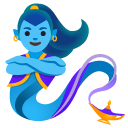
Appearance varies by platform and device. Google Noto, Twemoji, and OpenMoji are open-source.