👨🏻🦼➡️
The Emoji
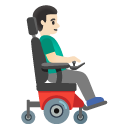
Man In Motorized Wheelchair Facing Right: Light Skin Tone
U+1F468 U+1F3FB U+200D U+1F9BC U+200D U+27A1 U+FE0F · :man_in_motorized_wheelchair_facing_right_light_skin_tone:
Trend 18
Meaning layers
- interpretation
- Used to represent movement, progress, or 'rolling forward' in life. Sometimes used humorously to indicate someone is moving on from a situation or 'wheeling away' from drama.
- tiktok usage
- Appears in disability awareness content, accessibility advocacy videos, and occasionally in humorous 'moving on' or 'leaving' contexts in skits.
- irony level
- 3 / 10
Platform meanings
- meaning
- Used in disability awareness, accessibility advocacy, and mobility content. Occasionally appears in comedic 'exit stage right' scenarios.
- trend usage
- Featured in #DisabilityTok, accessibility challenges, and 'day in my life' content by motorized wheelchair users.
- hashtags
- #DisabilityTok#WheelchairLife#AccessibilityMatters#MobilityAid#DisabilityPride
- virality score
- 22 / 100
Cultural meanings
🇺🇸
Western / Gen-Z
Primarily recognized as a disability representation emoji; Gen Z in Western contexts often use it in advocacy posts or reclaimed disability humor online.
🇵🇰
Pakistan & India
Used sincerely in social media posts about disability awareness and accessibility infrastructure challenges; less common in casual conversation.
🌍
Middle East
Appears in disability charity and zakat-related content; also used in government accessibility initiative announcements.
🌐
Global Neutral
Universally understood as representing a person using a motorized wheelchair; directional aspect is noted but rarely discussed separately.
🇧🇩
Bangladesh
Used primarily in healthcare and disability advocacy contexts; disability rights organizations use it in awareness campaigns on social media.
🇱🇰
Sri Lanka
Seen in posts about accessible infrastructure, disability support NGOs, and government rehabilitation programs.
🇨🇳
China
Used in WeChat and Weibo posts about assistive technology and disability welfare; also appears in posts about elderly care and mobility products.
🇯🇵
Japan
Associated with universal design (ユニバーサルデザイン) culture; used respectfully in accessibility-related content and aging society discussions.
🇰🇷
South Korea
Appears in disability rights advocacy content and discussions about barrier-free (무장애) environments in urban design.
🇹🇼
Taiwan
Used in disability welfare and accessible tourism content; Taiwan's strong disability rights framework gives this emoji an empowering connotation.
🇭🇰
Hong Kong
Seen in posts about accessible public transport and disability advocacy; sometimes used in protest contexts about systemic barriers.
🇵🇭
Philippines
Used in disability awareness and PWD (Persons with Disability) rights content; also in healthcare and rehabilitation discussions.
🇮🇩
Indonesia
Appears in social media content about disability inclusion, Difabel rights, and accessible infrastructure advocacy.
🇹🇭
Thailand
Used in content about disability welfare and accessible tourism, given Thailand's growing wheelchair-friendly tourism efforts.
🇻🇳
Vietnam
Associated with disability support programs and accessibility improvements in urban areas; used by NGOs and health organizations.
🇲🇾
Malaysia
Featured in OKU (Orang Kurang Upaya) rights content and accessibility advocacy posts on social media.
🇸🇦
Saudi Arabia
Used in government Vision 2030 accessibility initiative posts and disability welfare content by official channels.
🇦🇪
UAE
Appears in Dubai and Abu Dhabi accessibility content; the UAE's smart city initiatives give this a tech-forward, progressive connotation.
🇪🇬
Egypt
Used in disability awareness campaigns and NGO posts; also appears in discussions about accessible infrastructure challenges.
🇹🇷
Turkey
Featured in disability rights (engelli hakları) content and accessible city planning discussions on Turkish social media.
🇮🇷
Iran
Used sincerely in disability welfare and rehabilitation content; appears in posts from disability support organizations.
🇳🇬
Nigeria
Used in disability rights advocacy and accessible healthcare discussions; Nigerians may also use it to represent resilience and pushing forward.
🇿🇦
South Africa
Appears in disability inclusion content and posts about South Africa's Equality Court cases involving accessibility rights.
🇬🇧
UK & Ireland
Widely recognized in disability representation discussions; used in Blue Badge scheme content and Disability Rights UK advocacy posts.
🇫🇷
France
Associated with handicap accessibility (accessibilité) content and discussions about France's disability policy (MDPH).
🇩🇪
Germany
Used in Inklusion (inclusion) advocacy and Behindertenrechte (disability rights) content; also in discussions about accessible public transport.
🇪🇸
Spain & Italy
Appears in disability rights content; in Spain often linked to ONCE (disability organization) campaigns, in Italy to accessibility infrastructure debates.
🇧🇷
Brazil
Used in accessibility advocacy (acessibilidade) and disability rights content; also in discussions about Paralympic athletes.
🇲🇽
Mexico
Featured in discapacidad (disability) awareness content and accessible infrastructure discussions; also linked to Paralympic pride.
🌎
Latin America
Broadly used across Latin America in disability advocacy content, accessible tourism promotion, and Paralympic celebration posts.
🇦🇺
Australia & NZ
Used in NDIS (National Disability Insurance Scheme) discussions, accessibility advocacy, and disability pride content in both countries.
How its meaning shifted
- 2010
This specific emoji sequence did not exist in 2010; general disability representation was minimal in emoji sets, limited to a basic wheelchair symbol.
- 2015
Still pre-existing as this specific ZWJ sequence; basic wheelchair emoji existed but skin tone and gender variations were not yet standardized.
- 2020
With expanded ZWJ sequences and disability emoji additions around 2019-2020, motorized wheelchair emojis became available, though directional variants came later. Used primarily in genuine disability representation contexts.
- 2026
Now used in both sincere disability advocacy and as a mainstream 'moving forward/rolling on' metaphor; disability creators have significantly normalized and reclaimed this emoji in online culture.
See it on every platform
Compare with
Adjacent emojis
Share & embed
Frequently asked
01What does the 👨🏻🦼➡️ Man In Motorized Wheelchair Facing Right: Light Skin Tone emoji mean?
A man using a motorized wheelchair, depicted facing right, with light skin tone. This is a ZWJ sequence combining the man emoji, light skin tone modifier, motorized wheelchair emoji, and right-arrow directional indicator.
02What does 👨🏻🦼➡️ mean on TikTok?
Used in disability awareness, accessibility advocacy, and mobility content. Occasionally appears in comedic 'exit stage right' scenarios.
03What does 👨🏻🦼➡️ mean on WhatsApp?
Represents a person in a motorized wheelchair or signals 'I'm on the move / heading out'.
04What does 👨🏻🦼➡️ mean in Gen-Z slang?
Used to represent movement, progress, or 'rolling forward' in life. Sometimes used humorously to indicate someone is moving on from a situation or 'wheeling away' from drama.
05Is the 👨🏻🦼➡️ emoji safe to use?
Represents a man with a disability using a motorized wheelchair; used for disability representation, accessibility advocacy, and inclusive communication.
06What does 👨🏻🦼➡️ mean in texting?
The rightward direction combined with a mobility aid evokes a sense of agency, independence, and purposeful movement. Psychologically linked to overcoming barriers and self-determination for people with disabilities.
07What is the shortcode for 👨🏻🦼➡️?
The shortcode for Man In Motorized Wheelchair Facing Right: Light Skin Tone is :man_in_motorized_wheelchair_facing_right_light_skin_tone:
08What does 👨🏻🦼➡️ mean in dating?
Rarely used in flirting contexts; occasionally used jokingly as 'rolling into your DMs' but this can be seen as insensitive.
Safety & usage
- Safe meaning
- Represents a man with a disability using a motorized wheelchair; used for disability representation, accessibility advocacy, and inclusive communication.
- Caution
- Occasionally misused in ableist mockery or as a punchline in inappropriate disability humor; can be weaponized to demean people with mobility disabilities.
Care should be taken not to use this emoji in mocking, dehumanizing, or ableist contexts. Non-disabled users should be mindful of using it as a generic joke emoji given its specific representation purpose.
How it looks across platforms
Appearance varies by platform and device. Google Noto, Twemoji, and OpenMoji are open-source.