🚴♂️
The Emoji
Man Biking
U+1F6B4 U+200D U+2642 U+FE0F · :man_biking:
Trend 65
Meaning layers
- interpretation
- Used to signal hustle, grinding, or being in 'go mode' — metaphorically pedaling through life. Also used to represent someone who is constantly moving forward and not stopping for drama or distractions.
- tiktok usage
- Appears in 'main character energy' content, workout motivation videos, and productivity edits. Often used in captions like 'me ignoring my problems 🚴♂️' or 'not stopping for anyone 🚴♂️'.
- irony level
- 5 / 10
Platform meanings
- meaning
- Represents grind culture, fitness motivation, and metaphorical forward momentum. Used in 'not looking back' energy content.
- trend usage
- Featured in POV videos, day-in-my-life fitness content, 'hot girl summer' workout edits, and 'running away from my problems' trend videos.
- hashtags
- #cyclinglife#bikelife#grindmode#notlookingback#fitcheck
- virality score
- 62 / 100
Cultural meanings
🇺🇸
Western / Gen-Z
Primarily used as a meme for avoiding problems or as fitness/hustle culture signaling. The ironic 'riding away' use is deeply embedded in Western Gen Z internet humor.
🇵🇰
Pakistan & India
Used literally for cycling as exercise or commuting. Also gaining traction in urban fitness communities among younger populations as cycling culture grows in cities like Mumbai and Lahore.
🌍
Middle East
Used in fitness and health contexts among younger urban populations. Cycling culture is growing in Gulf cities — used in community cycling event promotion and personal fitness documentation.
🌐
Global Neutral
Universally understood as representing cycling or biking activity. Safe to use across cultures without risk of misinterpretation when discussing exercise, commuting, or sport.
🇧🇩
Bangladesh
Used mostly in literal cycling contexts — Bangladesh has strong bicycle commuting culture, so this emoji resonates as everyday transport rather than just sport.
🇱🇰
Sri Lanka
Cycling is both a practical commute method and recreational activity in Sri Lanka. The emoji is used for both fitness content and transportation discussions.
🇨🇳
China
Popular on WeChat and Weibo for cycling fitness content, especially with the growth of cycling culture in Chinese cities post-2020. Associated with healthy living and modern urban lifestyle.
🇯🇵
Japan
Strong cycling culture in Japan means this emoji is used extensively for commuting, recreational rides, and cycling club communications. Very practical and positive connotations.
🇰🇷
South Korea
Used in fitness and K-health content. The Han River cycling path culture makes this emoji very relatable — associated with healthy weekend activities and urban fitness.
🇹🇼
Taiwan
Taiwan's cycling infrastructure and culture (YouBike, scenic routes) make this emoji popular in travel and lifestyle content. Very positive, active associations.
🇭🇰
Hong Kong
Used in recreational cycling contexts and weekend activity planning. Cycling along the coastline is popular, making this emoji associated with leisure and outdoor life.
🇵🇭
Philippines
Gained new relevance post-2020 when cycling boomed as transport during lockdowns. Used in cycling advocacy content, commuting communities, and fitness groups.
🇮🇩
Indonesia
Used in urban cycling communities and fitness content. Jakarta's cycling culture growth means this emoji appears in community ride announcements and health advocacy.
🇹🇭
Thailand
Used in cycling club content, fitness posts, and increasingly in tourism content for scenic cycling routes. Bangkok's cycling community uses it extensively.
🇻🇳
Vietnam
Cycling is deeply cultural in Vietnam — both as heritage and modern fitness activity. This emoji bridges traditional bicycle commuting and contemporary cycling sport.
🇲🇾
Malaysia
Used in fitness communities and cycling event promotion. Malaysia's growing cycling culture in urban areas like KL makes this emoji popular in sports and wellness content.
🇸🇦
Saudi Arabia
With Vision 2030 promoting active lifestyles and new cycling infrastructure in Saudi cities, this emoji is increasingly used in fitness and modern lifestyle content.
🇦🇪
UAE
Dubai and Abu Dhabi's cycling events (like the Abu Dhabi Tour) make this a popular sports emoji. Used in active lifestyle content and fitness community posts.
🇪🇬
Egypt
Used in fitness and sports communities. Cycling along the Nile is a growing recreational trend, and this emoji appears in health-conscious social media content.
🇹🇷
Turkey
Popular in Istanbul's growing cycling community content. Used for fitness posts, cycling event promotion, and the increasingly popular bike-commuting movement.
🇮🇷
Iran
Used in sports and exercise contexts. Cycling has a notable recreational following in Iran, and this emoji appears in fitness and outdoor activity communities.
🇳🇬
Nigeria
Used in fitness and athletic content. Cycling is growing as both a sport and commuting method in urban Nigeria — the emoji is associated with health consciousness and modernity.
🇿🇦
South Africa
Strong cycling culture, especially for events like the Cape Argus. This emoji is heavily used in cycling club communities, race preparation content, and outdoor lifestyle posts.
🇬🇧
UK & Ireland
Used for commuting culture, sport cycling, and weekend rides. Very common in sustainability discussions about cycling as eco-friendly transport. Also used in the avoidance meme context.
🇫🇷
France
Tour de France association makes cycling deeply cultural. This emoji carries prestige and national pride in French contexts, used widely for sport, commuting, and lifestyle content.
🇩🇪
Germany
Germany's world-class cycling infrastructure means this emoji is used extensively for commuting, sport, and fitness content. Very positive and practical connotations.
🇪🇸
Spain & Italy
Both countries have strong cycling sport traditions (Vuelta a España, Giro d'Italia). This emoji is used for sport appreciation, fitness, and the outdoor Mediterranean lifestyle.
🇧🇷
Brazil
Used in fitness content, cycling event promotion, and recreational riding documentation. Brazil's cycling community is active on social media, especially in cities with new bike infrastructure.
🇲🇽
Mexico
Used in cycling communities and fitness content. Urban cycling advocacy is growing in Mexican cities, and this emoji appears in both sport and commuting discussions.
🌎
Latin America
Broadly used across Latin America for fitness content and cycling communities. Increasingly associated with urban mobility advocacy and eco-conscious transport.
🇦🇺
Australia & NZ
Cycling is a major sport and commuting method — this emoji is used heavily in both contexts. Triathlons, cycling clubs, and the outdoor active lifestyle make this a very common emoji.
How its meaning shifted
- 2010
Rarely used — emoji were still niche and this was primarily used only in literal cycling or sports contexts by early adopters, mostly on Japanese mobile platforms.
- 2015
Growing use in fitness and health communities as emoji became mainstream. Primarily literal — used for cycling events, workout logs, and sports commentary. No significant meme usage yet.
- 2020
Explosion in use due to cycling boom during COVID lockdowns globally. The avoidance meme format started gaining traction. Fitness culture content surged and this emoji became a fitness lifestyle symbol.
- 2026
Dual identity fully established: literal fitness/cycling use remains strong, while the ironic 'riding away from problems' meme format is deeply embedded in internet culture. Also used in sustainability and urban mobility discourse.
See it on every platform
Compare with
Adjacent emojis
- Opposite
- sleeping facecouch and lampsloth
- Often confused with
- man mountain bikingperson bikingkick scooter
- Can replace
- bicycleperson runningman lifting weights
Share & embed
Frequently asked
01What does the 🚴♂️ Man Biking emoji mean?
A man riding a bicycle, depicted in profile view pedaling forward. Used to represent cycling, biking, physical exercise, commuting by bike, or recreational riding.
02What does 🚴♂️ mean on TikTok?
Represents grind culture, fitness motivation, and metaphorical forward momentum. Used in 'not looking back' energy content.
03What does 🚴♂️ mean on WhatsApp?
Signals someone is out biking, exercising, or busy and on the move. Also used casually to say 'I'm heading out' or 'I'm active today'.
04What does 🚴♂️ mean in Gen-Z slang?
Used to signal hustle, grinding, or being in 'go mode' — metaphorically pedaling through life. Also used to represent someone who is constantly moving forward and not stopping for drama or distractions.
05Is the 🚴♂️ emoji safe to use?
Represents cycling, exercise, commuting by bike, fitness, outdoor activity, and forward momentum. Universally positive and safe in all mainstream contexts.
06What does 🚴♂️ mean in texting?
Cycling symbolizes forward momentum and self-propulsion in psychological metaphors. The emoji taps into feelings of autonomy, physical empowerment, and the meditative rhythm of repetitive motion — often evoking escape or stress relief.
07What is the shortcode for 🚴♂️?
The shortcode for Man Biking is :man_biking:
08What does 🚴♂️ mean in dating?
Sometimes used to hint at an active, outdoorsy lifestyle to attract fitness-minded partners. 'I'm out here staying fit 🚴♂️' can be a subtle flex or invitation to join a date activity.
Safety & usage
- Safe meaning
- Represents cycling, exercise, commuting by bike, fitness, outdoor activity, and forward momentum. Universally positive and safe in all mainstream contexts.
- Caution
- No inherently toxic usage. In extremely rare cases could be used to mock someone for fleeing a situation, but this is mild and context-dependent.
Essentially no warning needed. This emoji carries no offensive, sexual, or harmful connotations in any documented cultural context. The gender-specific version (man) may be noted in discussions of gender representation in emoji.
How it looks across platforms
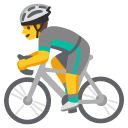
Appearance varies by platform and device. Google Noto, Twemoji, and OpenMoji are open-source.