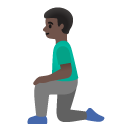
🧎🏿♂️
The Emoji
Man Kneeling: Dark Skin Tone
U+1F9CE U+1F3FF U+200D U+2642 U+FE0F · :man_kneeling_dark_skin_tone:
Trend 68
Meaning layers
- interpretation
- Used to express deep respect, humility, worship of someone or something, or to signal 'taking a knee' in solidarity. Also used ironically to mean 'I'm begging you' or to hype someone up as a god-tier individual.
- tiktok usage
- Appears in fan edits to show worship of celebrities or fictional characters, or in protest-related content referencing the Black Lives Matter movement's kneeling symbolism.
- irony level
- 5 / 10
Platform meanings
- meaning
- Signals worship, solidarity, or desperate pleading; used heavily in fan edits and protest-awareness videos
- trend usage
- Appears in comment sections of viral videos when someone does something exceptionally impressive, paired with 'I'm not worthy' captions
- hashtags
- #TakeAKnee#BLM#WeKneel#KneelingForYou#GodTier
- virality score
- 62 / 100
Cultural meanings
🇺🇸
Western / Gen-Z
Used to worship celebrities, express solidarity with Black Lives Matter, or dramatically beg friends; carries both protest and fan-culture connotations.
🇵🇰
Pakistan & India
Primarily interpreted as a gesture of prayer, devotion, or supplication; the dark skin tone may reduce personal identification but the posture is universally understood as respectful.
🌍
Middle East
Associated with Islamic prayer positions or deep reverence; the kneeling posture resonates with religious humility in Muslim-majority cultures.
🌐
Global Neutral
Broadly understood as a symbol of respect, prayer, or submission across most cultures; specific connotations vary by regional and political context.
🇧🇩
Bangladesh
Interpreted through a religious lens as a posture of prayer or deep respect toward elders or authority figures.
🇱🇰
Sri Lanka
Understood as a gesture of reverence or devotion, often linked to Buddhist or Hindu prayer traditions in local context.
🇨🇳
China
Kneeling has historical connotations of submission or kowtow; may be interpreted as extreme deference or respect, sometimes with negative undertones of subjugation.
🇯🇵
Japan
Associated with seiza (formal kneeling) and deep respect; seen as a dignified and culturally resonant posture of humility and honor.
🇰🇷
South Korea
Interpreted as a gesture of deep apology, respect, or formal reverence; aligns with Confucian values of hierarchical humility.
🇹🇼
Taiwan
Similar to broader East Asian interpretations — conveys deep respect and humility; may also be used in gaming or fan culture to mean 'I bow to you.'
🇭🇰
Hong Kong
Carries both traditional respect connotations and modern protest symbolism, given the political activism context of recent years.
🇵🇭
Philippines
Associated with Catholic prayer and devotion; also used in fan culture to worship K-pop idols or celebrities in a playful way.
🇮🇩
Indonesia
Primarily interpreted as prayer or deep respect, resonating with both Islamic prayer positions and general cultural deference to elders.
🇹🇭
Thailand
Connected to Buddhist prayer and prostration rituals; seen as a deeply respectful and spiritually significant gesture.
🇻🇳
Vietnam
Understood as a gesture of prayer, reverence to ancestors, or deep apology; carries strong traditional and spiritual weight.
🇲🇾
Malaysia
Interpreted through Islamic prayer symbolism; also used in multicultural contexts to express deep respect across religious backgrounds.
🇸🇦
Saudi Arabia
Strongly associated with Islamic prayer (sujud-adjacent posture); conveys deep religious devotion and submission to God.
🇦🇪
UAE
Similar to Saudi Arabia — primarily religious connotation; also understood in cosmopolitan Dubai contexts as a sign of respect or admiration in pop culture.
🇪🇬
Egypt
Associated with Islamic prayer and humility; also carries historical resonance with ancient Egyptian postures of reverence.
🇹🇷
Turkey
Interpreted as prayer or deep respect; in younger urban populations, also used in fan culture or to express reverence for a great achievement.
🇮🇷
Iran
Primarily associated with religious prayer and submission to God; also used to express deep respect for revered figures in Persian culture.
🇳🇬
Nigeria
Resonates strongly with BLM symbolism and pan-African solidarity; also used in religious contexts for prayer and in fan culture to worship Afrobeats artists.
🇿🇦
South Africa
Deeply connected to anti-apartheid legacy and racial justice movements; kneeling in protest carries powerful symbolic weight in South African discourse.
🇬🇧
UK & Ireland
Tied to BLM solidarity movements and Premier League player protests; also used in fan culture and casual humor to express reverence.
🇫🇷
France
Associated with protest and solidarity following BLM-inspired movements; also used in secular contexts to express admiration or humility.
🇩🇪
Germany
Used in social justice and solidarity contexts; may also carry connotations of formal respect or historical reverence in academic discussions.
🇪🇸
Spain & Italy
Primarily interpreted as prayer, religious devotion, or romantic proposal; protest connotations are less dominant but recognized in activist circles.
🇧🇷
Brazil
Used in religious contexts (Catholic prayer) and fan worship of football players; also gaining traction in racial justice conversations tied to Afro-Brazilian movements.
🇲🇽
Mexico
Associated with Catholic devotion and pilgrimage traditions; also used in pop culture to worship artists or express dramatic admiration.
🌎
Latin America
Broadly interpreted as prayer, devotion, or romantic gesture; protest symbolism is recognized but less culturally dominant than in North America.
🇦🇺
Australia & NZ
Used in BLM solidarity contexts and to honor Indigenous rights movements; also employed casually in fan culture and humor to show extreme respect.
How its meaning shifted
- 2010
This emoji did not exist yet; kneeling gestures were represented through text emoticons or described in words.
- 2015
The base kneeling person emoji was introduced; usage was limited and primarily interpreted as prayer or submission without strong cultural associations.
- 2020
Usage surged dramatically during the Black Lives Matter movement and George Floyd protests; the dark skin tone variant became a powerful symbol of racial solidarity and protest.
- 2026
Continues to carry protest and solidarity symbolism while expanding into fan worship, prayer, and pop culture reverence; used across generational lines with varied interpretations.
See it on every platform
Adjacent emojis
- Often confused with
- person bowingfolded handsman in lotus position
- Can replace
- raised fistfolded handsperson bowing
Share & embed
Frequently asked
01What does the 🧎🏿♂️ Man Kneeling: Dark Skin Tone emoji mean?
A man with dark skin tone shown kneeling on one or both knees, representing a posture of respect, submission, prayer, proposal, or protest.
02What does 🧎🏿♂️ mean on TikTok?
Signals worship, solidarity, or desperate pleading; used heavily in fan edits and protest-awareness videos
03What does 🧎🏿♂️ mean on WhatsApp?
Sent to show deep respect or to beg someone for a favor in a dramatic but light-hearted way
04What does 🧎🏿♂️ mean in Gen-Z slang?
Used to express deep respect, humility, worship of someone or something, or to signal 'taking a knee' in solidarity. Also used ironically to mean 'I'm begging you' or to hype someone up as a god-tier individual.
05Is the 🧎🏿♂️ emoji safe to use?
Represents prayer, respect, solidarity, romantic proposal, or humility in a positive and culturally significant way.
06What does 🧎🏿♂️ mean in texting?
Kneeling is a universally recognized posture of submission or reverence. The dark skin tone adds cultural and racial identity, making it particularly resonant in conversations about racial justice, Black spirituality, and representation.
07What is the shortcode for 🧎🏿♂️?
The shortcode for Man Kneeling: Dark Skin Tone is :man_kneeling_dark_skin_tone:
08What does 🧎🏿♂️ mean in dating?
Can be used flirtatiously to say 'I'm on my knees for you' implying deep admiration or desire; sometimes used to simulate a proposal gesture.
Safety & usage
- Safe meaning
- Represents prayer, respect, solidarity, romantic proposal, or humility in a positive and culturally significant way.
- Caution
- Could be used mockingly to imply someone is weak, subservient, or to demean a person by suggesting they should kneel in submission.
The dark skin tone variant carries strong racial identity and protest symbolism; using it in mocking or derogatory contexts related to race is highly offensive. Context is critical.
How it looks across platforms
Appearance varies by platform and device. Google Noto, Twemoji, and OpenMoji are open-source.