🤾🏿♂️
The Emoji
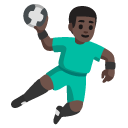
Man Playing Handball: Dark Skin Tone
U+1F93E U+1F3FF U+200D U+2642 U+FE0F · :man_playing_handball_dark_skin_tone:
Trend 18
Meaning layers
- interpretation
- Used to flex athletic energy, hype up sports moments, or ironically represent someone going 'all out' on something — not necessarily handball itself.
- tiktok usage
- Appears in sports highlight videos, gym motivation content, or ironically when someone is trying really hard at something trivial.
- irony level
- 4 / 10
Platform meanings
- meaning
- Represents athletic hustle, sports energy, or the act of going all-in on something.
- trend usage
- Used in workout motivation videos, sports highlight reels, and ironically in 'grinding' content where someone is working intensely on a non-athletic task.
- hashtags
- #handball#athlete#sportsmotivation#activeliving#blackathletes
- virality score
- 22 / 100
Cultural meanings
🇺🇸
Western / Gen-Z
Recognized as a sports emoji but largely used ironically to represent 'going hard' or max effort in any context, not just handball.
🇵🇰
Pakistan & India
Handball is less mainstream, so it may be mistaken for a cricket or kabaddi gesture; used generally to represent athletic activity.
🌍
Middle East
Handball is popular in some Gulf states; used genuinely by handball fans and players, especially in Qatar where the sport has visibility.
🌐
Global Neutral
Universally understood as a sports/athletics emoji representing physical effort and competitive sport.
🇧🇩
Bangladesh
Handball is niche; more likely interpreted as a general sports emoji representing any athletic activity or physical game.
🇱🇰
Sri Lanka
Rarely used in handball-specific contexts; more likely used to represent general sports enthusiasm or athletic pride.
🇨🇳
China
Handball has limited mainstream popularity; emoji may be used generically for sports or physical education contexts.
🇯🇵
Japan
Japan has an active handball culture; used sincerely by handball players and fans, especially during national team events.
🇰🇷
South Korea
Korea's national handball team is historically strong; the emoji carries genuine sports pride and is used earnestly in sports contexts.
🇹🇼
Taiwan
Limited handball culture; used generically to represent sports or physical activity rather than specifically handball.
🇭🇰
Hong Kong
Used primarily as a general sports or activity emoji; handball-specific usage is rare.
🇵🇭
Philippines
Handball is uncommon; likely interpreted as a ball sport emoji generically, possibly confused with basketball given its popularity there.
🇮🇩
Indonesia
Handball is niche; used generally for sports representation or to signal an active lifestyle.
🇹🇭
Thailand
Used broadly for sports content; handball is not mainstream so the emoji functions as a general athletic symbol.
🇻🇳
Vietnam
Handball has very limited presence; the emoji is used generically to signify sports or physical activity.
🇲🇾
Malaysia
Handball is a minor sport; the emoji is used more generally for athletic or active lifestyle content.
🇸🇦
Saudi Arabia
Handball is widely played and followed in Saudi Arabia; the emoji is used genuinely and with national sports pride.
🇦🇪
UAE
UAE has an active handball community and hosts regional tournaments; the emoji is used sincerely in sports contexts.
🇪🇬
Egypt
Egypt has a strong handball tradition and competitive national team; the emoji is used with genuine sports pride and enthusiasm.
🇹🇷
Turkey
Turkey has an active handball league and following; the emoji is used authentically in sports communities and fan discussions.
🇮🇷
Iran
Handball is played but not the top sport; used generally for athletics or sports encouragement.
🇳🇬
Nigeria
Sports enthusiasm is high but handball is niche; more likely used to represent general athletic achievement or hustle.
🇿🇦
South Africa
Handball is a minority sport; the emoji is used broadly for sports representation or fitness content.
🇬🇧
UK & Ireland
Handball has a modest following; the dark skin tone aspect is noted positively for diversity representation in British sports culture.
🇫🇷
France
France has a world-class handball tradition and multiple World Championship titles; this emoji carries strong national sports pride and authentic usage.
🇩🇪
Germany
Germany is a handball powerhouse with passionate fans; the emoji is used genuinely and frequently by a dedicated handball community.
🇪🇸
Spain & Italy
Both countries have professional handball leagues; the emoji is used sincerely by fans and players, especially during Liga ASOBAL or Serie A Beretta seasons.
🇧🇷
Brazil
Handball is growing but not dominant; the emoji is used for sports motivation and athletic content broadly.
🇲🇽
Mexico
Handball is relatively niche; used generally for sports content or to signal athletic activity.
🌎
Latin America
Latin America has developing handball scenes; the emoji is used more generally for sports and athletic content across the region.
🇦🇺
Australia & NZ
Handball here often refers to the playground wall-ball game rather than Olympic handball; the emoji may cause some confusion but is generally read as athletic.
How its meaning shifted
- 2010
This emoji did not exist yet; handball representation in digital communication was absent or handled by generic sports emoji and text.
- 2015
The base handball emoji existed but skin tone modifiers were just being introduced; limited usage, primarily by actual handball enthusiasts.
- 2020
Growing awareness of skin tone emoji diversity drove more intentional use; appeared in conversations about representation in sports and emoji design.
- 2026
Used authentically in handball sports communities and broadly to signal athletic effort or hustle; the dark skin tone version is deliberately chosen by users valuing representation.
See it on every platform
Adjacent emojis
- Often confused with
- man playing water poloman bouncing ballman throwing ball
- Can replace
- basketballsoccer ballflexed biceps
Share & embed
Frequently asked
01What does the 🤾🏿♂️ Man Playing Handball: Dark Skin Tone emoji mean?
A man with dark skin tone playing handball, shown in an athletic throwing or jumping pose typical of the sport of handball.
02What does 🤾🏿♂️ mean on TikTok?
Represents athletic hustle, sports energy, or the act of going all-in on something.
03What does 🤾🏿♂️ mean on WhatsApp?
Used to say someone is playing handball, being active, or heading to the gym/sports practice.
04What does 🤾🏿♂️ mean in Gen-Z slang?
Used to flex athletic energy, hype up sports moments, or ironically represent someone going 'all out' on something — not necessarily handball itself.
05Is the 🤾🏿♂️ emoji safe to use?
Represents athletic activity, handball sport, physical fitness, and competitive spirit in a completely safe and positive context.
06What does 🤾🏿♂️ mean in texting?
Conveys a sense of active effort, physical power, and competitive spirit. May also signal pride in representation for users with dark skin tones who see themselves reflected in the emoji.
07What is the shortcode for 🤾🏿♂️?
The shortcode for Man Playing Handball: Dark Skin Tone is :man_playing_handball_dark_skin_tone:
08What does 🤾🏿♂️ mean in dating?
Rarely used in flirting, but could be sent to imply athleticism or an active lifestyle as an attractive quality.
Safety & usage
- Safe meaning
- Represents athletic activity, handball sport, physical fitness, and competitive spirit in a completely safe and positive context.
- Caution
- No known toxic or coded uses; extremely unlikely to be weaponized as a symbol of harm or harassment.
No significant warnings. The dark skin tone modifier is a positive diversity feature and carries no negative connotations.
How it looks across platforms
Appearance varies by platform and device. Google Noto, Twemoji, and OpenMoji are open-source.