🤾
The Emoji
Person Playing Handball
U+1F93E · :person_playing_handball:
Trend 18
Meaning layers
- interpretation
- Rarely used literally; sometimes ironically deployed to mean 'throwing something back at someone' metaphorically, or to signal hyper-specific athletic energy. Occasionally used to flex gym or sports dedication.
- tiktok usage
- Used in sports highlight captions, gym motivation content, or ironically in 'throwing hands' jokes. Sometimes appears in niche European sports TikToks.
- irony level
- 4 / 10
Platform meanings
- meaning
- Sports energy, athletic motivation, sometimes ironic fitness content
- trend usage
- Appears in handball highlight videos, European sports TikToks, gym motivation captions, and ironically in 'dodging responsibilities' content
- hashtags
- #handball#sportslife#athleticvibes#throwback#handballplayer
- virality score
- 22 / 100
Cultural meanings
🇺🇸
Western / Gen-Z
Rarely used outside sports contexts; occasionally deployed ironically in 'throwing things back' metaphors or to flex niche European sports knowledge. Most Gen Z in North America would not use it organically.
🇵🇰
Pakistan & India
Handball is a less common sport here, so the emoji is rarely used; when it appears it's usually literal — in sports apps, school sports content, or pan-Asian games discussions.
🌍
Middle East
Handball has a growing presence in countries like Egypt, Tunisia, and Qatar; the emoji is used literally in sports contexts and gains seasonal popularity during Arab handball championships.
🌐
Global Neutral
Universally understood as a sports emoji representing handball or general athletic activity; used safely across cultures without significant alternate readings.
🇧🇩
Bangladesh
Very rarely used; handball is not a major sport here. May appear in Olympic watching contexts or school sports discussions without deeper cultural connotation.
🇱🇰
Sri Lanka
Minimal usage; cricket and volleyball dominate sports culture here, so this emoji would be considered unusual and mostly literal when it does appear.
🇨🇳
China
Handball has a modest following, particularly in women's handball. The emoji appears in sports media, national team fan communities, and Olympic season coverage.
🇯🇵
Japan
Used in sports communities and during Olympic coverage; handball has a dedicated fan base in Japan, particularly women's handball, and the emoji is respected as a straightforward sports symbol.
🇰🇷
South Korea
Handball is culturally significant in Korea, particularly women's handball which has strong Olympic history. The emoji is used proudly in fan communities and national sports pride contexts.
🇹🇼
Taiwan
Minimal direct handball culture; the emoji appears mostly in Olympic contexts or pan-Asian sports discussions, understood as a general sports activity symbol.
🇭🇰
Hong Kong
Used in sports and fitness contexts; handball is not dominant but the emoji appears in multi-sport communities and Olympic season content without unusual interpretations.
🇵🇭
Philippines
Handball is uncommon here; the emoji would be interpreted literally as a sport but rarely used in everyday digital communication outside sports-specific contexts.
🇮🇩
Indonesia
Limited handball culture means this emoji is rarely used; when it appears it's typically in sports news contexts or multi-sport event coverage like the Asian Games.
🇹🇭
Thailand
Occasionally used in sports contexts, particularly during Southeast Asian Games coverage; handball is growing in regional sports so the emoji appears in niche sports communities.
🇻🇳
Vietnam
Rarely used in everyday communication; handball has limited cultural presence here, so the emoji is mostly found in sports journalism and multi-sport event discussions.
🇲🇾
Malaysia
Appears occasionally in multi-sport event contexts (SEA Games, Asian Games); handball is a niche sport here and the emoji is used straightforwardly when it does appear.
🇸🇦
Saudi Arabia
Growing sports culture in Saudi Arabia includes handball at the national level; the emoji is used in sports fan communities and increasingly in youth sports content.
🇦🇪
UAE
Used in sports contexts; the UAE has invested in handball infrastructure and the emoji appears in sports media, national team coverage, and active lifestyle content.
🇪🇬
Egypt
Egypt has strong handball culture and is a major handball nation in Africa; the emoji is used with national pride, especially during World Championships and African championships.
🇹🇷
Turkey
Turkey has an active handball community; the emoji is used in sports fan groups, national team discussions, and physical education contexts with genuine enthusiasm.
🇮🇷
Iran
Handball exists in Iranian sports culture; the emoji appears in sports media contexts and national team fan communities but is not widely used in casual digital communication.
🇳🇬
Nigeria
Nigeria participates in African handball championships; the emoji appears in sports communities and national team fan discussions, gaining traction as African handball grows internationally.
🇿🇦
South Africa
Used in sports contexts; handball is a growing sport in South Africa and the emoji appears in club sports, school sports, and multi-sport event coverage.
🇬🇧
UK & Ireland
Handball is not the dominant sport but has a modest following; the emoji is used in sports fan communities and ironically by people making jokes about niche Olympic sports.
🇫🇷
France
France is a handball powerhouse and multiple-time World Champion; the emoji carries significant national pride and is widely used in sports fan communities and celebration contexts.
🇩🇪
Germany
Germany has a passionate handball culture; the emoji is used enthusiastically in sports communities, Bundesliga handball discussions, and national team fan content.
🇪🇸
Spain & Italy
Spain and Italy both have strong handball traditions; the emoji is used in sports fan communities, club handball discussions, and national team coverage with genuine sporting enthusiasm.
🇧🇷
Brazil
Handball has a growing presence in Brazil; the emoji appears in sports communities and Olympic contexts, though football dominates and this emoji remains relatively niche.
🇲🇽
Mexico
Handball is a minor sport in Mexico; the emoji would be interpreted literally and appears mostly in Olympic watching contexts and pan-American sports discussions.
🌎
Latin America
Across Latin America, handball is growing particularly in Brazil and Argentina; the emoji is used in sports fan communities and regional championship coverage with increasing frequency.
🇦🇺
Australia & NZ
Handball in Australia and NZ refers sometimes to a completely different sport (four-square handball); this creates slight cultural ambiguity, though the emoji is still mostly associated with team handball in sports contexts.
How its meaning shifted
- 2010
Did not exist as an emoji; handball was represented using generic sports emojis or text descriptions in digital communication.
- 2015
Still pre-release; handball content used generic sports emojis or relied on text. The sport was gaining digital presence through social media sports accounts.
- 2020
Introduced and primarily used in sports contexts, Olympic coverage, and by handball communities. Gained some ironic usage during pandemic lockdowns when people joked about missing sports.
- 2026
Remains niche but gains recurring seasonal spikes during Olympic Games and World Handball Championships. Ironic usage around 'throwing things back' metaphors has grown slightly among Gen Z.
See it on every platform
Compare with
Adjacent emojis
- Opposite
- couch and lampsleeping facezzz
- Often confused with
- person playing water poloperson cartwheelingperson fencing
- Can replace
- volleyballbasketballtrophy
Share & embed
Frequently asked
01What does the 🤾 Person Playing Handball emoji mean?
A person throwing or catching a handball, depicted mid-motion in athletic play. Used to represent the sport of handball, physical activity, sports participation, and competitive games.
02What does 🤾 mean on TikTok?
Sports energy, athletic motivation, sometimes ironic fitness content
03What does 🤾 mean on WhatsApp?
Usually used literally in sports-related chats, group discussions about handball matches, or to indicate someone is at a sports event
04What does 🤾 mean in Gen-Z slang?
Rarely used literally; sometimes ironically deployed to mean 'throwing something back at someone' metaphorically, or to signal hyper-specific athletic energy. Occasionally used to flex gym or sports dedication.
05Is the 🤾 emoji safe to use?
Represents the sport of handball, athletic activity, physical fitness, and competitive sports participation.
06What does 🤾 mean in texting?
Evokes feelings of physical empowerment, competitive spirit, and team belonging. Psychologically linked to achievement motivation and kinetic energy expression.
07What is the shortcode for 🤾?
The shortcode for Person Playing Handball is :person_playing_handball:
08What does 🤾 mean in dating?
Rarely used in flirting; could be used playfully as 'I can throw it back at you' or to show off an active, sporty lifestyle to a potential partner.
Safety & usage
- Safe meaning
- Represents the sport of handball, athletic activity, physical fitness, and competitive sports participation.
- Caution
- In very rare edge cases, could be used in contexts implying physical aggression ('throwing hands') but this is not a standard or common interpretation.
No significant safety concerns; this emoji is overwhelmingly used in innocent sports and fitness contexts. No known use in harmful coded language.
How it looks across platforms
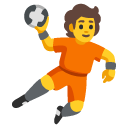


Appearance varies by platform and device. Google Noto, Twemoji, and OpenMoji are open-source.