🤾🏾♂️
The Emoji
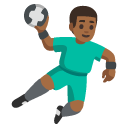
Man Playing Handball: Medium-dark Skin Tone
U+1F93E U+1F3FE U+200D U+2642 U+FE0F · :man_playing_handball_mediumdark_skin_tone:
Trend 28
Meaning layers
- interpretation
- Used to signal athletic energy, hustle, or someone who's 'in the game' — both literally and metaphorically. Also dropped casually to show someone is active, competitive, or unbothered.
- tiktok usage
- Appears in sports highlight clips, workout motivation videos, and occasionally in 'POV: you're the main character' athletic aesthetics.
- irony level
- 3 / 10
Platform meanings
- meaning
- Represents athletic hustle, sports pride, and active lifestyle content. Used in motivational sports edits and POV athlete content.
- trend usage
- Appears in sports highlight compilations, workout challenge videos, and representation-forward athletic content.
- hashtags
- #HandballLife#SportsEmoji#AthleteVibes#RepresentationMatters#HustleHard
- virality score
- 32 / 100
Cultural meanings
🇺🇸
Western / Gen-Z
Celebrated as a representation win — Gen Z in the West uses this emoji to affirm inclusive athletic identity and casually flex sporty energy.
🇵🇰
Pakistan & India
Handball is less mainstream here, so the emoji is more broadly interpreted as 'playing sports' or 'being athletic,' often used in school sports contexts.
🌍
Middle East
Handball has regional popularity in some Gulf states; the emoji is used straightforwardly for sports communication and team culture.
🌐
Global Neutral
Universally understood as an athletic/sports emoji, used across cultures to denote physical activity and competitive spirit.
🇧🇩
Bangladesh
Used casually in sports contexts, more likely interpreted as a general 'playing sports' symbol given handball's limited local profile.
🇱🇰
Sri Lanka
Rarely sport-specific; used broadly to indicate physical activity or youth sports culture in messaging.
🇨🇳
China
Handball has niche Olympic-era recognition; the emoji is used in sports apps, team chats, and Olympic season social posts.
🇯🇵
Japan
Japan has a competitive handball scene; the emoji is used authentically in sports communities and school athletics discussions.
🇰🇷
South Korea
Handball is part of the school and Olympic sports culture; used in sports forums and team encouragement messages.
🇹🇼
Taiwan
Used in school sports contexts and Olympic discussion threads; the skin tone modifier may spark conversations about diversity representation.
🇭🇰
Hong Kong
Used in international sports contexts and among fitness-conscious communities, often in Olympic or team sports discussions.
🇵🇭
Philippines
Handball is less common; the emoji is used more broadly for athletic energy or as a sports substitute emoji.
🇮🇩
Indonesia
Used in school sports and community leagues; broadly interpreted as an energetic sports figure rather than handball-specific.
🇹🇭
Thailand
Interpreted as a general athletic emoji; used in fitness motivation content and school sports communication.
🇻🇳
Vietnam
Used in sports contexts broadly; handball's limited visibility means it's more of a 'sporty person' symbol than sport-specific.
🇲🇾
Malaysia
Used in multicultural sports contexts; the medium-dark skin tone is seen as representation for Malay and Indian Malaysian communities.
🇸🇦
Saudi Arabia
Handball is popular in the Gulf region; the emoji is used authentically in sports group chats and national team content.
🇦🇪
UAE
Strong handball culture in the region means this emoji is used genuinely in sports leagues, school athletics, and team communications.
🇪🇬
Egypt
Egypt has a strong handball tradition as African champions; this emoji is used proudly in sports content and national team discussions.
🇹🇷
Turkey
Turkey has an active handball scene; the emoji is used in sports forums, team chats, and youth league communications.
🇮🇷
Iran
Used in sports contexts including school athletics; handball has regional recognition and the emoji appears in team-related messaging.
🇳🇬
Nigeria
Nigeria's growing handball scene plus the medium-dark skin tone makes this emoji feel culturally resonant and celebratory of Black athleticism.
🇿🇦
South Africa
Used in sports and fitness contexts; the skin tone modifier resonates strongly as a representation of Black South African athletic excellence.
🇬🇧
UK & Ireland
Handball is known but niche; used mostly in sports discussions, Olympic content, and fitness communities alongside gym culture references.
🇫🇷
France
France has a world-famous handball tradition; this emoji is used proudly and frequently in sports content, especially during World Championship seasons.
🇩🇪
Germany
Germany's strong handball culture means this emoji is actively used in Bundesliga discussions, team chats, and sports journalism.
🇪🇸
Spain & Italy
Spain has a notable handball tradition; the emoji appears in sports content, though football still dominates the emoji sports conversation.
🇧🇷
Brazil
Handball exists but is overshadowed by football; the emoji is used in Olympic contexts and by athletes who play the sport.
🇲🇽
Mexico
Less handball familiarity means it's used more as a general athletic symbol or during Olympic coverage discussions.
🌎
Latin America
Across Latin America, the emoji is generally used for athletic energy; handball is most visible during Pan American Games coverage.
🇦🇺
Australia & NZ
Handball has niche popularity; the emoji appears in sports diversity discussions and occasionally in school or recreational sports contexts.
How its meaning shifted
- 2010
Emoji did not exist yet; sports representation in emoji was extremely limited and skin tone modifiers had not been introduced.
- 2015
Introduced as part of Unicode 9.0 era expansion; early usage was literal and limited to sports enthusiasts and handball fans.
- 2020
Grew in visibility alongside the broader conversation about racial representation in emoji; athletes and sports communities adopted it more widely.
- 2026
Used authentically by handball communities, fitness culture, and as a representation symbol; also carries metaphorical 'in the game' energy in Gen Z communication.
See it on every platform
Adjacent emojis
- Opposite
- sleeping facecouch and lampzzz
- Often confused with
- person throwing ballbaseballhandball
Share & embed
Frequently asked
01What does the 🤾🏾♂️ Man Playing Handball: Medium-dark Skin Tone emoji mean?
A man with medium-dark skin tone playing handball, shown in a throwing or active athletic pose. Represents the sport of handball, physical activity, and competitive sports.
02What does 🤾🏾♂️ mean on TikTok?
Represents athletic hustle, sports pride, and active lifestyle content. Used in motivational sports edits and POV athlete content.
03What does 🤾🏾♂️ mean on WhatsApp?
Casually used to tell someone you're at practice, playing a sport, or in an active mood.
04What does 🤾🏾♂️ mean in Gen-Z slang?
Used to signal athletic energy, hustle, or someone who's 'in the game' — both literally and metaphorically. Also dropped casually to show someone is active, competitive, or unbothered.
05Is the 🤾🏾♂️ emoji safe to use?
An athlete playing handball — entirely safe, positive, and represents physical activity and sport.
06What does 🤾🏾♂️ mean in texting?
The medium-dark skin tone modifier carries added significance for users who see representation in mainstream emoji sets — it can evoke pride, belonging, and visibility beyond just sporting context.
07What is the shortcode for 🤾🏾♂️?
The shortcode for Man Playing Handball: Medium-dark Skin Tone is :man_playing_handball_mediumdark_skin_tone:
08What does 🤾🏾♂️ mean in dating?
Occasionally used to signal athletic physique or active lifestyle when flirting — a subtle 'I work out and I'm competitive' flex.
Safety & usage
- Safe meaning
- An athlete playing handball — entirely safe, positive, and represents physical activity and sport.
- Caution
- No commonly known toxic or coded usage; extremely low risk of misuse.
No significant warning needed. In extremely rare edge cases, the throwing motion could be used metaphorically in aggressive contexts, but this is not an established pattern.
How it looks across platforms
Appearance varies by platform and device. Google Noto, Twemoji, and OpenMoji are open-source.