🤽🏻♂️
The Emoji
Man Playing Water Polo: Light Skin Tone
U+1F93D U+1F3FB U+200D U+2642 U+FE0F · :man_playing_water_polo_light_skin_tone:
Trend 22
Meaning layers
- interpretation
- Used to signal being athletic, sporty, or pool-adjacent. Can ironically represent someone pretending to have an intense athletic lifestyle or flexing niche sport knowledge. Also used as shorthand for 'I'm built different' or 'this is my whole personality.'
- tiktok usage
- Appears in sports highlight edits, gym motivation content, or ironically when someone does anything remotely water-related. Sometimes used in 'POV: you're an elite athlete' skits.
- irony level
- 5 / 10
Platform meanings
- meaning
- Represents athletic content, water sports, or Olympic-adjacent humor. Used in sports motivation videos or ironic 'elite athlete' persona skits.
- trend usage
- Appears in hashtag stacks for water sports content, swim team TikToks, Olympic season content, and POV athlete videos.
- hashtags
- #WaterPolo#SwimLife#AthleteLife#OlympicSports#PoolVibes
- virality score
- 28 / 100
Cultural meanings
🇺🇸
Western / Gen-Z
Used literally by water polo players and ironically by Gen Z to dramatize minor water-related activities as Olympic-level performances. Fits within the broader trend of niche sport pride humor.
🇵🇰
Pakistan & India
Water polo is a relatively niche sport here, so this emoji is mostly used literally by athletes or sports enthusiasts. May also appear in discussions around Olympic coverage during Games season.
🌍
Middle East
Occasionally used in Gulf states where water polo is practiced in private clubs and schools. Mostly literal usage among sports communities; carries a positive, active lifestyle connotation.
🌐
Global Neutral
Universally understood as representing water polo or aquatic sports. Safe for cross-cultural communication in sports contexts without risk of misinterpretation.
🇧🇩
Bangladesh
Very rarely used due to low water polo popularity. When it appears, it is typically in Olympic discussion contexts or by internationally exposed users.
🇱🇰
Sri Lanka
Niche usage; water polo has a small but dedicated community in Sri Lanka. Primarily used by athletes or sports fans during Olympic seasons.
🇨🇳
China
Water polo has a growing presence in China's Olympic program. Used during Olympic seasons with pride, particularly when discussing national team performances.
🇯🇵
Japan
Japan has a competitive water polo tradition. Emoji is used earnestly in sports communities, school club discussions, and Olympic fan content.
🇰🇷
South Korea
Niche but growing sport in South Korea. Used primarily in sports media discussions and Olympic content; carries a positive, disciplined athlete connotation.
🇹🇼
Taiwan
Occasionally used in sports-themed content; water polo has a modest following. Tends to be used literally rather than ironically.
🇭🇰
Hong Kong
Water polo has a history in Hong Kong from British colonial sports culture. Used among local sports communities and during competitive seasons.
🇵🇭
Philippines
Rarely used organically. Appears during Olympic Games when water polo events are televised or in discussions about international sports.
🇮🇩
Indonesia
Minimal mainstream usage. Appears in sports enthusiast communities and during Olympic seasons as a straightforward sport reference.
🇹🇭
Thailand
Used occasionally in sports content, more so during Olympic Games. Water polo is played at some university levels, giving it a collegiate community niche.
🇻🇳
Vietnam
Very niche; appears mostly in Olympic sports discussion content. Not commonly used in everyday casual communication.
🇲🇾
Malaysia
Water polo is played competitively at school and national levels in Malaysia. Used in sports team chats, school announcements, and athletic community posts.
🇸🇦
Saudi Arabia
Water polo is played in private clubs and at university level. Emoji usage is limited to sports-specific communities and Olympic viewers.
🇦🇪
UAE
Growing water sports culture in UAE means this emoji sees occasional use in sports club communications, fitness communities, and Olympic discussions.
🇪🇬
Egypt
Water polo has a historical tradition in Egypt. Used among sports enthusiasts, especially during Mediterranean Games or African Championships discussions.
🇹🇷
Turkey
Turkey has a competitive water polo scene. Used in sports club communications, national team supporter content, and athletic community posts.
🇮🇷
Iran
Iran has a notable water polo tradition and has competed internationally. Used with athletic pride in sports communities and during major international tournaments.
🇳🇬
Nigeria
Minimal mainstream usage. Appears in Olympic coverage contexts or among internationally-minded sports enthusiasts.
🇿🇦
South Africa
Water polo is played competitively at school and university levels in South Africa. Used in sports team communications and school sports culture posts.
🇬🇧
UK & Ireland
Water polo has a modest presence in UK sports culture. Used literally in sports communities and occasionally ironically in British humor about obscure sports.
🇫🇷
France
France has a competitive water polo history. Used with genuine athletic pride in sports communities, especially during Olympic or European Championship seasons.
🇩🇪
Germany
Germany has a strong water polo tradition, particularly in club sports. Used earnestly in sports communities, club announcements, and Olympic fan discussions.
🇪🇸
Spain & Italy
Both countries have strong water polo cultures, especially Italy which is a world powerhouse. Emoji is used with significant athletic pride and frequency in sports content.
🇧🇷
Brazil
Water polo is played competitively in Brazil. Used in sports communities and during Pan American Games or Olympic season discussions with national pride.
🇲🇽
Mexico
Niche sport in Mexico but present at university and club levels. Used in sports enthusiast communities and Olympic discussions.
🌎
Latin America
Occasional usage across Latin America during Olympic seasons or regional sports events. More common in countries with established aquatic sports traditions.
🇦🇺
Australia & NZ
Australia has a strong water polo culture, particularly women's water polo. Used frequently in sports communities, club communications, and with genuine athletic enthusiasm.
How its meaning shifted
- 2010
Emoji did not exist yet in 2010. Water polo as a concept had no dedicated emoji representation; users relied on swimming or sports emoji approximations.
- 2015
Early versions of sports emoji existed but water polo-specific emoji had not yet been introduced. The concept was represented through combinations of water and ball emoji.
- 2020
Emoji had been introduced with skin tone and gender modifiers. Usage was primarily literal among water polo players and Olympic sports fans, with growing awareness during Tokyo 2020 discussions.
- 2026
Used both literally by actual athletes and ironically by Gen Z for humor. Sees spikes during Olympic seasons and has found a home in niche sports pride communities online.
See it on every platform
Adjacent emojis
- Often confused with
- person swimmingperson surfingperson rowing boat
- Can replace
- person swimmingwater wavesport medal
Share & embed
Frequently asked
01What does the 🤽🏻♂️ Man Playing Water Polo: Light Skin Tone emoji mean?
A male figure with light skin tone playing water polo, shown throwing or catching a ball in water. Combines the sport emoji with a male gender modifier and light skin tone modifier.
02What does 🤽🏻♂️ mean on TikTok?
Represents athletic content, water sports, or Olympic-adjacent humor. Used in sports motivation videos or ironic 'elite athlete' persona skits.
03What does 🤽🏻♂️ mean on WhatsApp?
Direct reference to water polo activity — used when texting about a game, practice, or match. Can also be used to describe splashing around in a pool casually.
04What does 🤽🏻♂️ mean in Gen-Z slang?
Used to signal being athletic, sporty, or pool-adjacent. Can ironically represent someone pretending to have an intense athletic lifestyle or flexing niche sport knowledge. Also used as shorthand for 'I'm built different' or 'this is my whole personality.'
05Is the 🤽🏻♂️ emoji safe to use?
A straightforward sports emoji representing water polo, athletic activity, and aquatic competition. Completely safe for all audiences.
06What does 🤽🏻♂️ mean in texting?
Signals ambition, physical confidence, and team-oriented identity. The specificity of the sport can also signal a desire to stand out as unique or niche-interest-driven.
07What is the shortcode for 🤽🏻♂️?
The shortcode for Man Playing Water Polo: Light Skin Tone is :man_playing_water_polo_light_skin_tone:
08What does 🤽🏻♂️ mean in dating?
Rarely used as a direct flirt tool, but can appear in bios or openers to signal an active, sporty lifestyle — implying physical fitness and discipline, which can be attractive signals.
Safety & usage
- Safe meaning
- A straightforward sports emoji representing water polo, athletic activity, and aquatic competition. Completely safe for all audiences.
- Caution
- No known toxic or harmful uses. Extremely low risk of misuse or negative interpretation.
No significant warnings. As with any human figure emoji, context determines appropriateness, but no inherent harmful connotations exist.
How it looks across platforms
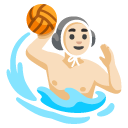
Appearance varies by platform and device. Google Noto, Twemoji, and OpenMoji are open-source.