🏊
The Emoji
Person Swimming
U+1F3CA · :person_swimming:
Trend 55
Meaning layers
- interpretation
- Used to express being 'in the deep end' of a situation, grinding through something overwhelming, or literally talking about swim activities. Also used metaphorically for 'staying afloat' through life's chaos.
- tiktok usage
- Appears in fitness motivation content, summer aesthetic videos, and ironically in 'drowning in work/feelings' metaphor content.
- irony level
- 3 / 10
Platform meanings
- meaning
- Used in swim training videos, summer lifestyle content, and ironically in overwhelmed/burnout storytelling.
- trend usage
- Appears in #SwimLife, fitness transformation content, pool aesthetic videos, and 'things I do to cope' narrative formats.
- hashtags
- #SwimLife#PoolDay#SwimWorkout#StayingAfloat#SummerVibes
- virality score
- 62 / 100
Cultural meanings
🇺🇸
Western / Gen-Z
Used both literally for swim culture and ironically to mean 'barely keeping my head above water' in meme language. Strongly associated with summer aesthetics and Olympic pride.
🇵🇰
Pakistan & India
Primarily used literally to indicate swimming activities; swimming pools are less ubiquitous so the emoji often signals travel, luxury, or coastal living. Also used during cricket-adjacent sports discussions online.
🌍
Middle East
Associated with private pool culture, resort vacations, and water parks, which are popular in the Gulf. Used in travel and leisure contexts rather than competitive sports.
🌐
Global Neutral
Universally understood as a symbol of swimming, water sports, fitness, and summer leisure with minimal cultural baggage.
🇧🇩
Bangladesh
Interestingly, in a country of rivers and waterways, this emoji is used in both literal swimming and flood-related metaphorical contexts online.
🇱🇰
Sri Lanka
Used in coastal and beach contexts; Sri Lanka's island nature makes water activities culturally familiar. Also appears in sports content tied to South Asian Games.
🇨🇳
China
Used in contexts of competitive swimming, especially around national pride for Chinese Olympic swimmers. Also used in wellness and fitness content popular on WeChat and Weibo.
🇯🇵
Japan
Associated with school swim classes (a compulsory part of Japanese education), summer pools, and competitive swimming. Used fondly and nostalgically in social media.
🇰🇷
South Korea
Linked to fitness culture, gym content, and summer leisure. Korean users may pair it with wellness and self-care content on platforms like KakaoTalk.
🇹🇼
Taiwan
Used in summer content, leisure pool posts, and travel content. Taiwan's beach culture makes this emoji relatively common in lifestyle posts.
🇭🇰
Hong Kong
Associated with public swimming pools (a popular local activity) and competitive swimming. Used casually in plans to go swimming in city pools or beaches.
🇵🇭
Philippines
Strongly tied to beach and island culture — used frequently in summer posts, island hopping content, and ocean swimming. Very positive and enthusiastic connotation.
🇮🇩
Indonesia
Associated with beach tourism, island vacations, and water sports given Indonesia's archipelago geography. Used in travel content and leisure posts.
🇹🇭
Thailand
Tied to resort and beach tourism, Muay Thai athlete conditioning, and island lifestyle. Appears heavily in travel influencer content related to Thai beaches.
🇻🇳
Vietnam
Used in coastal travel content, beach vacation posts, and increasingly in fitness content as gym culture grows in urban Vietnam.
🇲🇾
Malaysia
Associated with pool culture in condominiums and resorts; also used in water park and beach content. Common in WhatsApp group chats planning outings.
🇸🇦
Saudi Arabia
With growing interest in sports and Vision 2030 fitness initiatives, this emoji appears in gym and sports content. Gender-separated swimming contexts mean usage may vary by audience.
🇦🇪
UAE
Strongly associated with luxury resort pools, beach clubs, and a vibrant expat fitness culture in Dubai and Abu Dhabi. High visibility in lifestyle influencer content.
🇪🇬
Egypt
Used in content about the Nile, Mediterranean coast, Red Sea, and resort towns like Sharm el-Sheikh. Swimming is recreational and touristic in Egyptian social media use.
🇹🇷
Turkey
Associated with Aegean and Mediterranean beach culture, summer holidays (tatil), and competitive swimming. Very common in summer travel content.
🇮🇷
Iran
Swimming is a popular sport in Iran; this emoji appears in sports content and is used by athletes. Gender-segregated pools affect context — women's swim content is more private.
🇳🇬
Nigeria
Used in aspirational content tied to travel, wealth, and luxury pool access. Also appears in sports content as Nigerian swimming gains visibility.
🇿🇦
South Africa
Linked to beach culture (Cape Town, Durban), competitive swimming (a strong national sport), and summer leisure. Used proudly in swimming achievement posts.
🇬🇧
UK & Ireland
Often used ironically given the cold water — 'brave enough to swim in the sea in October 🏊' is a relatable British format. Also used earnestly for triathlon and sport content.
🇫🇷
France
Associated with summer holidays (les vacances), the French riviera, competitive swimming, and the Paris 2024 Olympics which boosted swimming emoji usage nationally.
🇩🇪
Germany
Tied to organized sports culture (Schwimmbad), competitive swimming, and efficient fitness routines. Used straightforwardly in sports and wellness content.
🇪🇸
Spain & Italy
Heavily associated with Mediterranean beach culture, summer vacations, and a relaxed coastal lifestyle. Used exuberantly in holiday and leisure content.
🇧🇷
Brazil
Deeply tied to beach culture (especially Rio), outdoor swimming, and national pride in Brazilian swimmers. One of the more enthusiastically used sports emojis in Brazilian social media.
🇲🇽
Mexico
Used in beach destination content (Cancun, Los Cabos), resort life, and family vacation posts. Also appears in fitness content in urban areas.
🌎
Latin America
Broadly associated with tropical beach culture, summer joy, and athletic aspiration. Used across travel, fitness, and leisure content throughout the region.
🇦🇺
Australia & NZ
Extremely culturally relevant — tied to surf lifesaving, competitive swimming (national pride), beach lifestyle, and school swimming carnivals. One of the most naturally resonant sports emojis in the region.
How its meaning shifted
- 2010
Primarily literal — used in texts and early social media to indicate swimming plans, swim lessons, or sports schedules. Limited creative or metaphorical use.
- 2015
Gained wider use with the fitness and wellness social media boom. Began appearing in workout posts, triathlon content, and summer lifestyle photography.
- 2020
Metaphorical use expanded significantly — 'swimming through pandemic anxiety' became a format. Also surged during the Tokyo 2020 Olympics delay discussions and fitness content during lockdowns.
- 2026
Fully integrated into both literal swim content and ironic 'barely staying afloat' life commentary. Used in Olympic cycles, Gen Z wellness discourse, and as part of summer aesthetic visual language across all major platforms.
See it on every platform
Compare with
Emoji combinations
Adjacent emojis
- Often confused with
- person rowing boatperson in lotus positionperson running
- Can replace
- water wavedropletperson surfing
Share & embed
Frequently asked
01What does the 🏊 Person Swimming emoji mean?
A person swimming, typically depicted in a horizontal position with arms extended in a freestyle or front crawl stroke, surrounded by water or waves.
02What does 🏊 mean on TikTok?
Used in swim training videos, summer lifestyle content, and ironically in overwhelmed/burnout storytelling.
03What does 🏊 mean on WhatsApp?
Used to tell someone you're going swimming, planning a pool outing, or describing a swim session.
04What does 🏊 mean in Gen-Z slang?
Used to express being 'in the deep end' of a situation, grinding through something overwhelming, or literally talking about swim activities. Also used metaphorically for 'staying afloat' through life's chaos.
05Is the 🏊 emoji safe to use?
A completely safe, benign emoji representing swimming, water sports, fitness, and summer leisure activities.
06What does 🏊 mean in texting?
Swimming is psychologically associated with both solitude and endurance. The emoji evokes a sense of meditative effort — pushing through resistance while being supported by water, often linked to stress relief and athletic identity.
07What is the shortcode for 🏊?
The shortcode for Person Swimming is :person_swimming:
08What does 🏊 mean in dating?
Can be used flirtatiously to suggest 'come swim with me' or hint at a beach/pool date. Occasionally used to say someone is 'out of their depth' in a playful, teasing way.
Safety & usage
- Safe meaning
- A completely safe, benign emoji representing swimming, water sports, fitness, and summer leisure activities.
- Caution
- No known toxic or harmful usage patterns. In very rare cases could be used mockingly toward someone 'drowning' in difficulties, but this is not a recognized toxic pattern.
No significant warnings. Occasionally used in dark humor contexts about overwhelm, but this is considered mild and non-harmful.
How it looks across platforms
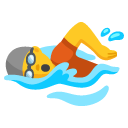


Appearance varies by platform and device. Google Noto, Twemoji, and OpenMoji are open-source.