🤽🏾♂️
The Emoji
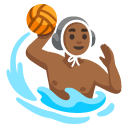
Man Playing Water Polo: Medium-dark Skin Tone
U+1F93D U+1F3FE U+200D U+2642 U+FE0F · :man_playing_water_polo_mediumdark_skin_tone:
Trend 14
Meaning layers
- interpretation
- Used to flex aquatic athleticism, signal a niche sporty identity, or humorously represent being 'in deep water' on a situation. Also used ironically to represent someone who is trying too hard or out of their element.
- tiktok usage
- Appears in sports highlight edits, gym-to-pool transition videos, or ironically when someone is 'drowning' in work or drama.
- irony level
- 5 / 10
Platform meanings
- meaning
- Represents water polo culture, aquatic athleticism, or is used humorously in 'drowning in stress' metaphor content.
- trend usage
- Used in sports transition edits, water sports POVs, and niche athlete identity videos. Sometimes paired with 'things I do that nobody understands' trends.
- hashtags
- #waterpolo#poloaquatico#athletelife#aquaticsports#swimlife
- virality score
- 18 / 100
Cultural meanings
🇺🇸
Western / Gen-Z
Used primarily by actual water polo players or ironically to signal niche athletic identity; the medium-dark skin tone is appreciated for representation.
🇵🇰
Pakistan & India
Water polo is rare in mainstream culture but exists in elite sports circles; this emoji may be used by niche sports enthusiasts or to signal overseas athletic aspirations.
🌍
Middle East
Water polo is played in Gulf nations with pools and sports academies; the emoji is used in sports club and school athletic contexts.
🌐
Global Neutral
Universally understood as a sports/athletic emoji representing water polo; skin tone variation appreciated for diversity.
🇧🇩
Bangladesh
Water polo is extremely niche; the emoji would mostly be used in reference to international sports or the Olympics.
🇱🇰
Sri Lanka
Rarely used locally; may appear in Olympic viewing contexts or content about international sports.
🇨🇳
China
China has a competitive water polo team; used in sports fan communities, Olympic discussion forums, and athlete social media.
🇯🇵
Japan
Japan has a historic water polo tradition; used by sports clubs, school teams, and Olympic fans especially around summer games.
🇰🇷
South Korea
Used by sports enthusiasts and Olympic fans; water polo is a minority sport but has a dedicated community.
🇹🇼
Taiwan
Primarily used in Olympic and international sports contexts; niche but respected athletic representation.
🇭🇰
Hong Kong
Used in expat sports communities, international school sports, and Olympic discussion content.
🇵🇭
Philippines
Water polo is played in elite schools and universities; the emoji is used by student athletes and sports clubs.
🇮🇩
Indonesia
Used in sports communities and school athletic contexts; water polo is growing in popularity.
🇹🇭
Thailand
Used in aquatics and Olympic sports communities; gaining traction in youth sports culture.
🇻🇳
Vietnam
Very niche usage; primarily appears in Olympic or international sports coverage contexts.
🇲🇾
Malaysia
Used in aquatics sports communities and school sports contexts; water polo is a minority but organized sport.
🇸🇦
Saudi Arabia
With growing sports investment and Vision 2030, water polo is an emerging sport; emoji used in sports academy and youth athletic content.
🇦🇪
UAE
Used in expat sports communities and elite sports academies; the UAE has growing aquatics infrastructure.
🇪🇬
Egypt
Egypt has a notable water polo history in Africa; the emoji is used proudly in Egyptian sports contexts and fan communities.
🇹🇷
Turkey
Turkey participates in European water polo competitions; used in sports club and fan community contexts.
🇮🇷
Iran
Iran has a competitive water polo scene; used by athletes and fans especially around Asian Games coverage.
🇳🇬
Nigeria
Water polo is emerging in Nigeria; primarily used in reference to international sports or Olympic aspirations.
🇿🇦
South Africa
South Africa has a water polo culture especially in schools; used by student athletes, coaches, and sports communities.
🇬🇧
UK & Ireland
Water polo is played at university and club level; the emoji is used by players, fans, and in sardonic British humor about niche sports.
🇫🇷
France
France has a strong water polo tradition; used in sports communities, club announcements, and Olympic fan content.
🇩🇪
Germany
Germany is competitive in European water polo; used in sports club contexts and Olympic fan discussions.
🇪🇸
Spain & Italy
Spain and Italy are water polo powerhouses; the emoji is used widely in passionate fan communities, sports news, and athlete profiles.
🇧🇷
Brazil
Brazil has a water polo presence especially in São Paulo; used in sports community and Olympic contexts.
🇲🇽
Mexico
Used in aquatics sports communities and school sports contexts; water polo is a minority sport with dedicated players.
🌎
Latin America
Across Latin America, used primarily in Olympic context and by niche athletic communities; gaining visibility through international competitions.
🇦🇺
Australia & NZ
Australia has a strong water polo culture; the emoji is commonly used by players, coaches, and sports fans in everyday athletic contexts.
How its meaning shifted
- 2010
This specific emoji with medium-dark skin tone modifier did not exist; water polo emoji was not available at all in Unicode.
- 2015
Water polo emoji was introduced but skin tone variants were still limited; used primarily by actual athletes and sports apps.
- 2020
With expanded skin tone modifiers standardized, this specific variant became available; used in sports content, Olympic discourse, and diversity-positive emoji usage.
- 2026
Used by water polo athletes, sports communities, and ironically by Gen Z for 'out of depth' metaphors; skin tone representation appreciated in inclusive digital content.
See it on every platform
Adjacent emojis
- Often confused with
- person surfingman playing handballperson rowing boat
Share & embed
Frequently asked
01What does the 🤽🏾♂️ Man Playing Water Polo: Medium-dark Skin Tone emoji mean?
A male figure playing water polo in a pool, depicted with medium-dark skin tone, wearing a cap and throwing or catching a ball in water.
02What does 🤽🏾♂️ mean on TikTok?
Represents water polo culture, aquatic athleticism, or is used humorously in 'drowning in stress' metaphor content.
03What does 🤽🏾♂️ mean on WhatsApp?
Used by water polo players or fans to reference the sport directly; also casually to say 'I'm at the pool' or 'I'm doing something sporty.'
04What does 🤽🏾♂️ mean in Gen-Z slang?
Used to flex aquatic athleticism, signal a niche sporty identity, or humorously represent being 'in deep water' on a situation. Also used ironically to represent someone who is trying too hard or out of their element.
05Is the 🤽🏾♂️ emoji safe to use?
Represents the sport of water polo and athletic activity; fully appropriate and positive.
06What does 🤽🏾♂️ mean in texting?
Signals a strong personal identity tied to sport or physical achievement; the niche nature of water polo can invoke both pride and humor, often used by those who want to stand out from mainstream sports culture.
07What is the shortcode for 🤽🏾♂️?
The shortcode for Man Playing Water Polo: Medium-dark Skin Tone is :man_playing_water_polo_mediumdark_skin_tone:
08What does 🤽🏾♂️ mean in dating?
Used to signal fitness, aquatic hobbies, or an athletic lifestyle; a subtle flex that says 'I'm active and disciplined.'
Safety & usage
- Safe meaning
- Represents the sport of water polo and athletic activity; fully appropriate and positive.
- Caution
- Extremely rare but could theoretically be used in racial targeting given the skin tone modifier, though this is highly unlikely in practice.
No notable misuse patterns; skin tone emojis are occasionally subject to racist misuse but this specific emoji has no documented toxic usage pattern.
How it looks across platforms
Appearance varies by platform and device. Google Noto, Twemoji, and OpenMoji are open-source.