👨🏿🤝👨🏻
The Emoji
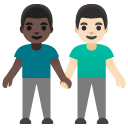
Men Holding Hands: Dark Skin Tone, Light Skin Tone
U+1F468 U+1F3FF U+200D U+1F91D U+200D U+1F468 U+1F3FB · :men_holding_hands_dark_skin_tone_light_skin_tone:
Trend 58
Meaning layers
- interpretation
- Used to represent brotherhood, male bonding, LGBTQ+ pride, interracial friendship, or wholesome bromance vibes. Gen Z uses it freely regardless of sexual orientation to show closeness with a friend.
- tiktok usage
- Appears in duo content, 'bestie' videos, pride-related trends, and interracial friendship montages. Sometimes used ironically in 'no hetero' joke formats.
- irony level
- 3 / 10
Platform meanings
- meaning
- Represents male friendship, gay couples, interracial bonds, or pride in diversity. Shows up in duet-style content and 'found family' narratives.
- trend usage
- Used in pride month compilations, interracial friendship appreciation videos, and 'no hetero' ironic duo content.
- hashtags
- #pride#malebestfriends#interracialfriendship#lgbtq#brotherlyove
- virality score
- 62 / 100
Cultural meanings
🇺🇸
Western / Gen-Z
Broadly used to represent gay male couples, interracial friendships, and LGBTQ+ allyship. Gen Z embraces it freely for both platonic and romantic male bonds.
🇵🇰
Pakistan & India
Ironically, male hand-holding is culturally common as a sign of friendship in South Asia, though the LGBTQ+ connotation may cause discomfort in conservative communities. Used cautiously online.
🌍
Middle East
Largely avoided in public social media due to cultural and legal stigma against same-sex relationships. May be used privately by LGBTQ+ individuals in the region.
🌐
Global Neutral
Universally understood as representing male companionship or partnership. The dual skin tone signals cross-cultural solidarity and diversity.
🇧🇩
Bangladesh
Male platonic touch is normalized culturally, but the LGBTQ+ interpretation makes this emoji sensitive in public contexts. Used mainly by progressive urban youth.
🇱🇰
Sri Lanka
Similar to South Asian neighbors — platonic male friendship is common, but LGBTQ+ associations make public use of this emoji rare in conservative circles.
🇨🇳
China
Used cautiously; same-sex relationships face increasing censorship. May appear in private chats between LGBTQ+ youth or on niche international platforms.
🇯🇵
Japan
Japan has a visible BL (Boys Love) culture and growing LGBTQ+ acceptance in urban areas. The emoji is used in fandom and LGBTQ+ communities without strong stigma.
🇰🇷
South Korea
Similar to Japan, BL fandoms are popular, and younger Koreans use it in fan contexts. However, broader societal acceptance is still developing.
🇹🇼
Taiwan
Taiwan legalized same-sex marriage in 2019 and has one of Asia's most LGBTQ+-affirming cultures. The emoji is used openly and positively.
🇭🇰
Hong Kong
Used in LGBTQ+ communities and among progressive youth, though political tensions complicate open expression. Still appears in pride-related content.
🇵🇭
Philippines
Generally friendly toward LGBTQ+ expression in urban areas. The emoji is used in gay couple content, pride events, and friendship posts.
🇮🇩
Indonesia
Highly sensitive due to conservative Islamic majority and anti-LGBTQ+ sentiment. Rarely used publicly; mostly avoided or used covertly.
🇹🇭
Thailand
Thailand has a visible and celebrated LGBTQ+ culture. The emoji is used freely in pride content, relationship posts, and friendship celebrations.
🇻🇳
Vietnam
Increasing LGBTQ+ visibility in urban Vietnam. The emoji appears in progressive youth communities and pride-related content online.
🇲🇾
Malaysia
Sensitive due to Islamic law and anti-LGBTQ+ policies. Rarely used publicly; LGBTQ+ individuals may use it in private or on international platforms.
🇸🇦
Saudi Arabia
Highly sensitive and rarely used due to strict laws against same-sex relationships. Might appear among diaspora or on private international accounts.
🇦🇪
UAE
Similar to Saudi Arabia — legal and social restrictions make public use uncommon. Used discreetly by LGBTQ+ individuals online.
🇪🇬
Egypt
Conservative society with legal ambiguity around LGBTQ+ expression. The emoji is avoided in public posts but may appear in private digital spaces.
🇹🇷
Turkey
Used by LGBTQ+ communities despite increasing political hostility. Appears in pride-related posts, ally content, and underground LGBTQ+ networks.
🇮🇷
Iran
Extremely sensitive due to criminalization of same-sex relationships. Used only in very private or diaspora-based digital contexts.
🇳🇬
Nigeria
Largely taboo due to legal prohibitions on same-sex relationships. Used very rarely and almost exclusively in diaspora or international LGBTQ+ contexts.
🇿🇦
South Africa
South Africa has constitutional protections for LGBTQ+ rights and an active pride culture. The emoji is used openly in relationships, pride events, and ally content.
🇬🇧
UK & Ireland
Widely used and culturally accepted. Appears in pride posts, gay couple content, interracial friendship celebrations, and ally messaging.
🇫🇷
France
Used in LGBTQ+ circles and diversity advocacy. France's secular tradition of equality makes this emoji generally well-received in inclusive social spaces.
🇩🇪
Germany
Used positively in LGBTQ+ and diversity contexts. Germany's strong civil rights culture embraces the emoji in pride, relationship, and allyship content.
🇪🇸
Spain & Italy
Spain is very LGBTQ+-affirming; the emoji is used freely. Italy has a more mixed cultural reception, but LGBTQ+ communities use it prominently in urban areas.
🇧🇷
Brazil
Brazil has one of the world's largest pride events and a vibrant LGBTQ+ community. The emoji is widely used across social platforms for couples, friends, and pride content.
🇲🇽
Mexico
Used in LGBTQ+ communities, particularly in urban centers like Mexico City. Growing acceptance makes it increasingly common in progressive social media spaces.
🌎
Latin America
Variable across countries; more accepted in Argentina and Chile, more sensitive in Honduras or Guatemala. Generally used by LGBTQ+ youth in digital-first spaces.
🇦🇺
Australia & NZ
Widely accepted and celebrated. Both countries have strong LGBTQ+ rights frameworks, and the emoji is used freely for couples, friends, and pride advocacy.
How its meaning shifted
- 2010
Emoji of this specificity did not exist; representation of same-sex or diverse couples in emoji form was virtually absent from Unicode.
- 2015
Early versions of same-sex couple emojis emerged, though skin tone variants were limited. Usage was primarily limited to LGBTQ+ advocacy and pride contexts.
- 2020
Multi-skin-tone holding hands emojis became more standardized. Usage expanded to interracial couple representation and mainstream LGBTQ+ visibility on major platforms.
- 2026
Widely normalized across platforms. Used freely for gay couples, interracial friendships, and allyship. Appears in mainstream media, brand communications, and everyday messaging without requiring explicit LGBTQ+ context.
See it on every platform
Adjacent emojis
- Often confused with
- people holding handshandshakecouple with heart man man
- Can replace
- rainbow flagred heartpeople holding hands
Share & embed
Frequently asked
01What does the 👨🏿🤝👨🏻 Men Holding Hands: Dark Skin Tone, Light Skin Tone emoji mean?
Two men holding hands, depicted with dark skin tone for the left figure and light skin tone for the right figure, representing male companionship, partnership, or romantic relationship across different skin tones.
02What does 👨🏿🤝👨🏻 mean on TikTok?
Represents male friendship, gay couples, interracial bonds, or pride in diversity. Shows up in duet-style content and 'found family' narratives.
03What does 👨🏿🤝👨🏻 mean on WhatsApp?
Signals a close friendship between two men or a gay couple, often sent between male friends as a wholesome 'we're tight' expression.
04What does 👨🏿🤝👨🏻 mean in Gen-Z slang?
Used to represent brotherhood, male bonding, LGBTQ+ pride, interracial friendship, or wholesome bromance vibes. Gen Z uses it freely regardless of sexual orientation to show closeness with a friend.
05Is the 👨🏿🤝👨🏻 emoji safe to use?
Represents male friendship, gay romantic partnership, interracial bonding, and LGBTQ+ pride in a wholesome, affirming way.
06What does 👨🏿🤝👨🏻 mean in texting?
Psychologically signals belonging, trust, and cross-cultural unity. The dual skin tone amplifies its symbolism of bridging differences, making it especially emotionally resonant for those who value diversity and acceptance.
07What is the shortcode for 👨🏿🤝👨🏻?
The shortcode for Men Holding Hands: Dark Skin Tone, Light Skin Tone is :men_holding_hands_dark_skin_tone_light_skin_tone:
08What does 👨🏿🤝👨🏻 mean in dating?
Used by gay or bisexual men to signal romantic interest or to hint at their orientation in a subtle, low-pressure way.
Safety & usage
- Safe meaning
- Represents male friendship, gay romantic partnership, interracial bonding, and LGBTQ+ pride in a wholesome, affirming way.
- Caution
- In rare cases, used mockingly to imply that two men are gay as an insult, or deployed in homophobic harassment to ridicule perceived closeness between men.
Context-dependent in conservative cultural settings where LGBTQ+ expression is stigmatized or illegal. Generally safe in Western and progressive digital spaces. Potential for misuse in targeted harassment.
How it looks across platforms


Appearance varies by platform and device. Google Noto, Twemoji, and OpenMoji are open-source.