👬🏼
The Emoji
Men Holding Hands: Medium-light Skin Tone
U+1F46C U+1F3FC · :men_holding_hands_mediumlight_skin_tone:
Trend 65
Meaning layers
- interpretation
- Used to celebrate gay or queer male relationships, male friendship ('bromance'), LGBTQ+ solidarity, or Pride representation. Also used casually to describe two guys doing anything together.
- tiktok usage
- Appears in Pride content, 'shipping' videos of fictional male characters, bromance compilations, and LGBTQ+ coming-out stories.
- irony level
- 3 / 10
Platform meanings
- meaning
- Symbol of gay male couples, Pride celebration, and male best-friend energy. Frequently used in LGBTQ+ storytelling and couple reveal videos.
- trend usage
- Used in Pride Month challenges, 'couples that look alike' trends, fictional character shipping edits, and coming-out videos.
- hashtags
- #PrideTikTok#GayCouple#BoysBoysBoys#LGBTQTikTok#Bromance
- virality score
- 72 / 100
Cultural meanings
🇺🇸
Western / Gen-Z
Widely used and understood as a positive symbol of gay male relationships and LGBTQ+ Pride; embraced enthusiastically in progressive communities and on social media.
🇵🇰
Pakistan & India
Rarely used openly due to social stigma around same-sex relationships; may be used cautiously within private LGBTQ+ networks or urban queer communities in major cities like Mumbai or Lahore.
🌍
Middle East
Largely avoided in public digital spaces due to legal and social restrictions on same-sex relationships across most of the region; used discreetly in underground LGBTQ+ communities.
🌐
Global Neutral
Recognized internationally as a symbol of same-sex male partnership or LGBTQ+ representation, though reception varies widely by cultural and legal context.
🇧🇩
Bangladesh
Very rarely used publicly given strong social and religious conservatism; may exist in underground LGBTQ+ digital spaces among youth.
🇱🇰
Sri Lanka
Infrequently used in mainstream digital communication; same-sex acts remain criminalized, so usage is largely confined to private or activist contexts.
🇨🇳
China
Used cautiously by LGBTQ+ individuals, particularly on platforms like Weibo, though subject to content moderation; sometimes replaced with coded language or other symbols.
🇯🇵
Japan
Used in contexts of BL (Boys' Love) fandom culture, gay couple representation, and Pride events; relatively accepted in pop culture contexts even if broader social acceptance is still growing.
🇰🇷
South Korea
Appears in LGBTQ+ online communities and Pride-related content; faces mixed reception given ongoing societal debates about queer rights, but increasingly visible among younger users.
🇹🇼
Taiwan
Freely and positively used given Taiwan's status as the first Asian country to legalize same-sex marriage; common in Pride content and everyday couple communication.
🇭🇰
Hong Kong
Used in LGBTQ+ contexts by activists and community members, though the political climate has somewhat chilled public Pride expression; remains present in digital queer spaces.
🇵🇭
Philippines
Used in queer communities and among allies; the Philippines has a relatively visible LGBTQ+ culture, though same-sex unions are not legally recognized, so the emoji carries hopeful connotation.
🇮🇩
Indonesia
Rarely used openly given strong religious and social conservatism; largely confined to private or underground LGBTQ+ communities in urban centers like Jakarta.
🇹🇭
Thailand
Used in the context of Thailand's visible gay culture and tourism industry; fairly accepted in urban and entertainment contexts, though legal same-sex marriage recognition was only recently achieved.
🇻🇳
Vietnam
Used cautiously; Vietnam has shown some openness toward LGBTQ+ visibility in recent years, and the emoji appears in Pride-related content among younger urban populations.
🇲🇾
Malaysia
Very rarely used publicly due to legal prohibitions on same-sex relationships and strong religious conservatism; exists only in discreet private or activist digital spaces.
🇸🇦
Saudi Arabia
Essentially not used in public digital communication; same-sex relationships are illegal and severely stigmatized, making any public use of this emoji extremely rare and risky.
🇦🇪
UAE
Similar to Saudi Arabia, public use is extremely limited due to legal prohibition; may appear in expat LGBTQ+ networks or among international residents in private contexts.
🇪🇬
Egypt
Rarely used openly; same-sex relationships face legal persecution and strong social stigma, limiting use to very private or diaspora contexts.
🇹🇷
Turkey
Used among LGBTQ+ communities in Istanbul and other urban areas, though Pride events have faced government bans; emoji use is present in activist and community digital spaces.
🇮🇷
Iran
Extremely rare in public digital use given severe legal penalties for same-sex relationships; may appear in diaspora communities or encrypted private communications.
🇳🇬
Nigeria
Rarely used publicly due to strict anti-LGBTQ+ laws and social stigma; confined to underground queer communities or diaspora social media contexts.
🇿🇦
South Africa
Relatively freely used given South Africa's constitutional protections for LGBTQ+ rights and legal same-sex marriage; common in Pride content and urban queer communities.
🇬🇧
UK & Ireland
Widely used and positively received; strong LGBTQ+ rights framework means it's common in Pride celebrations, couple announcements, and everyday queer expression.
🇫🇷
France
Used openly in LGBTQ+ contexts; France's relatively progressive stance on gay rights makes this emoji comfortable in public digital communication.
🇩🇪
Germany
Freely used in LGBTQ+ positive contexts; Germany's strong civil rights protections for gay couples mean the emoji is seen as normal and celebratory.
🇪🇸
Spain & Italy
Spain uses it freely given its long history of LGBTQ+ rights; Italy's usage is growing as marriage equality discussions continue, with the emoji common among younger and progressive users.
🇧🇷
Brazil
Widely used in Brazil's large and vibrant LGBTQ+ community, especially around São Paulo Pride which is one of the world's largest; common in couple and activist content.
🇲🇽
Mexico
Used actively in LGBTQ+ communities, especially in Mexico City and other urban areas where Pride culture is strong; growing visibility despite some regional conservatism.
🌎
Latin America
Usage varies across the region; more open in countries like Argentina and Uruguay with strong LGBTQ+ rights, and more cautious in more conservative nations.
🇦🇺
Australia & NZ
Freely and positively used following marriage equality legislation in both countries; common in Pride content, couple posts, and everyday LGBTQ+ expression.
How its meaning shifted
- 2010
This specific emoji did not exist in 2010; male couple representation in emoji was absent, and same-sex couples had to improvise with generic people or heart emojis.
- 2015
Early versions of men-holding-hands emojis began appearing with Unicode 8.0; used primarily by LGBTQ+ advocates and in Pride content, though with limited skin tone variety.
- 2020
Skin tone variants became more established; usage expanded significantly with growing mainstream LGBTQ+ visibility, Pride Month social media campaigns, and increased ally participation online.
- 2026
Now a normalized part of digital communication for LGBTQ+ expression; used fluidly across platforms for Pride content, relationship announcements, fictional shipping, and everyday queer identity expression.
See it on every platform
Adjacent emojis
- Opposite
- no entrybroken heartangry face
- Often confused with
- people holding handshandshakeraised hands
Share & embed
Frequently asked
01What does the 👬🏼 Men Holding Hands: Medium-light Skin Tone emoji mean?
Two men holding hands with medium-light skin tone modifier applied to both figures, representing a male same-sex couple or close male friendship in a visual, inclusive manner.
02What does 👬🏼 mean on TikTok?
Symbol of gay male couples, Pride celebration, and male best-friend energy. Frequently used in LGBTQ+ storytelling and couple reveal videos.
03What does 👬🏼 mean on WhatsApp?
Indicates a gay male couple, two male friends doing something together, or LGBTQ+ solidarity in conversation.
04What does 👬🏼 mean in Gen-Z slang?
Used to celebrate gay or queer male relationships, male friendship ('bromance'), LGBTQ+ solidarity, or Pride representation. Also used casually to describe two guys doing anything together.
05Is the 👬🏼 emoji safe to use?
Celebration of gay male relationships, LGBTQ+ Pride, male friendship, inclusivity, and allyship.
06What does 👬🏼 mean in texting?
Triggers feelings of acceptance and belonging for LGBTQ+ individuals; for allies it signals support and allyship. The skin tone modifier adds a layer of personal identity representation.
07What is the shortcode for 👬🏼?
The shortcode for Men Holding Hands: Medium-light Skin Tone is :men_holding_hands_mediumlight_skin_tone:
08What does 👬🏼 mean in dating?
Used by gay or queer men to signal romantic interest, indicate they are in a relationship, or invite connection on dating platforms.
Safety & usage
- Safe meaning
- Celebration of gay male relationships, LGBTQ+ Pride, male friendship, inclusivity, and allyship.
- Caution
- Occasionally weaponized in homophobic contexts to mock or demean gay men, though this is relatively rare as trolls more often avoid using positive representation emojis.
In regions where same-sex relationships are illegal or heavily stigmatized, using this emoji publicly could expose individuals to social or legal risks. Content moderators should be aware of the cultural sensitivity in conservative regional contexts.
How it looks across platforms
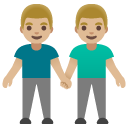


Appearance varies by platform and device. Google Noto, Twemoji, and OpenMoji are open-source.