👨🏼🤝👨🏿
The Emoji
Men Holding Hands: Medium-light Skin Tone, Dark Skin Tone
U+1F468 U+1F3FC U+200D U+1F91D U+200D U+1F468 U+1F3FF · :men_holding_hands_mediumlight_skin_tone_dark_skin_tone:
Trend 58
Meaning layers
- interpretation
- Used to show male solidarity, bromance, queer love, or interracial friendship. Gen Z uses it freely without assuming sexuality — it can mean deep friendship, allyship, or a cute couple.
- tiktok usage
- Appears in videos about best friend duos, LGBTQ+ love stories, interracial couples, or wholesome male bonding moments.
- irony level
- 2 / 10
Platform meanings
- meaning
- Represents male friendship, gay couples, interracial love, or wholesome bromance in short-form video captions and comments.
- trend usage
- Appears in Pride content, couple reveal videos, 'my best friend and I' trends, and diversity celebration challenges.
- hashtags
- #BromanceGoals#PrideMonth#InterracialCouple#MenWhoLove#RepresentationMatters
- virality score
- 62 / 100
Cultural meanings
🇺🇸
Western / Gen-Z
Widely embraced as a symbol of gay love, interracial friendship, and male solidarity; used freely without stigma in progressive Western Gen Z spaces.
🇵🇰
Pakistan & India
Rarely used in mainstream contexts due to social conservatism; may be used in private LGBTQ+ circles or by progressive youth in major cities.
🌍
Middle East
Generally avoided in public digital spaces due to legal and cultural restrictions on same-sex relationships; may carry significant social risk if used openly.
🌐
Global Neutral
Understood broadly as two men holding hands, representing friendship or partnership; interpretation varies widely by cultural context.
🇧🇩
Bangladesh
Not commonly used; LGBTQ+ expression is socially suppressed, so this emoji is mostly absent from mainstream use and may be used cautiously in private.
🇱🇰
Sri Lanka
Rarely used publicly; same-sex relationships face social stigma, so usage is limited to private or internationally connected LGBTQ+ communities.
🇨🇳
China
Usage is very limited due to censorship of LGBTQ+ content; may be used subtly in queer online communities on platforms like Weibo before being removed.
🇯🇵
Japan
Used in LGBTQ+ contexts in urban, progressive circles; Japan has growing Pride visibility, so this emoji appears in ally and queer community posts.
🇰🇷
South Korea
Used by younger, progressive Koreans in queer and ally spaces; LGBTQ+ visibility is growing but still faces significant mainstream resistance.
🇹🇼
Taiwan
Widely embraced; Taiwan is the most LGBTQ+-accepting nation in Asia and this emoji is used freely in couple and Pride contexts.
🇭🇰
Hong Kong
Used in LGBTQ+ communities and among progressive youth; same-sex rights discourse is active despite political pressures.
🇵🇭
Philippines
Used in LGBTQ+ spaces and by allies; Filipinos are generally relatively open to queer expression compared to other Southeast Asian nations.
🇮🇩
Indonesia
Rarely used openly due to strong religious and cultural conservatism; LGBTQ+ expression is heavily suppressed and this emoji may be flagged.
🇹🇭
Thailand
Used relatively openly given Thailand's visible LGBTQ+ culture and tourism industry, particularly among younger and urban populations.
🇻🇳
Vietnam
Usage is cautious; while same-sex marriage is not legally recognized, there is growing youth acceptance and usage in progressive digital spaces.
🇲🇾
Malaysia
Rarely used in public spaces due to religious laws against same-sex relationships; usage is confined to private, international, or underground LGBTQ+ communities.
🇸🇦
Saudi Arabia
Not used publicly due to strict anti-LGBTQ+ laws; using this emoji openly could carry serious social or legal consequences.
🇦🇪
UAE
Similar to Saudi Arabia, publicly avoided; LGBTQ+ expression is legally prohibited, so this emoji is not used in mainstream UAE digital culture.
🇪🇬
Egypt
Not used publicly; LGBTQ+ relationships are heavily stigmatized and legally persecuted, making this emoji largely absent from Egyptian public digital spaces.
🇹🇷
Turkey
Usage is limited and politicized; despite a historically more liberal past, increasing conservatism has pushed LGBTQ+ use of this emoji into private spaces.
🇮🇷
Iran
Almost never used openly; same-sex relationships are criminalized, and this emoji would be considered highly subversive or dangerous in public contexts.
🇳🇬
Nigeria
Rarely used due to strict laws against same-sex relationships; may appear cautiously in private queer circles or diaspora communities.
🇿🇦
South Africa
Used more openly than most of Africa due to South Africa's progressive LGBTQ+ legal protections; common in Cape Town and Johannesburg LGBTQ+ communities.
🇬🇧
UK & Ireland
Widely accepted and used freely; both countries have strong LGBTQ+ rights and mainstream acceptance, making this emoji common in everyday and Pride contexts.
🇫🇷
France
Used comfortably in LGBTQ+ and ally circles; France has a strong tradition of personal liberty and the emoji is seen positively in progressive French culture.
🇩🇪
Germany
Embraced in LGBTQ+ communities and mainstream progressive spaces; Germany's CSD (Pride) events make this emoji especially visible in summer months.
🇪🇸
Spain & Italy
Used freely in Spain's vibrant LGBTQ+ scene; Italy is more conservative but younger generations use it in progressive urban and online contexts.
🇧🇷
Brazil
Very popular; Brazil has one of the world's largest Pride parades and a highly visible LGBTQ+ community, making this emoji common in celebration and advocacy.
🇲🇽
Mexico
Used in LGBTQ+ spaces, especially among urban youth; Mexico City has a strong queer culture but rural conservatism limits broader use.
🌎
Latin America
Usage varies widely by country; Argentina and Chile are more accepting, while Central American countries trend more conservative in LGBTQ+ expression.
🇦🇺
Australia & NZ
Widely accepted and used freely; both countries have strong LGBTQ+ rights, with Australia's same-sex marriage legalization making this emoji a common celebratory symbol.
How its meaning shifted
- 2010
This specific emoji did not exist in 2010; same-sex and skin tone diversity emojis were not yet part of Unicode standards.
- 2015
Skin tone modifiers and same-sex couple emojis began emerging in Unicode 8.0; early usage was mostly by LGBTQ+ advocates and tech-forward users celebrating representation.
- 2020
Usage grew significantly with increased LGBTQ+ visibility, Black Lives Matter movement highlighting interracial solidarity, and mainstream Pride Month adoption across platforms.
- 2026
Now widely recognized across platforms; used freely for gay couples, bromance, interracial friendship, and allyship with minimal stigma in progressive digital spaces globally.
See it on every platform
Adjacent emojis
- Opposite
- broken heartcollisionprohibited
- Often confused with
- people holding handshandshakeraised hands
- Can replace
- rainbow flagtwo heartshandshake
Share & embed
Frequently asked
01What does the 👨🏼🤝👨🏿 Men Holding Hands: Medium-light Skin Tone, Dark Skin Tone emoji mean?
Two men holding hands, depicted with medium-light and dark skin tones respectively, representing male partnership, friendship, or romantic connection across different skin tones.
02What does 👨🏼🤝👨🏿 mean on TikTok?
Represents male friendship, gay couples, interracial love, or wholesome bromance in short-form video captions and comments.
03What does 👨🏼🤝👨🏿 mean on WhatsApp?
Sent between close male friends to express deep friendship or as a playful bromance acknowledgment.
04What does 👨🏼🤝👨🏿 mean in Gen-Z slang?
Used to show male solidarity, bromance, queer love, or interracial friendship. Gen Z uses it freely without assuming sexuality — it can mean deep friendship, allyship, or a cute couple.
05Is the 👨🏼🤝👨🏿 emoji safe to use?
Represents male friendship, bromance, gay love, or interracial partnership in a wholesome and celebratory context.
06What does 👨🏼🤝👨🏿 mean in texting?
Represents connection across racial lines and challenges heteronormative assumptions about male relationships, evoking feelings of acceptance and emotional safety.
07What is the shortcode for 👨🏼🤝👨🏿?
The shortcode for Men Holding Hands: Medium-light Skin Tone, Dark Skin Tone is :men_holding_hands_mediumlight_skin_tone_dark_skin_tone:
08What does 👨🏼🤝👨🏿 mean in dating?
Used by gay or bisexual men to express interest in or affection toward a partner, often in DMs or couple captions.
Safety & usage
- Safe meaning
- Represents male friendship, bromance, gay love, or interracial partnership in a wholesome and celebratory context.
- Caution
- Can be used mockingly in homophobic contexts to demean or ridicule same-sex relationships, though this is a misuse.
In regions with strict anti-LGBTQ+ laws or cultural norms, using this emoji publicly may expose users to social or legal risk. Content moderation should be sensitive to regional contexts.
How it looks across platforms
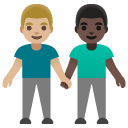


Appearance varies by platform and device. Google Noto, Twemoji, and OpenMoji are open-source.