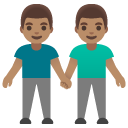
👬🏽
The Emoji
Men Holding Hands: Medium Skin Tone
U+1F46C U+1F3FD · :men_holding_hands_medium_skin_tone:
Trend 65
Meaning layers
- interpretation
- Used to celebrate male friendship, gay relationships, or ironically to depict two bros being unabashedly close without toxic masculinity getting in the way.
- tiktok usage
- Appears in 'bromance' content, LGBTQ+ pride videos, and ironic commentary about men who are just built different together.
- irony level
- 4 / 10
Platform meanings
- meaning
- Represents gay male couples, bromances, pride content, or ironic 'just two guys being dudes' humor.
- trend usage
- Used heavily during Pride Month, in LGBTQ+ coming-out videos, couple duets, and 'wholesome men supporting men' compilations.
- hashtags
- #gaytiktok#bromance#pride#lgbtq#menfriendship
- virality score
- 72 / 100
Cultural meanings
🇺🇸
Western / Gen-Z
Widely understood and celebrated as a symbol of gay male relationships or close platonic male friendship; used freely in LGBTQ+ and ally contexts without significant stigma.
🇵🇰
Pakistan & India
Carries significant social sensitivity due to conservative cultural norms around homosexuality; more likely to be used privately by LGBTQ+ individuals or interpreted as mere friendship in public contexts.
🌍
Middle East
Largely taboo in relation to its LGBTQ+ connotation given regional laws and cultural norms; may be used platonic-friendship contexts only, with very limited LGBTQ+ usage occurring discreetly.
🌐
Global Neutral
Broadly understood as representing two men who are close — whether romantically or as friends — with the LGBTQ+ reading becoming increasingly dominant globally.
🇧🇩
Bangladesh
Same-sex context is socially and legally sensitive; most public usage would be interpreted as friendship or brotherhood rather than a romantic relationship.
🇱🇰
Sri Lanka
Used cautiously; same-sex relations are still criminalized, so the emoji is more likely used in platonic contexts or among private LGBTQ+ communities online.
🇨🇳
China
LGBTQ+ content faces significant censorship on domestic platforms; used quietly within LGBTQ+ communities but broadly interpreted as two male friends on mainstream platforms.
🇯🇵
Japan
Carries a relatively gentle reception; Japan's nuanced relationship with gender expression means it may be used in both LGBTQ+ and 'friendship' contexts, with growing visibility in Pride communities.
🇰🇷
South Korea
Increasingly recognized as an LGBTQ+ symbol among younger generations; in broader society it may still read as close male friendship due to K-culture's normalized male physical affection.
🇹🇼
Taiwan
Positively received and widely used in LGBTQ+ contexts; Taiwan is the most progressive country in Asia regarding LGBTQ+ rights and this emoji reflects that openness.
🇭🇰
Hong Kong
Used openly in LGBTQ+ circles; there is growing advocacy culture despite political pressures, and Pride communities actively use this symbol.
🇵🇭
Philippines
Mixed reception — the Philippines has a visible and vibrant LGBTQ+ community that uses this emoji freely, while conservative religious communities may view it with disapproval.
🇮🇩
Indonesia
Sensitive due to conservative and religious social norms; primarily interpreted as male friendship when used in public-facing contexts, with LGBTQ+ usage confined to private or anonymous online spaces.
🇹🇭
Thailand
Thailand's visible LGBTQ+ culture means this emoji is broadly understood and accepted, though formal legal recognition of same-sex relationships remains limited.
🇻🇳
Vietnam
LGBTQ+ community is growing in visibility; younger Vietnamese users recognize the emoji's dual meaning, while older or more conservative audiences may read it as friendship.
🇲🇾
Malaysia
Highly sensitive due to both civil and religious laws against homosexuality; used almost exclusively in platonic friendship contexts publicly, with discreet LGBTQ+ use online.
🇸🇦
Saudi Arabia
Strictly interpreted as male friendship only in public discourse; any LGBTQ+ connotation would be socially and legally problematic and is generally avoided.
🇦🇪
UAE
Similar to Saudi Arabia, the romantic/LGBTQ+ reading is taboo; used only in friendship contexts on public platforms, with very private LGBTQ+ community usage existing underground.
🇪🇬
Egypt
Homosexuality is heavily stigmatized socially and legally prosecuted; this emoji is used almost exclusively to depict male friendship, with LGBTQ+ usage highly covert.
🇹🇷
Turkey
Increasingly polarized; while Istanbul once hosted large Pride events, political crackdowns have made LGBTQ+ expression more difficult, though younger urbanites still use the emoji in queer contexts.
🇮🇷
Iran
Homosexuality is criminalized; this emoji would be interpreted strictly as platonic male companionship in any public context, with no safe public LGBTQ+ usage.
🇳🇬
Nigeria
Same-sex relationships are criminalized under federal law; the emoji is interpreted as brotherhood or friendship, and any LGBTQ+ connotation is avoided in public digital spaces.
🇿🇦
South Africa
South Africa has constitutionally protected LGBTQ+ rights and the emoji is used openly in both gay relationship and friendship contexts, particularly in urban and online communities.
🇬🇧
UK & Ireland
Widely accepted and understood as representing both gay couples and close male friends; LGBTQ+ usage is common and largely celebrated, especially among younger demographics.
🇫🇷
France
France's secular and progressive values support open use of this emoji in LGBTQ+ contexts; it appears in both romantic and philosophical discussions about masculinity and connection.
🇩🇪
Germany
Germany's strong LGBTQ+ legal protections and active Pride culture make this emoji commonly used to represent gay male couples or solidarity; its use is matter-of-fact and positive.
🇪🇸
Spain & Italy
Spain has strong LGBTQ+ legal frameworks making the emoji widely embraced in queer contexts; Italy is more conservative but urban youth use it freely, especially in northern cities.
🇧🇷
Brazil
Brazil has one of the world's largest Pride parades and a vibrant LGBTQ+ community; the emoji is widely used in both romantic and friendship contexts with high cultural visibility.
🇲🇽
Mexico
Growing LGBTQ+ visibility in major cities like Mexico City contrasts with more conservative rural attitudes; the emoji is used openly online by queer communities and allies.
🌎
Latin America
Varies widely by country — progressive urban communities in Argentina and Chile use it openly in LGBTQ+ contexts, while more conservative nations may still default to the friendship reading.
🇦🇺
Australia & NZ
Both countries have strong LGBTQ+ acceptance; the emoji is freely used to represent gay male couples or close male friends with broad social comfort and no significant stigma.
How its meaning shifted
- 2010
This specific emoji with medium skin tone modifier did not exist; earlier male-holding-hands representations were limited and largely absent from standard emoji sets.
- 2015
The base men-holding-hands emoji existed but skin tone variants were just emerging; usage was primarily in LGBTQ+ advocacy spaces and still carried novelty as a visibility milestone.
- 2020
Significantly more mainstream; used openly during Pride Month, in LGBTQ+ coming-out content, and increasingly in ironic 'bromance' content by straight male friends as toxic masculinity discourse grew.
- 2026
Normalized across most Western and progressive digital spaces; medium skin tone variant specifically used to ensure representation; integrated casually into both queer identity expression and platonic male affection content.
See it on every platform
Compare with
Adjacent emojis
- Often confused with
- people holding handshandshakewaving hand
Share & embed
Frequently asked
01What does the 👬🏽 Men Holding Hands: Medium Skin Tone emoji mean?
Two men holding hands depicted with medium skin tone, representing male same-sex partnership, friendship, or brotherhood.
02What does 👬🏽 mean on TikTok?
Represents gay male couples, bromances, pride content, or ironic 'just two guys being dudes' humor.
03What does 👬🏽 mean on WhatsApp?
Signals a gay couple, two close male friends, or used in group chats to tag two male friends who are always together.
04What does 👬🏽 mean in Gen-Z slang?
Used to celebrate male friendship, gay relationships, or ironically to depict two bros being unabashedly close without toxic masculinity getting in the way.
05Is the 👬🏽 emoji safe to use?
Represents male friendship, brotherhood, gay romantic partnership, LGBTQ+ pride, and inclusive companionship.
06What does 👬🏽 mean in texting?
Carries dual emotional weight — for LGBTQ+ users it signals identity affirmation and visibility; for straight male friends it challenges toxic masculinity norms by normalizing platonic male affection.
07What is the shortcode for 👬🏽?
The shortcode for Men Holding Hands: Medium Skin Tone is :men_holding_hands_medium_skin_tone:
08What does 👬🏽 mean in dating?
Used by gay or bisexual men to signal interest or relationship status to potential partners in a casual, non-threatening way.
Safety & usage
- Safe meaning
- Represents male friendship, brotherhood, gay romantic partnership, LGBTQ+ pride, and inclusive companionship.
- Caution
- Rarely used in a toxic manner; could be used mockingly or derogatorily in anti-LGBTQ+ contexts by bad actors, but this is not the dominant usage.
In highly conservative cultural or legal contexts, even sending this emoji could be socially risky for LGBTQ+ individuals. On some platforms, it may be targeted in anti-LGBTQ+ harassment campaigns. Use with contextual awareness.
How it looks across platforms


Appearance varies by platform and device. Google Noto, Twemoji, and OpenMoji are open-source.