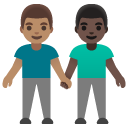
👨🏽🤝👨🏿
The Emoji
Men Holding Hands: Medium Skin Tone, Dark Skin Tone
U+1F468 U+1F3FD U+200D U+1F91D U+200D U+1F468 U+1F3FF · :men_holding_hands_medium_skin_tone_dark_skin_tone:
Trend 58
Meaning layers
- interpretation
- Used to celebrate male friendship ('bromance'), LGBTQ+ solidarity, or interracial unity. Gen Z uses it both sincerely for pride representation and playfully to celebrate 'no-homo' male bonding moments that actually show healthy masculine vulnerability.
- tiktok usage
- Appears in videos about best friend goals, LGBTQ+ pride content, wholesome male friendship moments, and 'found family' narratives highlighting interracial bonds.
- irony level
- 2 / 10
Platform meanings
- meaning
- Symbol of male friendship goals, LGBTQ+ pride, and interracial solidarity; frequently seen in 'appreciate your bestie' and pride month content.
- trend usage
- Used in duet videos, friendship appreciation montages, pride month compilations, and 'this is us' couple reveal videos.
- hashtags
- #MaleAllies#PrideTok#InterracialFriendship#BromanceGoals#RepresentationMatters
- virality score
- 62 / 100
Cultural meanings
🇺🇸
Western / Gen-Z
Widely embraced as a symbol of LGBTQ+ pride and interracial friendship; Gen Z uses it freely and positively in both sincere and playful contexts to celebrate diverse male bonds.
🇵🇰
Pakistan & India
Predominantly interpreted as two close male friends since public male friendship is culturally common; LGBTQ+ interpretation is present but mostly in progressive urban youth circles given legal and social sensitivities.
🌍
Middle East
Primarily read as male friendship or brotherhood given the cultural norm of men holding hands publicly; LGBTQ+ connotation is generally not the primary interpretation, though awareness exists in younger, internet-connected demographics.
🌐
Global Neutral
Universally recognizable as a symbol of male connection, unity, and diversity; the cross-skin-tone combination emphasizes cross-cultural solidarity regardless of the relationship type.
🇧🇩
Bangladesh
Interpreted largely as a symbol of male friendship or brotherhood; the LGBTQ+ reading is largely avoided due to social and legal context, though the diversity angle resonates in diaspora communities.
🇱🇰
Sri Lanka
Seen as a representation of close male friendship; the interracial skin tone combination may evoke ethnic harmony narratives given the country's history, while LGBTQ+ meaning remains niche.
🇨🇳
China
Primarily read as male friendship or brotherhood; same-sex relationship connotation is understood by younger, globally connected users but avoided in mainstream content given social conservatism.
🇯🇵
Japan
Interpreted as close male friendship ('nakama') or, in progressive spaces, as a subtle pride symbol; the skin tone diversity adds a multicultural layer that resonates in Japan's growing diversity conversations.
🇰🇷
South Korea
Used among younger Koreans to represent close male friendship or 'bromance'; LGBTQ+ meaning is understood by Gen Z but remains sensitive due to social attitudes, though pride visibility is growing.
🇹🇼
Taiwan
Taiwan's progressive LGBTQ+ legal landscape means this emoji is warmly received as a pride and love symbol; frequently used to celebrate same-sex relationships and interracial couples.
🇭🇰
Hong Kong
Used by younger, globally connected users as both a friendship and LGBTQ+ symbol; the interracial skin tones also resonate in Hong Kong's multicultural urban context.
🇵🇭
Philippines
Mostly interpreted as male friendship or brotherhood; LGBTQ+ meaning is understood and celebrated in progressive communities, while the skin tone diversity aligns with the country's multicultural identity.
🇮🇩
Indonesia
Predominantly read as male friendship given cultural norms; LGBTQ+ interpretation exists in activist and urban circles but is largely avoided in mainstream use due to social and religious sensitivities.
🇹🇭
Thailand
Thailand's relatively visible LGBTQ+ culture means this emoji can be used openly as a pride symbol by some communities, though friendship remains the dominant public interpretation.
🇻🇳
Vietnam
Read primarily as close male friendship; LGBTQ+ awareness is growing among Vietnamese youth but the emoji's romantic connotation remains niche in mainstream usage.
🇲🇾
Malaysia
Interpreted almost exclusively as male friendship due to strong religious and legal context around same-sex relationships; diversity angle is appreciated in multicultural contexts.
🇸🇦
Saudi Arabia
Seen strictly as male friendship or brotherhood in keeping with local norms; LGBTQ+ interpretation is not publicly expressed, though the cross-skin-tone element resonates with the country's diverse expatriate population.
🇦🇪
UAE
Read as male friendship or professional partnership in a multicultural expat-heavy society; the skin tone diversity is particularly resonant given the UAE's international workforce, while LGBTQ+ meaning is private.
🇪🇬
Egypt
Predominantly interpreted as close male friendship; same-sex connotation is not publicly acknowledged in mainstream culture, though diaspora and younger internet users may use it with LGBTQ+ awareness.
🇹🇷
Turkey
Seen as male friendship or solidarity, especially in sports or political contexts; younger, progressive Turkish users understand the LGBTQ+ meaning and use it in advocacy spaces.
🇮🇷
Iran
Interpreted as male friendship given significant social and legal context; the emoji is used in diaspora and activist communities to quietly signal LGBTQ+ solidarity.
🇳🇬
Nigeria
Primarily read as male friendship or brotherhood; the interracial skin tone pairing resonates strongly in Pan-African solidarity contexts, while LGBTQ+ meaning is largely not publicly expressed.
🇿🇦
South Africa
Resonates as both a friendship emoji and a symbol of racial unity given the country's history; LGBTQ+ interpretation is embraced in progressive communities given South Africa's constitutional protections.
🇬🇧
UK & Ireland
Warmly received as a symbol of gay pride and interracial friendship; widely used during Pride Month and in everyday expressions of LGBTQ+ relationship visibility.
🇫🇷
France
Interpreted as a symbol of fraternity, diversity, and LGBTQ+ love in line with French progressive values; the skin tone diversity especially resonates given France's multicultural identity.
🇩🇪
Germany
Used openly as a pride and diversity symbol; Germany's strong LGBTQ+ culture and diverse population make both the romantic and friendship interpretations equally valid and positive.
🇪🇸
Spain & Italy
Embraced as a pride symbol in Spain's very LGBTQ+-positive culture; in Italy, it's more commonly read as friendship, though LGBTQ+ meaning is growing especially among younger Italians.
🇧🇷
Brazil
Celebrated warmly in Brazil's vibrant LGBTQ+ and diverse cultural landscape; used freely to represent interracial gay relationships, friendships, and pride solidarity.
🇲🇽
Mexico
Read as either close male friendship ('cuates') or LGBTQ+ partnership; younger Mexicans in urban areas use it freely for pride representation while friendship remains the mainstream interpretation.
🌎
Latin America
Broadly interpreted as male friendship or brotherhood with LGBTQ+ meaning growing among younger, urban, internet-connected populations across Latin American countries.
🇦🇺
Australia & NZ
Widely embraced as a symbol of LGBTQ+ pride and multicultural friendship; used freely in everyday conversation, pride events, and diversity celebrations.
How its meaning shifted
- 2010
Skin-tone-modified emoji did not yet exist; basic holding hands emoji were not yet part of Unicode, and LGBTQ+ representation in emoji was essentially nonexistent.
- 2015
Early versions of gender and couple emoji emerged but skin tone modifiers for multi-person emoji were not yet available; LGBTQ+ emoji representation was a growing advocacy topic.
- 2020
Fully available with skin tone combinations following Unicode updates; used primarily in Pride Month content, LGBTQ+ advocacy, and diversity celebrations amid global conversations about racial justice.
- 2026
Mainstream and normalized as a symbol of diverse male connection across LGBTQ+, friendship, and solidarity contexts; frequently used in everyday digital communication without the novelty or controversy of earlier years.
See it on every platform
Compare with
Adjacent emojis
- Opposite
- broken heartprohibitedangry face
- Often confused with
- people holding handshandshakeraised hands
- Can replace
- two heartsrainbow flaghandshake
Share & embed
Frequently asked
01What does the 👨🏽🤝👨🏿 Men Holding Hands: Medium Skin Tone, Dark Skin Tone emoji mean?
Two men holding hands, with the left figure displaying medium skin tone and the right figure displaying dark skin tone, representing male companionship, brotherhood, or romantic partnership between individuals of different skin tones.
02What does 👨🏽🤝👨🏿 mean on TikTok?
Symbol of male friendship goals, LGBTQ+ pride, and interracial solidarity; frequently seen in 'appreciate your bestie' and pride month content.
03What does 👨🏽🤝👨🏿 mean on WhatsApp?
Sent between close male friends to celebrate their friendship, often in group chats as a gesture of brotherhood or loyalty.
04What does 👨🏽🤝👨🏿 mean in Gen-Z slang?
Used to celebrate male friendship ('bromance'), LGBTQ+ solidarity, or interracial unity. Gen Z uses it both sincerely for pride representation and playfully to celebrate 'no-homo' male bonding moments that actually show healthy masculine vulnerability.
05Is the 👨🏽🤝👨🏿 emoji safe to use?
A positive symbol of male friendship, brotherhood, LGBTQ+ love, and interracial solidarity used in supportive and celebratory contexts.
06What does 👨🏽🤝👨🏿 mean in texting?
Represents psychological safety in vulnerability — two men publicly holding hands challenges traditional masculine norms, evoking feelings of acceptance, pride, and cross-cultural unity. The mixed skin tones add a layer of racial solidarity and belonging.
07What is the shortcode for 👨🏽🤝👨🏿?
The shortcode for Men Holding Hands: Medium Skin Tone, Dark Skin Tone is :men_holding_hands_medium_skin_tone_dark_skin_tone:
08What does 👨🏽🤝👨🏿 mean in dating?
Used by gay or bisexual men to signal interest or to casually indicate they are in or open to a same-sex relationship. Can be used in bios or DMs as a soft coming-out or flirtatious nod.
Safety & usage
- Safe meaning
- A positive symbol of male friendship, brotherhood, LGBTQ+ love, and interracial solidarity used in supportive and celebratory contexts.
- Caution
- Rarely used toxically; may occasionally be deployed mockingly in homophobic contexts or used sarcastically to demean LGBTQ+ visibility efforts.
May be inappropriate or sensitive in contexts where LGBTQ+ expression is legally or socially restricted; should be used with cultural awareness in conservative regional contexts.
How it looks across platforms


Appearance varies by platform and device. Google Noto, Twemoji, and OpenMoji are open-source.