🖕🏾
The Emoji
Middle Finger: Medium-dark Skin Tone
U+1F595 U+1F3FE · :middle_finger_mediumdark_skin_tone:
Trend 78
Meaning layers
- interpretation
- Used ironically, humorously, or defiantly to express rejection of norms, clap back at criticism, or signal unbothered energy. Often stripped of full hostility and used playfully among close friends.
- tiktok usage
- Appears in reaction videos, 'I don't care' montages, and transition effects where creators signal attitude or rebellion. Frequently paired with trending audio about not caring what others think.
- irony level
- 7 / 10
Platform meanings
- meaning
- Attitude signifier, unbothered energy, clapping back at critics or trends
- trend usage
- Used in 'POV: I don't care' videos, transition reveals, and comment clapbacks. Creators use it to signal confidence and dismiss negativity in a visually punchy way.
- hashtags
- #attitude#unbothered#fyp#nocare#vibes
- virality score
- 82 / 100
Cultural meanings
🇺🇸
Western / Gen-Z
Widely used and often stripped of full hostility — functions as a humor tool, attitude marker, and ironic expression of defiance among peers. The skin tone variant adds representation and personalization.
🇵🇰
Pakistan & India
Considered highly offensive and vulgar; rarely used in mainstream digital communication. Younger, Western-influenced urban youth may use it ironically online but it carries serious disrespect in most social contexts.
🌍
Middle East
Deeply offensive and culturally unacceptable; the gesture itself is considered extremely rude and disrespectful across the region, and digital use carries the same weight as the physical gesture.
🌐
Global Neutral
Universally understood as an offensive gesture across most of the world, though irony levels vary significantly by generational and cultural context.
🇧🇩
Bangladesh
Highly taboo and considered extremely disrespectful; the physical gesture is deeply offensive and its digital representation carries equal cultural weight in most social circles.
🇱🇰
Sri Lanka
Regarded as a vulgar Western gesture; use in digital communication is limited to younger, internet-savvy users familiar with global meme culture, but remains offensive in mainstream contexts.
🇨🇳
China
The middle finger gesture is understood through Western cultural exposure but considered rude; social media censorship may limit its visibility, and its use signals youthful rebellion or Western influence.
🇯🇵
Japan
Understood as a Western offensive gesture; used online by younger generations familiar with Western internet culture, but considered extremely rude in Japanese social norms and would be shocking in most contexts.
🇰🇷
South Korea
Recognized as an offensive Western gesture; younger Koreans in online spaces may use it humorously in meme contexts, but it is considered highly inappropriate in formal or traditional settings.
🇹🇼
Taiwan
Similar to broader East Asian perception — understood as offensive through Western pop culture exposure, occasionally used by younger online communities in ironic or humorous digital contexts.
🇭🇰
Hong Kong
With strong Western cultural influence, this gesture has broader digital recognition; younger users in meme and protest culture contexts may use it as a defiance symbol, though it remains rude in traditional settings.
🇵🇭
Philippines
Understood as a vulgar gesture through heavy American cultural influence; online Filipino communities may use it humorously in meme contexts, but it is considered highly disrespectful in person or in formal digital spaces.
🇮🇩
Indonesia
Considered very offensive and culturally inappropriate; the gesture violates norms of politeness and respect central to Indonesian culture, and digital use is primarily limited to Western-influenced youth subcultures.
🇹🇭
Thailand
The gesture is understood through Western media exposure and is considered rude; the strong cultural emphasis on politeness (kreng jai) means it is rarely used positively, though internet-savvy youth may use it in meme contexts.
🇻🇳
Vietnam
Recognized as a Western vulgar gesture; while younger Vietnamese internet users may encounter it in meme culture, it is considered offensive and inappropriate in Vietnamese social norms.
🇲🇾
Malaysia
Seen as a rude Western gesture; use in digital communication is primarily among younger, meme-literate users, but carries significant disrespect especially in Malaysia's multicultural and conservative social landscape.
🇸🇦
Saudi Arabia
Extremely offensive and culturally inappropriate; the gesture violates Islamic social values and local norms of respect, and its digital use would be considered deeply disrespectful and potentially reportable.
🇦🇪
UAE
Similar to broader Gulf culture — highly offensive in local cultural context, though the UAE's cosmopolitan digital landscape means younger expat and internationally-connected users may encounter it in Western meme contexts.
🇪🇬
Egypt
The gesture is understood and considered very offensive; while Egyptian internet culture is vibrant, this gesture is seen as extremely rude and its digital use is typically limited to anonymous or edgy online spaces.
🇹🇷
Turkey
Recognized as a vulgar gesture through Western cultural exposure; younger Turkish internet users may use it in meme contexts online, but it is considered highly disrespectful in mainstream social contexts.
🇮🇷
Iran
Extremely offensive and inappropriate within Iranian cultural values; digital use is largely limited to underground or anonymous internet spaces, and the gesture carries serious social consequences if used openly.
🇳🇬
Nigeria
The gesture is understood and considered very rude; younger Nigerians active in global internet culture may use it in ironic meme contexts, but it is regarded as highly disrespectful and vulgar in most social settings.
🇿🇦
South Africa
With significant Western cultural influence, younger South Africans in urban and online spaces use this in meme and attitude contexts; however, it remains offensive and inappropriate in formal or traditional community settings.
🇬🇧
UK & Ireland
Well understood as a very offensive gesture (the UK equivalent is the two-finger V gesture, but the middle finger is widely recognized); used humorously among friends online but considered genuinely rude in public contexts.
🇫🇷
France
Recognized as an offensive gesture; French internet culture embraces provocation and irreverence, so younger users may deploy it in online debates or meme contexts with somewhat less shock value than in more conservative cultures.
🇩🇪
Germany
Understood as a serious offensive gesture (called 'den Stinkefinger zeigen'); has legal precedent for fines when used in public, though digital use among younger people in meme contexts is treated more lightly.
🇪🇸
Spain & Italy
Recognized as a vulgar gesture; Southern European internet culture, especially among younger generations, may use it in humorous or passionate reaction contexts, though it remains offensive in formal settings.
🇧🇷
Brazil
While Brazil has its own equivalent rude gesture, the middle finger is widely understood through American cultural influence; young Brazilians in meme culture use it freely online, often in passionate sports or political contexts.
🇲🇽
Mexico
Understood through American cultural proximity; Mexican internet culture, especially younger users, may use it in humorous or defiant digital contexts, though it carries the same offensive weight as in broader Latin culture.
🌎
Latin America
Broadly understood across Latin America through American cultural influence; younger, internet-connected users engage with it in meme culture, while it remains a serious offense in traditional social settings across the region.
🇦🇺
Australia & NZ
Widely understood and used with similar cultural weight to the UK and USA; considered rude but frequently deployed humorously or ironically in casual digital communication, especially in meme culture and among friends.
How its meaning shifted
- 2010
The middle finger emoji did not yet exist in Unicode; the physical gesture was digitally represented through ASCII art or described in text. Skin tone modifiers were not yet available in emoji.
- 2015
The middle finger emoji (🖕) was added to Unicode 7.0 in 2014 and became widely available in 2015. Skin tone variants were introduced with Unicode 8.0 in 2015, immediately sparking cultural conversation about representation and the humor of diverse skin tones on an offensive gesture.
- 2020
Fully normalized in internet culture as an ironic and humorous tool, not just a hostile gesture. The skin tone variant gained specific cultural resonance in discussions around representation. Heavily used in meme culture, political commentary, and Gen Z communication.
- 2026
Deeply embedded in digital communication as a multi-layered symbol — simultaneously offensive, ironic, humorous, and expressive. Skin tone variants are standard personalization. Younger generations use it with significantly reduced shock value compared to older interpretations, treating it as casual attitude expression.
See it on every platform
Compare with
Adjacent emojis
Share & embed
Frequently asked
01What does the 🖕🏾 Middle Finger: Medium-dark Skin Tone emoji mean?
The middle finger gesture with medium-dark skin tone modifier, universally recognized as an obscene hand gesture of contempt or defiance.
02What does 🖕🏾 mean on TikTok?
Attitude signifier, unbothered energy, clapping back at critics or trends
03What does 🖕🏾 mean on WhatsApp?
Direct expression of frustration, dismissal, or playful defiance depending on relationship closeness with recipient.
04What does 🖕🏾 mean in Gen-Z slang?
Used ironically, humorously, or defiantly to express rejection of norms, clap back at criticism, or signal unbothered energy. Often stripped of full hostility and used playfully among close friends.
05Is the 🖕🏾 emoji safe to use?
Ironic humor, playful defiance, attitude signaling among close friends, meme culture participation, unbothered energy expression.
06What does 🖕🏾 mean in texting?
The middle finger gesture activates primal dominance signaling. When used digitally, it can function as cathartic release of frustration or as an identity marker of nonconformity, especially among younger users who reclaim aggressive symbols as playful expression.
07What is the shortcode for 🖕🏾?
The shortcode for Middle Finger: Medium-dark Skin Tone is :middle_finger_mediumdark_skin_tone:
08What does 🖕🏾 mean in dating?
Rarely used flirtatiously; occasionally sent between partners in a teasing 'you annoy me but I love you' context or as a playful response to banter.
Safety & usage
- Safe meaning
- Ironic humor, playful defiance, attitude signaling among close friends, meme culture participation, unbothered energy expression.
- Caution
- Direct hostile threat, harassment, cyberbullying tool, intimidation, aggressive dismissal intended to demean or disrespect a specific person.
- NSFW
- Not safe for work — use with care.
This emoji is flagged by content moderation systems on many platforms. It can violate community guidelines depending on context, target, and platform. On platforms like LinkedIn and Facebook, it may result in content removal or account warnings. When directed at specific individuals, it can constitute digital harassment. Parents and educators should note it is a common emoji among younger users who may not appreciate its full cultural weight.
How it looks across platforms
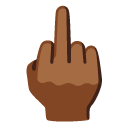


Appearance varies by platform and device. Google Noto, Twemoji, and OpenMoji are open-source.