🥮
The Emoji
Moon Cake
U+1F96E · :moon_cake:
Trend 52
Meaning layers
- interpretation
- Used to signal East Asian heritage, Mid-Autumn Festival hype, or simply aesthetic fall/autumn vibes. Also used ironically when something is overly ornate, expensive, or 'extra' — like gifting a luxury item unnecessarily.
- tiktok usage
- Appears in heritage/cultural pride videos, food content about mooncake mukbangs, and 'things only Asian kids understand' trend videos.
- irony level
- 3 / 10
Platform meanings
- meaning
- Symbol of Mid-Autumn Festival celebrations, Asian food culture pride, and aesthetic autumn content.
- trend usage
- Used in #MidAutumnFestival, mooncake taste-test videos, diaspora storytelling, and 'Asian traditions explained' educational content.
- hashtags
- #MidAutumnFestival#Mooncake#AsianFood#ChineseCulture#MoonFestival
- virality score
- 58 / 100
Cultural meanings
🇺🇸
Western / Gen-Z
Primarily a cultural identity marker used by East Asian diaspora Gen Z to celebrate heritage; non-Asian users may use it to show cultural curiosity or during autumn aesthetic phases.
🇵🇰
Pakistan & India
Mooncakes are not a traditional Pakistani or Indian food, so this emoji is used mostly in cosmopolitan, multicultural contexts or by those familiar with Chinese culture through trade, travel, or media.
🌍
Middle East
Recognized in Gulf states with large Chinese expat communities; luxury mooncake gifting has become popular in the UAE and Saudi Arabia during Chinese festivals.
🌐
Global Neutral
Universally understood as a food emoji representing East Asian culture, often used in generic food discussions or as a symbol of autumn and harvest celebrations.
🇧🇩
Bangladesh
Limited cultural resonance, but understood in urban, educated contexts; occasionally seen in food content or multicultural celebration posts.
🇱🇰
Sri Lanka
Mooncakes are sold in urban Sri Lanka during the Chinese New Year and Mid-Autumn seasons; the emoji appears in food and cultural content among cosmopolitan communities.
🇨🇳
China
Deeply significant — one of the most emotionally resonant food emojis, synonymous with family reunion, Mid-Autumn Festival (中秋节), gift-giving, and national cultural pride.
🇯🇵
Japan
Recognized due to similar moon-viewing festival (Tsukimi) traditions; the emoji resonates as an autumn harvest symbol though Japan's version differs; used in cultural comparison and food content.
🇰🇷
South Korea
Korea has a similar harvest festival (Chuseok) with its own traditional foods (songpyeon); the mooncake emoji is recognized but understood as distinctly Chinese — used in cross-cultural comparisons.
🇹🇼
Taiwan
Extremely popular and culturally central; Taiwan has a vibrant mooncake culture with unique local flavors (pineapple cake, taro), and the emoji is used widely during Mid-Autumn Festival.
🇭🇰
Hong Kong
Highly significant cultural symbol; Hong Kong has a rich mooncake tradition with elaborate gift boxes, and the emoji is used heavily during the festival season on all social platforms.
🇵🇭
Philippines
Chinese-Filipino (Tsinoy) communities use this emoji enthusiastically during the festival; mainstream Filipinos recognize it as a Chinese cultural symbol.
🇮🇩
Indonesia
Used by Chinese-Indonesian communities (Tionghoa) for Mid-Autumn Festival celebrations; mainstream Indonesian users associate it with Chinese culture and autumn festivals.
🇹🇭
Thailand
Thailand has a significant Chinese-Thai population with strong mooncake traditions; the emoji is widely recognized and used during the Loy Kratong and Mid-Autumn Festival overlap seasons.
🇻🇳
Vietnam
Vietnam celebrates Tết Trung Thu (Mid-Autumn Festival) with its own mooncakes (bánh trung thu); this emoji is culturally very relevant and used widely in Vietnamese social media during the festival.
🇲🇾
Malaysia
Strong cultural resonance in Malaysia's large Chinese-Malaysian community; mooncake festivals are major commercial and cultural events, making this emoji highly seasonal but widely recognized.
🇸🇦
Saudi Arabia
Mooncake gifting has been adopted as a luxury corporate gift during Chinese festivals, particularly in Riyadh and Jeddah; the emoji appears in business and expatriate community contexts.
🇦🇪
UAE
Dubai and Abu Dhabi have seen mooncake culture popularized by luxury hotels and the large Chinese expat community; the emoji is used in premium gifting and hospitality content.
🇪🇬
Egypt
Limited cultural familiarity; used mainly in contexts involving Chinese culture studies, tourism, or trade — not a common emoji in mainstream Egyptian social media.
🇹🇷
Turkey
Recognized in cosmopolitan Istanbul circles familiar with Chinese culture; occasionally used during cultural exchange events or food tourism content.
🇮🇷
Iran
Iran and China have deepening trade ties; mooncakes have begun appearing as diplomatic gifts, so the emoji appears in news and cultural exchange contexts more than in everyday social use.
🇳🇬
Nigeria
Used by Nigerian Chinese diaspora communities and those interested in Chinese culture; Lagos has a visible Chinese business community that observes Mid-Autumn Festival.
🇿🇦
South Africa
Recognized primarily in Cape Town and Johannesburg's Chinese-South African communities; used during Mid-Autumn Festival celebrations in multicultural social circles.
🇬🇧
UK & Ireland
Used by British East Asian communities in cultural pride posts; increasingly recognized by non-Asian UK users through exposure to Chinese cultural events and food culture.
🇫🇷
France
Paris has a significant Chinese diaspora and vibrant Chinatown; the emoji is used in cultural celebration posts and gourmet food content, with French foodies also appreciating the artisanal quality symbolism.
🇩🇪
Germany
Used by the Chinese community in cities like Berlin and Frankfurt; recognized in multicultural circles but not widely used by mainstream German social media users.
🇪🇸
Spain & Italy
Limited but growing cultural familiarity; used primarily by East Asian communities in Madrid, Barcelona, Milan, and Rome during Mid-Autumn Festival.
🇧🇷
Brazil
São Paulo has one of the largest Japanese and Chinese diaspora communities outside Asia; the emoji appears in Liberdade neighborhood cultural content and Asian food communities.
🇲🇽
Mexico
Recognized in Mexico City's small but active Chinese community; used in cultural exchange and food content, with growing interest from foodies and Asia-curious youth.
🌎
Latin America
In most Latin American countries, mooncakes are exotic and associated with Chinese culture; used primarily by Chinese diaspora or Asia-enthusiast communities.
🇦🇺
Australia & NZ
Australia and New Zealand have large East Asian communities and celebrated Mid-Autumn Festivals in major cities; the emoji is widely recognized and used, especially in Sydney, Melbourne, and Auckland.
How its meaning shifted
- 2010
Mooncakes as an emoji concept did not yet exist in Unicode; cultural references to mooncakes online were text-based or used generic food icons.
- 2015
Still pre-emoji, mooncake references grew on Chinese social platforms (WeChat, Weibo) using sticker packs; diaspora communities used descriptive text and photos.
- 2020
The emoji (added in 2018) gained steady adoption; saw significant usage during COVID-era Mid-Autumn Festivals as a digital substitute for in-person family reunions and gifting.
- 2026
Established as a key East Asian cultural emoji; used year-round as a cultural identity marker, seasonally spikes for Mid-Autumn Festival, and appears in luxury/artisanal food aesthetic content globally.
See it on every platform
Compare with
Adjacent emojis
Share & embed
Frequently asked
01What does the 🥮 Moon Cake emoji mean?
A mooncake, the traditional Chinese pastry eaten during the Mid-Autumn Festival (中秋节). It typically features intricate patterns on the top crust and is filled with lotus seed paste, red bean, or salted egg yolk.
02What does 🥮 mean on TikTok?
Symbol of Mid-Autumn Festival celebrations, Asian food culture pride, and aesthetic autumn content.
03What does 🥮 mean on WhatsApp?
Directly references mooncakes, often used to ask if someone wants to share mooncakes or to announce festival preparations.
04What does 🥮 mean in Gen-Z slang?
Used to signal East Asian heritage, Mid-Autumn Festival hype, or simply aesthetic fall/autumn vibes. Also used ironically when something is overly ornate, expensive, or 'extra' — like gifting a luxury item unnecessarily.
05Is the 🥮 emoji safe to use?
A traditional East Asian pastry representing the Mid-Autumn Festival, family reunion, and cultural heritage.
06What does 🥮 mean in texting?
Mooncakes are deeply tied to family reunion symbolism in Chinese culture. Receiving or sharing this emoji can trigger nostalgic feelings of home, ancestry, and seasonal comfort, especially among diaspora communities.
07What is the shortcode for 🥮?
The shortcode for Moon Cake is :moon_cake:
08What does 🥮 mean in dating?
Rarely used in flirting directly, but sending 🥮 during Mid-Autumn Festival is a sweet, culturally aware gesture — like saying 'I remembered your traditions, thinking of you.'
Safety & usage
- Safe meaning
- A traditional East Asian pastry representing the Mid-Autumn Festival, family reunion, and cultural heritage.
- Caution
- Extremely rare, but could theoretically be used mockingly in anti-Asian harassment contexts — though this is not a documented pattern.
This emoji carries no known toxic, sexual, or harmful secondary meanings. It is one of the safest cultural food emojis in use. Brands should ensure its use is culturally sincere rather than performatively tokenistic.
How it looks across platforms
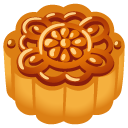


Appearance varies by platform and device. Google Noto, Twemoji, and OpenMoji are open-source.