🦟
The Emoji
Mosquito
U+1F99F · :mosquito:
Trend 42
Meaning layers
- interpretation
- Used to describe someone who is annoying, draining, or constantly leeching off others emotionally or financially. Can also represent something that keeps buzzing around and won't leave you alone.
- tiktok usage
- Appears in videos about toxic people, energy vampires, or annoying situations. Often paired with 'you're such a 🦟' to call someone out for being a nuisance.
- irony level
- 6 / 10
Platform meanings
- meaning
- Symbol of an annoying person or recurring nuisance; used in comedic skits about pests, toxic people, or summer struggles
- trend usage
- Featured in 'POV: you're the mosquito' trend and summer complaint videos; used in duets to call out annoying behavior
- hashtags
- #mosquitoseason#annoyingpeople#summerpest#mosquito#energyvampire
- virality score
- 52 / 100
Cultural meanings
🇺🇸
Western / Gen-Z
Used figuratively to describe annoying, clingy, or energy-draining people; rarely used literally and mostly appears in meme or sarcastic contexts.
🇵🇰
Pakistan & India
Highly practical and common use — mosquitoes are a daily reality; used in WhatsApp and Instagram to complain about dengue season, malaria warnings, or sleepless summer nights.
🌍
Middle East
Used seasonally in summer months for literal pest complaints; also appears in health awareness campaigns about vector-borne diseases in Gulf countries.
🌐
Global Neutral
Universally understood as representing a mosquito; accepted across cultures as a symbol of pest annoyance and disease risk without additional layered meanings.
🇧🇩
Bangladesh
Extremely relatable and frequently used, especially during monsoon season when dengue outbreaks are common; used in public health messaging and everyday complaints.
🇱🇰
Sri Lanka
Common in social media posts about monsoon season pests and dengue prevention; also used humorously to describe persistent people or problems.
🇨🇳
China
Used in conversations about summer pests and health warnings; in some online communities represents something small that causes outsized irritation or damage.
🇯🇵
Japan
Associated with summer (natsu) and outdoor discomfort; used in casual social media posts about evening mosquitoes and the iconic sound of mosquito coils burning.
🇰🇷
South Korea
Appears in summer content about outdoor activities being ruined by mosquitoes; also used online to describe someone who is buzzing around and being a nuisance.
🇹🇼
Taiwan
Frequently used in tropical climate complaints; tied to dengue awareness campaigns and summer outdoor culture warnings.
🇭🇰
Hong Kong
Used in urban outdoor contexts — rooftop parties, hiking complaints, and summer social media posts; carries mild nuisance connotation both literally and metaphorically.
🇵🇭
Philippines
Very common and culturally significant given high dengue risk; used extensively in public health messaging, social media warnings, and everyday pest-related conversations.
🇮🇩
Indonesia
Widely used in social media for dengue warnings, tropical complaints, and as a metaphor for persistently annoying people or situations during rainy season.
🇹🇭
Thailand
Common in tourism and health contexts; used by both locals and tourists to express frustration about tropical insects during outdoor activities.
🇻🇳
Vietnam
Practically used in everyday social media conversations about pest season; also appears in public health campaigns about malaria and dengue prevention.
🇲🇾
Malaysia
Highly relatable given tropical climate; frequently appears in dengue awareness posts, neighborhood group chats, and summer complaint humor.
🇸🇦
Saudi Arabia
Used contextually in health posts and travel warnings; less everyday than in South/Southeast Asia but appears during specific mosquito-season discussions.
🇦🇪
UAE
Appears in outdoor and travel content during humid months; used by expats and locals alike to express frustration about evening mosquitoes near water features or parks.
🇪🇬
Egypt
Used in Nile Delta and summer contexts for pest complaints; appears in health awareness posts about vector-borne diseases and travel warnings.
🇹🇷
Turkey
Used seasonally in summer posts about coastal and riverside areas; also appears metaphorically for small but persistent annoyances in Turkish social media humor.
🇮🇷
Iran
Used in summer contexts especially near wetlands or the Caspian region; practical usage dominates with some metaphorical overlap for persistent nuisances.
🇳🇬
Nigeria
Deeply culturally significant given malaria prevalence; used seriously in health discussions and casually in everyday complaints about the persistent challenge of mosquitoes.
🇿🇦
South Africa
Used in outdoor and safari contexts; appears in both literal pest complaints and awareness posts about malaria in border regions.
🇬🇧
UK & Ireland
Mostly used humorously since mosquitoes are less of a daily threat; appears in memes about British summer midges or as a metaphor for minor irritations.
🇫🇷
France
Used in summer holiday content, particularly for Mediterranean and tropical territory complaints; appears in humor about camping and outdoor dining inconveniences.
🇩🇪
Germany
Practical use in outdoor summer contexts near rivers and lakes; also used metaphorically in online discourse to describe persistently irritating minor problems.
🇪🇸
Spain & Italy
Seasonal use during hot Mediterranean summers; appears in posts about evening outdoor dining being interrupted by mosquitoes, with relatable humor.
🇧🇷
Brazil
Carries serious cultural weight given Zika and dengue epidemics; used widely in public health messaging, social media warnings, and everyday pest frustration.
🇲🇽
Mexico
Used in tropical and coastal content for pest complaints; also carries public health significance tied to dengue and Zika awareness campaigns.
🌎
Latin America
Broadly used across Latin American countries with tropical climates for both literal pest complaints and health awareness; also metaphorical for small persistent problems.
🇦🇺
Australia & NZ
Used in outdoor and bush contexts; appears in humor about Queensland and Northern Territory mosquitoes being legendarily aggressive, with significant meme culture around it.
How its meaning shifted
- 2010
Did not exist as an emoji; mosquito concepts were expressed through text descriptions or combined with bug-adjacent emojis. Insect-related digital communication was largely text-based.
- 2015
Still not available as a dedicated emoji; users relied on 🐛 or 🐝 as rough substitutes, or simply wrote 'mosquito' in texts about pest complaints.
- 2020
Introduced in 2018, gained traction during COVID-era when health and disease awareness spiked; used in Zika and dengue discussions and started appearing in 'annoying person' metaphor contexts.
- 2026
Firmly established in both literal (tropical health, pest season) and figurative (energy vampire, annoying person) contexts; integrated into meme culture with moderate but consistent usage across platforms.
See it on every platform
Compare with
Adjacent emojis
Share & embed
Frequently asked
01What does the 🦟 Mosquito emoji mean?
A mosquito, the small blood-sucking insect known for spreading diseases like malaria, dengue, and Zika virus. Depicted as a realistic or stylized mosquito with wings and a proboscis.
02What does 🦟 mean on TikTok?
Symbol of an annoying person or recurring nuisance; used in comedic skits about pests, toxic people, or summer struggles
03What does 🦟 mean on WhatsApp?
Literally refers to mosquitoes, especially in tropical regions; also used to describe someone who is pestering you in conversation
04What does 🦟 mean in Gen-Z slang?
Used to describe someone who is annoying, draining, or constantly leeching off others emotionally or financially. Can also represent something that keeps buzzing around and won't leave you alone.
05Is the 🦟 emoji safe to use?
Represents the mosquito insect; used for pest complaints, summer annoyances, tropical health warnings, and humorously to describe annoying people.
06What does 🦟 mean in texting?
Triggers mild to moderate negative emotional responses tied to irritation and helplessness. The mosquito universally symbolizes something small yet disproportionately bothersome, reflecting low-grade chronic stress.
07What is the shortcode for 🦟?
The shortcode for Mosquito is :mosquito:
08What does 🦟 mean in dating?
Almost never used flirtatiously; when used in dating contexts it typically signals that someone finds the other person persistent or annoying rather than endearing.
Safety & usage
- Safe meaning
- Represents the mosquito insect; used for pest complaints, summer annoyances, tropical health warnings, and humorously to describe annoying people.
- Caution
- Can be used as a subtle insult implying someone is a parasite, blood-sucker, or leeching off others — potentially offensive if directed at a person.
When used to describe people it carries a dehumanizing metaphor that could be considered insulting; in most contexts it is low-risk but should be noted when directed personally at individuals.
How it looks across platforms
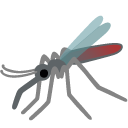


Appearance varies by platform and device. Google Noto, Twemoji, and OpenMoji are open-source.