💅🏿
The Emoji
Nail Polish: Dark Skin Tone
U+1F485 U+1F3FF · :nail_polish_dark_skin_tone:
Trend 85
Meaning layers
- interpretation
- Universally signals unbothered confidence, self-care energy, and a 'not my problem' attitude. The dark skin tone version carries additional cultural pride and Black excellence connotations in Gen Z spaces.
- tiktok usage
- Used in captions and comments to signal confidence, clapping back at drama, or celebrating a glow-up moment. Frequently appears as a punctuation emoji after a mic-drop statement.
- irony level
- 7 / 10
Platform meanings
- meaning
- Signals confidence, self-care, and zero concern for haters. A staple in clapback videos and glow-up content.
- trend usage
- Appears in text overlays and comment sections on videos about self-improvement, unbothered lifestyles, and Black girl magic content. Often used to close out a hot take.
- hashtags
- #BlackGirlMagic#UnbotheredVibes#SelfCareEra#NailsOfTikTok#GlowUp
- virality score
- 82 / 100
Cultural meanings
🇺🇸
Western / Gen-Z
Central to Gen Z's 'unbothered' lexicon and deeply tied to Black cultural expression online. Carries layered meanings of confidence, self-care, and sassy dismissal in Western digital spaces.
🇵🇰
Pakistan & India
Primarily interpreted literally as nail care or beauty. Used in beauty and fashion communities; the 'unbothered' cultural connotation is less universally understood but growing among English-speaking youth.
🌍
Middle East
Used mainly in beauty and lifestyle contexts, particularly by younger women sharing nail care content. The dark skin tone may carry specific resonance for Arab and South Asian women in the region asserting beauty standards.
🌐
Global Neutral
Universally recognized as beauty and self-care. The confident, unbothered cultural layer is understood globally among younger internet users familiar with Western meme culture.
🇧🇩
Bangladesh
Used primarily in literal nail care and beauty contexts among young women. The sass and unbothered connotation is emerging among Gen Z users who engage with international social media trends.
🇱🇰
Sri Lanka
Interpreted mostly as nail care and feminine self-expression. Growing use among youth influenced by Indian and Western beauty culture to signal confidence online.
🇨🇳
China
Less commonly used due to different emoji aesthetic preferences; when used, it signals beauty and self-care. The dark skin tone may reduce usage frequency due to colorism-influenced beauty standards.
🇯🇵
Japan
Seen as a beauty and nail care emoji, fitting Japan's strong nail art culture. However, the dark skin tone version is less prevalent due to cultural homogeneity; the base emoji is more commonly used.
🇰🇷
South Korea
Primarily a beauty emoji reflecting Korea's massive nail art industry. The dark skin tone variant is less commonly used domestically but appears in K-pop fan communities embracing diverse representation.
🇹🇼
Taiwan
Used in beauty and self-care contexts. Growing awareness of skin tone diversity in emoji usage among younger Taiwanese internet users influenced by global social media.
🇭🇰
Hong Kong
Common in beauty and lifestyle content. Younger users familiar with Western internet culture use it with the confident, unbothered connotation, particularly in English-language online spaces.
🇵🇭
Philippines
Widely used in beauty contexts and among younger users who follow Western trends. The dark skin tone version resonates with Filipinos who celebrate morena beauty and challenge traditional colorism.
🇮🇩
Indonesia
Used in beauty and self-care communities. The skin tone representation carries meaning for darker-skinned Indonesians challenging colorism; youth use it to signal confidence and self-love.
🇹🇭
Thailand
Primarily beauty-focused usage. The dark skin tone version is less commonly used in a culture where lighter skin tones are traditionally preferred, though progressive youth use it to challenge these norms.
🇻🇳
Vietnam
Mostly literal nail care usage, reflecting Vietnam's thriving nail salon industry. The confident, unbothered connotation is gaining traction among younger users on TikTok and Instagram.
🇲🇾
Malaysia
Used in beauty and lifestyle content. The dark skin tone version holds particular meaning for Malay and Indian Malaysian communities asserting beauty diversity and confidence online.
🇸🇦
Saudi Arabia
Used primarily in beauty and self-care contexts by women. The representation and confidence connotations resonate with younger Saudi women expressing individuality online.
🇦🇪
UAE
Popular in beauty communities across the UAE's diverse population. The dark skin tone version is meaningful to the large South Asian and African diaspora communities, used to signal pride and self-care.
🇪🇬
Egypt
Used in beauty contexts and, among younger users, carries sass and confidence connotations. The dark skin tone resonates with Egyptians who identify with darker complexions and push back against colorism.
🇹🇷
Turkey
Primarily beauty-focused, used in nail care and lifestyle content. Younger Turkish users influenced by Western social media are beginning to adopt the 'unbothered' connotation.
🇮🇷
Iran
Used in beauty communities, particularly by Iranian women sharing self-care content online. The confident connotation is growing among digitally active youth.
🇳🇬
Nigeria
Deeply resonant and widely used. The dark skin tone version is a point of pride, used to signal Black excellence, self-love, and the 'unbothered' attitude. Strongly embedded in Nigerian social media culture.
🇿🇦
South Africa
Widely used with strong cultural resonance, particularly in Black South African online spaces where it signals confidence, self-care, and pride. Aligns with 'Black joy' and empowerment movements.
🇬🇧
UK & Ireland
Popular in Black British communities where it carries the same 'unbothered' and Black excellence energy as in American contexts. Also used broadly by Gen Z to signal confidence.
🇫🇷
France
Used in beauty and self-care contexts. In Afro-French communities, the dark skin tone version carries cultural pride and representation significance. Broader sass connotation is growing among youth.
🇩🇪
Germany
Primarily beauty-focused usage in mainstream German culture. In Afro-German and diaspora communities, it carries empowerment and representation meaning.
🇪🇸
Spain & Italy
Used in beauty and fashion communities, reflecting both countries' strong fashion cultures. The darker skin tone version resonates with Latin American and African diaspora communities in these countries.
🇧🇷
Brazil
Widely used with strong cultural resonance in Black Brazilian communities. Deeply tied to Black Brazilian pride movements and widely understood as a symbol of confidence and self-love.
🇲🇽
Mexico
Common in beauty contexts and among younger users who follow US social media trends. The dark skin tone version resonates with Indigenous and Afro-Mexican communities embracing darker beauty.
🌎
Latin America
Used broadly in beauty and self-care content. The dark skin tone version carries increasing resonance as Afro-Latin communities celebrate representation and challenge colorism across the region.
🇦🇺
Australia & NZ
Used by Gen Z with the full range of 'unbothered' connotations, particularly in Aboriginal, Pasifika, and Black Australian communities where the skin tone representation carries additional cultural pride.
How its meaning shifted
- 2010
Emoji did not exist yet; nail polish emoji was introduced in Unicode 6.0 (2010) but skin tone modifiers were not yet available.
- 2015
Skin tone modifiers were introduced in Unicode 8.0 (2015). The dark skin tone nail polish emoji became available and was used primarily in literal beauty and nail care contexts, with early adoption in Black digital communities.
- 2020
Became a core symbol of the 'unbothered' meme culture that exploded during the pandemic era. Heavily used in Black Twitter and TikTok culture to signal confidence and dismissal of drama. Black Lives Matter era amplified its use as a symbol of Black joy and pride.
- 2026
Fully embedded in global Gen Z vocabulary as a multipurpose confidence and self-care symbol. The skin tone specificity is celebrated as a marker of representation and cultural identity. Used across all major platforms with understood layered meaning of beauty, pride, and unbothered energy.
See it on every platform
Compare with
Adjacent emojis
Share & embed
Frequently asked
01What does the 💅🏿 Nail Polish: Dark Skin Tone emoji mean?
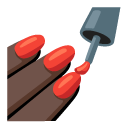
A hand with dark skin tone receiving nail polish application, depicted with a nail polish brush touching the fingernails. The dark skin tone modifier (Fitzpatrick Type VI) is applied to the base nail polish emoji.
02What does 💅🏿 mean on TikTok?
Signals confidence, self-care, and zero concern for haters. A staple in clapback videos and glow-up content.
03What does 💅🏿 mean on WhatsApp?
Used to signal that the sender is unbothered by drama or gossip, often sent after a petty comment or when describing a self-care routine.
04What does 💅🏿 mean in Gen-Z slang?
Universally signals unbothered confidence, self-care energy, and a 'not my problem' attitude. The dark skin tone version carries additional cultural pride and Black excellence connotations in Gen Z spaces.
05Is the 💅🏿 emoji safe to use?
Beauty, self-care, nail grooming, confidence, empowerment, Black excellence, and cultural pride.
06What does 💅🏿 mean in texting?
The nail polish emoji psychologically signals a detachment from external validation and a focus on self-care rituals. Combined with dark skin tone, it reinforces cultural identity and self-love, often used as a form of digital empowerment and boundary-setting.
07What is the shortcode for 💅🏿?
The shortcode for Nail Polish: Dark Skin Tone is :nail_polish_dark_skin_tone:
08What does 💅🏿 mean in dating?
Used to signal that the sender is high-maintenance in a playful way, or that they are treating themselves and not pining over anyone. Can be flirtatiously used to indicate 'I'm glowing up while you're missing out.'
Safety & usage
- Safe meaning
- Beauty, self-care, nail grooming, confidence, empowerment, Black excellence, and cultural pride.
- Caution
- Occasionally used to be dismissive or condescending in arguments, signaling contempt for the other person's perspective in a passive-aggressive way.
Generally safe and positive. When used in heated arguments, it can escalate tensions by signaling dismissal rather than engagement. Context-dependent in professional settings where it may be perceived as unprofessional.
How it looks across platforms


Appearance varies by platform and device. Google Noto, Twemoji, and OpenMoji are open-source.