💅🏽
The Emoji
Nail Polish: Medium Skin Tone
U+1F485 U+1F3FD · :nail_polish_medium_skin_tone:
Trend 85
Meaning layers
- interpretation
- Used to convey unbothered confidence, self-assurance, pettiness, or a 'I don't care' attitude. Often deployed after a savage or sassy statement to signal nonchalance and superiority.
- tiktok usage
- Appears at the end of callouts, hot takes, or clap-backs to signal 'I said what I said and I'm unbothered.' Also used in 'that girl' aesthetic and glow-up content.
- irony level
- 7 / 10
Platform meanings
- meaning
- Signals unbothered energy, self-care aesthetics, or sassiness. Used in 'that girl' content, glow-up videos, and sarcastic hot-take captions.
- trend usage
- Frequently used in 'POV: you don't care what they think' videos and beauty routines. Paired with trending sounds about confidence and self-love.
- hashtags
- #unbothered#nailsoftiktok#thatgirl#maincharacter#selfcare
- virality score
- 82 / 100
Cultural meanings
🇺🇸
Western / Gen-Z
A quintessential Gen Z symbol of unbothered confidence and sass, used after clapbacks, hot takes, and self-empowerment statements. One of the most culturally loaded emojis in Western internet culture.
🇵🇰
Pakistan & India
Used primarily in its literal meaning for beauty content, nail art, and salon culture on Instagram and WhatsApp. Younger, globally-connected users also adopt the Western 'unbothered' interpretation in urban contexts.
🌍
Middle East
Commonly used in beauty and lifestyle content among younger women, particularly in Gulf countries with a strong salon culture. The sassy connotation is increasingly understood among social-media-savvy youth.
🌐
Global Neutral
Universally understood as relating to nail care and beauty. The confident/sassy layer is understood in contexts where Western internet culture has strong penetration.
🇧🇩
Bangladesh
Primarily literal in meaning among general users, associated with nail polish and beauty routines. Urban Gen Z users may use it with the unbothered connotation influenced by TikTok trends.
🇱🇰
Sri Lanka
Used mainly in beauty and self-care contexts among younger women. The sarcastic and confident connotations are emerging among TikTok-savvy users.
🇨🇳
China
On platforms like WeChat and Douyin, it is used for beauty and nail art content. The 'unbothered' meaning is less established but growing among users exposed to Western internet culture.
🇯🇵
Japan
Associated with nail art, which is a deeply popular beauty culture in Japan. Used literally in nail-related content; the Western sassy connotation is less commonly used.
🇰🇷
South Korea
Tied strongly to the nail art and K-beauty culture. Used literally for beauty content, and the confident/empowered angle aligns with popular 'self-love' messaging in Korean pop culture.
🇹🇼
Taiwan
Used in beauty and lifestyle content contexts. Younger users familiar with Western internet trends also employ the confident, dismissive connotation.
🇭🇰
Hong Kong
Popular in beauty communities and among fashion-forward youth. The dual meaning of beauty and unbothered confidence is well understood due to strong Western cultural influence.
🇵🇭
Philippines
Widely used in beauty content and among younger Filipinos for self-care posts. The 'unbothered queen' connotation is widely understood and used on TikTok and Twitter.
🇮🇩
Indonesia
Used in beauty and lifestyle content, particularly among young women on Instagram. The sassy Western connotation is known but less dominant than the literal meaning.
🇹🇭
Thailand
Common in beauty culture content and self-care posts. Thai Gen Z users on TikTok increasingly use it with the confident, unbothered meaning.
🇻🇳
Vietnam
Used for nail care and beauty content. Vietnamese beauty culture has a strong nail salon tradition, making this emoji relevant literally; sassy connotation is emerging.
🇲🇾
Malaysia
Used in beauty content and self-care posts. The unbothered connotation is recognized among younger, English-speaking Malaysian social media users.
🇸🇦
Saudi Arabia
Used among younger women in beauty and self-care content in contexts where nail polish is culturally accepted. The confident meaning aligns with emerging women's empowerment discourse.
🇦🇪
UAE
Very common in beauty and luxury lifestyle content due to the UAE's strong beauty culture. Both the literal and 'unbothered' sassy meanings are well understood.
🇪🇬
Egypt
Used in beauty communities on social media. The literal nail care meaning dominates, while the sarcastic connotation is recognized among younger, globally-connected users.
🇹🇷
Turkey
Popular in beauty and self-care content among Turkish women. The sassy, unbothered interpretation is also used among younger Turkish Gen Z users influenced by Western trends.
🇮🇷
Iran
Used privately in beauty-related discussions and among younger women in social media contexts. The self-care and empowerment angle carries additional resonance given social constraints.
🇳🇬
Nigeria
Used widely among young Nigerians for beauty content and self-expression. The unbothered, 'I slay' connotation strongly resonates with Nigerian social media culture and Afrocentric empowerment.
🇿🇦
South Africa
Used in beauty content and by influencers. The confident, sassy meaning is very well understood and embraced, aligning with local 'slay' culture.
🇬🇧
UK & Ireland
Widely used with both the literal beauty meaning and the sarcastic 'not bothered' connotation. British users often pair it with dry wit and sarcasm for comedic effect.
🇫🇷
France
Used in beauty and fashion contexts, which resonate deeply with French aesthetic culture. The nonchalant, unbothered meaning also aligns with the French cultural value of 'je ne sais quoi' indifference.
🇩🇪
Germany
Used primarily in beauty and self-care contexts. The sassy, sarcastic dimension is less culturally prevalent but understood by younger German users familiar with English-language internet culture.
🇪🇸
Spain & Italy
Used in beauty and lifestyle content. Southern European beauty culture makes the literal meaning very relatable; the sassy connotation is popular among younger, social-media-active users.
🇧🇷
Brazil
Highly popular in beauty, self-care, and empowerment content. Brazilians have a vibrant nail culture, and the emoji is used both literally and to signal fierce, confident energy ('atitude').
🇲🇽
Mexico
Used in beauty and self-care posts and increasingly for expressing fierce, unbothered energy. Aligns well with expressions of female empowerment and sass in Mexican social media culture.
🌎
Latin America
Broadly used across Latin America for beauty content and to signal confident, no-nonsense femininity. The 'reina' (queen) energy this emoji conveys resonates strongly across the region.
🇦🇺
Australia & NZ
Used similarly to the US/UK with both literal beauty meaning and the sarcastic, unbothered connotation. Australian humor amplifies the ironic use of this emoji in social media clapbacks.
How its meaning shifted
- 2010
Emoji barely existed in mainstream usage; nail polish emoji was used almost exclusively in its literal sense for beauty and grooming conversations, with no ironic or cultural subtext.
- 2015
Growing use in beauty communities on Instagram and Tumblr. Beginning to develop the 'fabulous' and 'I'm treating myself' connotations, though still predominantly literal.
- 2020
Exploded in cultural significance with the rise of TikTok and meme culture. Became a core symbol of Gen Z's 'unbothered' aesthetic, used widely in clapbacks, hot takes, and 'that girl' content.
- 2026
A deeply embedded cultural symbol of nonchalance, confidence, and sassy empowerment. Skin tone variants are actively chosen for personal representation. Used across all platforms as punctuation for finality and confident self-expression.
See it on every platform
Adjacent emojis
- Often confused with
- nail care medium light skin tonehand with fingers splayedbackhand index pointing up
- Can replace
- crownsparklesstar struck
Share & embed
Frequently asked
01What does the 💅🏽 Nail Polish: Medium Skin Tone emoji mean?
A hand with medium skin tone applying nail polish, typically depicting self-care, beauty, and grooming rituals.
02What does 💅🏽 mean on TikTok?
Signals unbothered energy, self-care aesthetics, or sassiness. Used in 'that girl' content, glow-up videos, and sarcastic hot-take captions.
03What does 💅🏽 mean on WhatsApp?
Signals a sassy or unbothered response, often sent alone or after a statement to say 'I'm done caring about this.'
04What does 💅🏽 mean in Gen-Z slang?
Used to convey unbothered confidence, self-assurance, pettiness, or a 'I don't care' attitude. Often deployed after a savage or sassy statement to signal nonchalance and superiority.
05Is the 💅🏽 emoji safe to use?
A beauty and self-care emoji used to represent nail polish, manicures, personal grooming, and confident self-expression.
06What does 💅🏽 mean in texting?
Psychologically signals detachment from criticism and a strong sense of self-worth. The act of polishing nails while chaos ensues is a cultural shorthand for emotional regulation and composure under pressure.
07What is the shortcode for 💅🏽?
The shortcode for Nail Polish: Medium Skin Tone is :nail_polish_medium_skin_tone:
08What does 💅🏽 mean in dating?
Used to signal 'I'm high-maintenance and worth it' energy, or to playfully assert dominance after a witty comeback. Can be flirtatiously self-assured.
Safety & usage
- Safe meaning
- A beauty and self-care emoji used to represent nail polish, manicures, personal grooming, and confident self-expression.
- Caution
- Can be used in passive-aggressive or dismissive ways to belittle someone's concerns, signal contempt, or accompany cyberbullying disguised as nonchalance.
While generally safe, the 'unbothered' connotation can be weaponized in online harassment where dismissing someone's pain is framed as confidence. Context-dependent; rarely dangerous but can contribute to condescending tone in conflicts.
How it looks across platforms
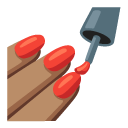


Appearance varies by platform and device. Google Noto, Twemoji, and OpenMoji are open-source.