💅🏻
The Emoji
Nail Polish: Light Skin Tone
U+1F485 U+1F3FB · :nail_polish_light_skin_tone:
Trend 91
Meaning layers
- interpretation
- Universally adopted as a symbol of unbothered confidence, petty indifference, and self-satisfied attitude. Used after delivering a savage clap-back or hot take, mimicking the gesture of blowing on freshly painted nails.
- tiktok usage
- Appears in 'slay' and 'not my problem' content, often after a mic-drop statement or when flexing achievements unbothered by criticism.
- irony level
- 7 / 10
Platform meanings
- meaning
- Symbol of unbothered slay energy, used at the end of a hot take or clap-back moment. Signals confidence, pettiness, or self-care priorities.
- trend usage
- Appears in 'things I do as a bad b*tch' trends, 'not my problem' POVs, and confidence-boosting 'that girl' content.
- hashtags
- #unbothered#slay#nailsoftiktok#thatgirl#girlboss
- virality score
- 88 / 100
Cultural meanings
🇺🇸
Western / Gen-Z
The definitive Gen Z unbothered emoji — universally understood as confidence, slay energy, and petty pride after a clap-back. Used by all genders to signal self-assured detachment.
🇵🇰
Pakistan & India
Primarily used literally for beauty content, nail art, and salon culture on Instagram and WhatsApp. The sarcastic/unbothered meaning is increasingly adopted by urban Gen Z influencers.
🌍
Middle East
Used mostly in beauty and self-care contexts by women on Instagram and TikTok. The sassy connotation is understood among younger social media users but less dominant than in Western contexts.
🌐
Global Neutral
Broadly recognized as a beauty and self-care symbol across most cultures; the sarcastic layer is understood primarily by globally connected social media users.
🇧🇩
Bangladesh
Used predominantly in literal nail beauty contexts by younger women on Facebook and Instagram. Urban youth are beginning to adopt the sassy internet connotation.
🇱🇰
Sri Lanka
Primarily associated with beauty, grooming, and feminine self-care. The confident/unbothered usage is emerging among Sri Lankan Gen Z TikTok users.
🇨🇳
China
Less common than Western platforms due to emoji culture differences; on Weibo and Xiaohongshu it signals 'beauty moment' or self-pampering aesthetics. Sarcastic usage is rare.
🇯🇵
Japan
Used in beauty-related content on Twitter/X and Instagram. Japanese social media culture favors softer emoji for sarcasm, so the aggressive unbothered meaning is less prevalent here.
🇰🇷
South Korea
Popular in beauty content on KakaoTalk, Instagram, and TikTok. Korean beauty (K-beauty) culture gives it strong nail care associations; the confident slay meaning is adopted by idol fan communities.
🇹🇼
Taiwan
Used in beauty and self-care contexts; younger users on Instagram and TikTok adopt the Western sassy interpretation especially in fandom and pop culture discourse.
🇭🇰
Hong Kong
Both literal beauty use and Western-influenced sarcastic use coexist, especially among bilingual younger generations active on Instagram and Twitter.
🇵🇭
Philippines
Very popular across Filipino social media for both literal nail beauty content and the sassy 'not my problem' attitude. Filipino Gen Z users heavily adopt the unbothered connotation.
🇮🇩
Indonesia
Used in beauty and lifestyle content widely. Among Indonesian Gen Z on TikTok and Twitter, the confident/petty meaning is well understood and frequently deployed.
🇹🇭
Thailand
Associated with nail art and beauty culture. Thai TikTok and Instagram users use it in self-care content; the sassy layer is understood but used more softly.
🇻🇳
Vietnam
Primarily literal in beauty contexts. Young Vietnamese social media users are beginning to adopt the confidence/unbothered meaning via TikTok influence.
🇲🇾
Malaysia
Used in beauty content and casual chat. Malaysian Gen Z users on TikTok and Twitter understand and use the sarcastic unbothered meaning actively.
🇸🇦
Saudi Arabia
Used in beauty and self-care content by women. Sarcastic/petty usage is present among younger women in private chats and social media but culturally nuanced.
🇦🇪
UAE
Cosmopolitan Dubai/UAE social media culture means both the beauty and the sassy internet meaning are widely recognized and used, especially among influencers.
🇪🇬
Egypt
Used in beauty content on Facebook and Instagram. Among younger Egyptian social media users, the sassy meaning is gaining ground via TikTok trends.
🇹🇷
Turkey
Popular in beauty and lifestyle content. Turkish Gen Z on Twitter and TikTok actively use the 'unbothered' interpretation alongside the literal beauty meaning.
🇮🇷
Iran
Primarily used in beauty and self-care content shared on Instagram (widely popular despite restrictions). The sassy connotation is understood among younger users.
🇳🇬
Nigeria
Very popular in Nigerian social media for both nail beauty culture and the confident 'slay' attitude that resonates deeply with Nigerian internet culture and Afrobeats aesthetics.
🇿🇦
South Africa
Used in beauty content and widely adopted in the 'slay' cultural context. South African Gen Z and millennials use it freely in sarcastic and confident contexts.
🇬🇧
UK & Ireland
Strong adoption of the Gen Z sarcastic meaning alongside beauty use. British dry humor culture aligns perfectly with the emoji's 'unbothered' undertone.
🇫🇷
France
Used in beauty and fashion contexts frequently. French social media users adopt the sassy tone, fitting with cultural appreciation for confident self-expression.
🇩🇪
Germany
More commonly used literally for beauty/nail content. The sarcastic meaning is understood by younger German internet users but used less frequently than in Anglo-American culture.
🇪🇸
Spain & Italy
Used in beauty contexts and increasingly in sassy/confident expression. Southern European expressive culture aligns well with the emoji's confident energy.
🇧🇷
Brazil
Extremely popular in Brazilian social media — both for nail culture (very prominent in Brazil) and the diva/confidence energy that resonates with Brazilian expressive culture.
🇲🇽
Mexico
Widely used for both nail beauty content and sassy expression. The unbothered confidence meaning is enthusiastically adopted in Mexican Gen Z internet culture.
🌎
Latin America
Broadly popular across Latin America for nail aesthetics and confident self-expression. The 'reina' (queen) energy of the emoji resonates strongly across the region.
🇦🇺
Australia & NZ
Used identically to the UK/US Gen Z context — both literal beauty use and the confident, sarcastic, unbothered meaning are fully adopted.
How its meaning shifted
- 2010
Primarily used literally to indicate getting a manicure, nail painting, or beauty appointments. Almost no sarcastic layer existed yet.
- 2015
Beginning to appear in 'treat yourself' and 'self-care Sunday' content. Slight edge of 'I'm fabulous' energy emerging but still mostly literal.
- 2020
Fully transformed into the internet's primary symbol of unbothered confidence, petty clap-backs, and slay energy. The sarcastic meaning dominates online discourse.
- 2026
Deeply embedded as a cultural shorthand for detached confidence across all platforms and demographics. Used by all genders and ages to signal emotional composure, self-assurance, or mild pettiness.
See it on every platform
Adjacent emojis
- Often confused with
- writing handraised hand light skin tonenail polish
- Can replace
- crownsparklessmiling face with sunglasses
Share & embed
Frequently asked
01What does the 💅🏻 Nail Polish: Light Skin Tone emoji mean?
A hand with light skin tone displaying painted fingernails, representing nail polish application or manicure. The light skin tone modifier (🏻) applies Fitzpatrick scale Type 1-2 coloring.
02What does 💅🏻 mean on TikTok?
Symbol of unbothered slay energy, used at the end of a hot take or clap-back moment. Signals confidence, pettiness, or self-care priorities.
03What does 💅🏻 mean on WhatsApp?
Sent after a witty comeback or when dismissing drama — 'Already moved on 💅🏻'.
04What does 💅🏻 mean in Gen-Z slang?
Universally adopted as a symbol of unbothered confidence, petty indifference, and self-satisfied attitude. Used after delivering a savage clap-back or hot take, mimicking the gesture of blowing on freshly painted nails.
05Is the 💅🏻 emoji safe to use?
Self-care, beauty, confidence, personal grooming, empowerment, sarcastic dismissal in online discourse.
06What does 💅🏻 mean in texting?
Psychologically mirrors the 'I don't care' defense mechanism — projecting composure and superiority as a coping or power-asserting behavior. Often signals emotional armor rather than genuine indifference.
07What is the shortcode for 💅🏻?
The shortcode for Nail Polish: Light Skin Tone is :nail_polish_light_skin_tone:
08What does 💅🏻 mean in dating?
Used flirtatiously to signal 'I'm out of your league' or 'I know my worth' — a playful power move in flirty banter.
Safety & usage
- Safe meaning
- Self-care, beauty, confidence, personal grooming, empowerment, sarcastic dismissal in online discourse.
- Caution
- Can be used to condescendingly dismiss valid concerns or to signal passive-aggressive contempt in arguments.
Generally safe. The skin tone modifier can occasionally be misused in racially coded contexts online, though this is not the dominant use case. The emoji carries no NSFW meaning.
How it looks across platforms
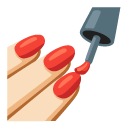


Appearance varies by platform and device. Google Noto, Twemoji, and OpenMoji are open-source.