💃
The Emoji
Woman Dancing
U+1F483 · :woman_dancing:
Trend 85
Meaning layers
- interpretation
- Used to express hype, excitement, living your best life, or being unbothered and carefree. Often signals that something is fun, iconic, or worth celebrating.
- tiktok usage
- Appears in captions for hype videos, night-out content, viral dance trends, or any moment of pure confidence and energy.
- irony level
- 3 / 10
Platform meanings
- meaning
- Signals hype, confidence, a banger moment, or that something deserves to be celebrated loudly.
- trend usage
- Paired with trending audio, outfit reveal videos, glow-up content, and reaction videos to exciting news.
- hashtags
- #girlsnight#dancechallenge#maincharacter#vibes#livingmybestlife
- virality score
- 88 / 100
Cultural meanings
🇺🇸
Western / Gen-Z
Widely used as the ultimate symbol of confidence, independence, and living your best life — often paired with 'that girl' aesthetic content.
🇵🇰
Pakistan & India
Used cautiously in mixed-gender or public contexts but freely in women-only friend groups to express excitement about weddings, parties, or Bollywood moments.
🌍
Middle East
Primarily used among women in private chats to express joy and celebration, though context-sensitive in more conservative settings.
🌐
Global Neutral
Universally understood as representing dancing, celebration, and joy — carries positive, festive connotations across most cultures.
🇧🇩
Bangladesh
Used in festive contexts like Eid celebrations, weddings, or cultural events, primarily by younger women in private or semi-private digital spaces.
🇱🇰
Sri Lanka
Associated with celebrations and Sinhala or Tamil New Year festivities — used freely among younger generations in social media contexts.
🇨🇳
China
Used in celebration contexts but less common than local alternatives; often associated with Latin or Western dance culture by Chinese users.
🇯🇵
Japan
Interpreted as a fun, celebratory emoji associated with parties and live events — occasionally used in idol fan culture and music event contexts.
🇰🇷
South Korea
Popular among K-pop fans and younger demographics to express hype around music, dance performances, and fan events.
🇹🇼
Taiwan
Used similarly to broader East Asian usage — signals festivity and fun, often in night-out or entertainment contexts.
🇭🇰
Hong Kong
Common in nightlife and entertainment circles; used to express excitement about going out, concerts, or social events.
🇵🇭
Philippines
Very commonly used in festive contexts — associated with fiestas, OPM music culture, and the Filipinos' deeply social, celebration-oriented culture.
🇮🇩
Indonesia
Used in celebratory contexts and increasingly popular in social media among younger generations, especially around weddings and holidays.
🇹🇭
Thailand
Associated with nightlife, Songkran festivals, and fun — used freely by younger Thais to signal excitement and social energy.
🇻🇳
Vietnam
Used in celebration and party contexts, often accompanying content about social gatherings, holidays, and music.
🇲🇾
Malaysia
Common among younger Malaysians in festive and social contexts, used cross-culturally across the country's diverse demographic groups.
🇸🇦
Saudi Arabia
Used primarily by women in private digital spaces to express joy; increasingly visible on social media as younger Saudis embrace entertainment culture post-Vision 2030.
🇦🇪
UAE
Widely used in the cosmopolitan UAE context — common in nightlife, concert, and social event content among the diverse expat and local population.
🇪🇬
Egypt
Popular in celebratory contexts, often associated with weddings and festive occasions — used by younger Egyptians freely on social media.
🇹🇷
Turkey
Commonly used to express excitement, hype, and celebration — associated with nightlife in Istanbul and festive cultural events.
🇮🇷
Iran
Used among younger Iranians on social media to express joy and resistance through celebration, often carrying an undercurrent of defiance in restrictive cultural contexts.
🇳🇬
Nigeria
Extremely popular — associated with Afrobeats culture, owambe parties, and Nigerian nightlife; signals maximum celebration energy.
🇿🇦
South Africa
Used in contexts around dancing, going out, and social celebration — resonates with South Africa's vibrant music and party culture.
🇬🇧
UK & Ireland
Used for nights out, hen parties, festival content, and any situation involving fun with friends — a staple of British and Irish girls' night culture.
🇫🇷
France
Associated with soirée culture, dancing, and joie de vivre — used in social and festive contexts with a sense of chic spontaneity.
🇩🇪
Germany
Used in party and nightlife contexts, especially around festivals like Karneval or club culture — signals letting loose and having fun.
🇪🇸
Spain & Italy
Deeply resonant in both cultures — in Spain it connects to flamenco heritage, and in Italy it signals festa, passion, and la dolce vita.
🇧🇷
Brazil
One of the most used celebratory emojis — tied to forró, samba, Carnival, and the Brazilian spirit of joyful, uninhibited celebration.
🇲🇽
Mexico
Strongly associated with fiestas, quinceañeras, Día de los Muertos celebrations, and the rich Mexican tradition of dance and festivity.
🌎
Latin America
Pan-regionally used to celebrate Latin culture's deep connection to dance — a universal symbol of joy across salsa, cumbia, and reggaeton communities.
🇦🇺
Australia & NZ
Used for nights out, bachelorette parties, and festival content — signals fun, social energy, and a carefree attitude in both countries.
How its meaning shifted
- 2010
Introduced with Unicode 6.0, used literally to indicate someone was dancing or to annotate dance-related content — straightforward and functional.
- 2015
Became a staple of 'girls' night out' and party culture on early Instagram and Facebook — used to hype up social plans and festive posts.
- 2020
Exploded in popularity on TikTok as dance culture went viral — adopted as a symbol of confidence, living your best life, and unbothered femininity.
- 2026
Entrenched as a multi-layered symbol of feminine confidence, celebration, and main-character energy — used both sincerely and ironically across all platforms.
See it on every platform
Compare with
Emoji combinations
Adjacent emojis
- Often confused with
- woman cartwheelingperson gesturing okwoman shrugging
- Can replace
- party poppersparklesfire
Share & embed
Frequently asked
01What does the 💃 Woman Dancing emoji mean?
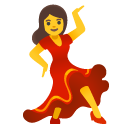
A woman in a red dress dancing, often depicted with one arm raised and one leg kicked out, representing dancing, celebration, and festivity.
02What does 💃 mean on TikTok?
Signals hype, confidence, a banger moment, or that something deserves to be celebrated loudly.
03What does 💃 mean on WhatsApp?
Expresses excitement about plans, a night out, or feeling good — often sent in group chats to hype everyone up.
04What does 💃 mean in Gen-Z slang?
Used to express hype, excitement, living your best life, or being unbothered and carefree. Often signals that something is fun, iconic, or worth celebrating.
05Is the 💃 emoji safe to use?
Celebration, dancing, joy, confidence, excitement, fun social events, and living life to the fullest.
06What does 💃 mean in texting?
Dancing is universally linked to emotional release and social bonding. This emoji taps into the psychology of uninhibited self-expression and the dopamine rush of celebration.
07What is the shortcode for 💃?
The shortcode for Woman Dancing is :woman_dancing:
08What does 💃 mean in dating?
Sent after making plans, suggesting the sender is excited and ready to have fun — subtly implies confidence and playfulness without being overtly flirtatious.
Safety & usage
- Safe meaning
- Celebration, dancing, joy, confidence, excitement, fun social events, and living life to the fullest.
- Caution
- In rare cases used dismissively — e.g., 'keep dancing 💃' to mock someone who is unaware of a problem or to signal performative unbotheredness after causing harm.
Generally very safe. In specific cultural contexts (conservative religious communities), using this emoji in public-facing content may be perceived as inappropriate due to its association with dancing and nightlife.
How it looks across platforms


Appearance varies by platform and device. Google Noto, Twemoji, and OpenMoji are open-source.