🥷🏿
The Emoji
Ninja: Dark Skin Tone
U+1F977 U+1F3FF · :ninja_dark_skin_tone:
Trend 74
Meaning layers
- interpretation
- Used to signal someone who is lowkey, moves in silence, is untraceable on social media, or is doing things secretly without announcing them. Also used to flex stealth mode — working quietly toward goals.
- tiktok usage
- Appears in 'silent grind' content, videos about avoiding drama, and 'I'm built different' aesthetics. Used when someone ghosts effortlessly or operates without being noticed.
- irony level
- 4 / 10
Platform meanings
- meaning
- Represents stealth grinding, silent success, and Black excellence in the hustle/grind culture space. Used as visual shorthand for 'I do things quietly and let results speak.'
- trend usage
- Appears in 'silent era' TikToks, productivity and self-improvement content, and duets where someone outperforms expectations without fanfare.
- hashtags
- #NinjaModeOn#MovingInSilence#SilentGrind#BlackExcellence#NinjaVibes
- virality score
- 72 / 100
Cultural meanings
🇺🇸
Western / Gen-Z
Deeply embedded in Gen Z slang as the icon of 'silent grind culture' and operating without announcing your moves. Also carries strong resonance in Black American culture as a symbol of quiet power and excellence.
🇵🇰
Pakistan & India
Less culturally specific but used among younger urban users to express stealth, cleverness, or being underestimated. Sometimes used humorously in Bollywood meme contexts for dramatic sneaky scenes.
🌍
Middle East
Used primarily by younger Arab users on TikTok and Instagram to signal being lowkey or mysterious. The dark skin tone modifier may draw more attention in contexts where skin tone representation is less normalized.
🌐
Global Neutral
Universally understood as representing stealth, secrecy, agility, and covert action. Works as a cross-cultural symbol for 'I move without being seen or heard.'
🇧🇩
Bangladesh
Used among younger social media users to represent being clever and undetectable, often in meme culture. The ninja archetype is understood through anime and gaming references.
🇱🇰
Sri Lanka
Primarily encountered through anime fandom and gaming communities where ninja characters are popular. Used to express stealth or surprise moves in casual digital conversations.
🇨🇳
China
The ninja (忍者 rěnzhě) is understood through Japanese cultural exports like anime, though sometimes viewed through a lens of Japanese cultural commentary. Used to signal skillful covert action or being impressively lowkey.
🇯🇵
Japan
Carries significant cultural weight as ninja (忍者) is a deeply rooted Japanese historical concept. Used respectfully to reference stealth, discipline, and mastery, though the emoji itself is seen as a western pop-culture simplification.
🇰🇷
South Korea
Popular among younger users through anime and gaming culture. Used to express being impressive without showing off — resonates with Korean aesthetic of 'effortless cool' (멋있다).
🇹🇼
Taiwan
Used in gaming and anime communities to signal elite, stealthy performance. Also appears in meme culture when describing someone who is impressively low-profile.
🇭🇰
Hong Kong
Used among youth culture to express street smarts and quiet effectiveness. Has additional resonance in contexts related to moving carefully and avoiding unwanted attention.
🇵🇭
Philippines
Widely used in Filipino internet culture to describe someone who is 'sutil' (sneaky but clever). Common in gaming communities and group chats when someone makes an unexpected smart move.
🇮🇩
Indonesia
Popular in gaming and meme communities as a representation of stealth and surprise. Used in Bahasa Indonesia internet slang to describe someone operating quietly but effectively.
🇹🇭
Thailand
Used in Thai social media to express being smooth, quiet, and strategic. Resonates in gaming culture and motivational content about silent success.
🇻🇳
Vietnam
Encountered primarily through gaming and anime fandoms. Used to express operating smartly and quietly, with a connotation of being underestimated but effective.
🇲🇾
Malaysia
Used in Malaysian internet culture to describe someone who is diam-diam (quietly) effective. Common in youth group chats and gaming communities to signal stealth and surprising ability.
🇸🇦
Saudi Arabia
Used among younger Saudis primarily through gaming and global meme culture. The stealth concept resonates in social contexts where operating quietly and avoiding attention is culturally valued.
🇦🇪
UAE
Popular in the diverse, cosmopolitan youth culture of the UAE. Used to signal quiet confidence and discretion, which aligns with certain cultural values around not oversharing personal affairs.
🇪🇬
Egypt
Used among Egyptian youth on TikTok and Twitter to represent being lowkey, strategic, or making a surprise move. Often used in football meme contexts when a player performs unexpectedly well.
🇹🇷
Turkey
Used in Turkish gaming culture and youth social media to express stealth and quiet excellence. Often appears in meme formats borrowed from global internet culture.
🇮🇷
Iran
Encountered primarily through gaming and anime communities among younger users. Used to signal being clever and undetectable, often in the context of navigating social situations quietly.
🇳🇬
Nigeria
Strongly resonates in Nigerian internet culture, especially with the dark skin tone variant representing Black excellence. Used on Nigerian Twitter to signal strategic moves, quiet success, and hustle culture.
🇿🇦
South Africa
The dark skin tone variant is especially significant in South African digital spaces as a symbol of Black pride and quiet strength. Used in motivational content and to celebrate achievements built in silence.
🇬🇧
UK & Ireland
Used in UK Black culture similarly to Black American usage — signals stealth, quiet grind, and being underestimated. Also used in gaming and grime/drill music communities.
🇫🇷
France
Used among younger French users influenced by global hip-hop and gaming culture. Signals being discreet and effective, with particular resonance in French-African communities.
🇩🇪
Germany
Primarily used in gaming contexts and among younger users familiar with global meme culture. Represents stealth, efficiency, and quiet effectiveness — values that resonate in German cultural contexts.
🇪🇸
Spain & Italy
Used in gaming communities and among youth influenced by global hip-hop culture. Signals being covert and impressive, often in playful social media banter.
🇧🇷
Brazil
Popular in Brazilian gaming and funk/trap culture to represent being slick and untouchable. Used in Brazilian internet slang for someone who moves quietly but makes a big impact.
🇲🇽
Mexico
Used in Mexican youth culture to signal being astute and operating under the radar. Common in gaming communities and meme culture referencing cunning or strategic behavior.
🌎
Latin America
Broadly understood across Latin America through gaming, anime, and global hip-hop influence as a symbol of stealth, skill, and quiet power. Used in motivational content and competitive gaming contexts.
🇦🇺
Australia & NZ
Used in Australian and New Zealand youth culture primarily through gaming and global meme influence. Signals quiet effectiveness and is used in multicultural communities to celebrate underrepresented excellence.
How its meaning shifted
- 2010
The ninja emoji did not exist in 2010. Ninja concepts were represented through combinations like 🗡️ or text-based ASCII art in early social media.
- 2015
Still no dedicated ninja emoji existed. Users relied on 👤, 🗡️, or Halloween-themed alternatives to convey ninja concepts in digital communication.
- 2020
The ninja emoji was officially introduced in Unicode 13.0 (2020), including skin tone variants. Initial adoption was driven by gaming communities, anime fans, and Black Twitter embracing the dark skin tone variant as a representation symbol.
- 2026
Firmly embedded in digital culture as the primary symbol for 'silent grind' and 'moving in silence' aesthetics. The dark skin tone variant holds specific cultural weight in Black digital spaces and has become a staple in motivational content, hustle culture, and representation discussions.
See it on every platform
Adjacent emojis
- Often confused with
- superheroperson in tuxedohalloween mask
- Can replace
- detectiveskullperson running dark skin tone
Share & embed
Frequently asked
01What does the 🥷🏿 Ninja: Dark Skin Tone emoji mean?
A ninja depicted in dark skin tone, wearing a black mask and hood, representing the traditional Japanese covert agent or assassin. The dark skin tone modifier applies the Fitzpatrick scale type 6.
02What does 🥷🏿 mean on TikTok?
Represents stealth grinding, silent success, and Black excellence in the hustle/grind culture space. Used as visual shorthand for 'I do things quietly and let results speak.'
03What does 🥷🏿 mean on WhatsApp?
Signals that the sender is operating quietly, being sneaky in a fun way, or is about to do something unexpected. Often used among friends to hype each other up.
04What does 🥷🏿 mean in Gen-Z slang?
Used to signal someone who is lowkey, moves in silence, is untraceable on social media, or is doing things secretly without announcing them. Also used to flex stealth mode — working quietly toward goals.
05Is the 🥷🏿 emoji safe to use?
Represents stealth, quiet achievement, discipline, and the cultural archetype of moving without announcing your plans. Widely used for positive motivational content.
06What does 🥷🏿 mean in texting?
Psychologically tied to introversion-as-power tropes and the fantasy of being mysterious and untouchable. Evokes a sense of self-sufficiency and control, with underlying themes of Black excellence and representation in warrior archetypes.
07What is the shortcode for 🥷🏿?
The shortcode for Ninja: Dark Skin Tone is :ninja_dark_skin_tone:
08What does 🥷🏿 mean in dating?
Sometimes used to say 'I'll slide into your DMs silently' or to indicate covert interest — flirting without making it obvious. Can suggest someone is watching from a distance.
Safety & usage
- Safe meaning
- Represents stealth, quiet achievement, discipline, and the cultural archetype of moving without announcing your plans. Widely used for positive motivational content.
- Caution
- In rare cases used to imply someone is operating covertly in a harmful or deceptive way — e.g., stalking behavior ('sliding in like 🥷🏿'). Can be used to glorify untraceable or anonymous harmful acts.
Generally safe. Monitor context when used in combination with threatening language, as it could be used to imply covert harassment. The skin tone modifier makes it a representation symbol and should not be used mockingly.
How it looks across platforms
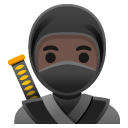


Appearance varies by platform and device. Google Noto, Twemoji, and OpenMoji are open-source.