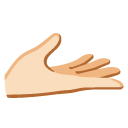
🫴🏻
The Emoji
Palm Up Hand: Light Skin Tone
U+1FAF4 U+1F3FB · :palm_up_hand_light_skin_tone:
Trend 74
Meaning layers
- interpretation
- Used to signal 'give it to me,' 'hand it over,' or 'I'm waiting' — often with an expectant or demanding vibe. Also used to express openness, vulnerability, or a soft 'come here' gesture.
- tiktok usage
- Appears in videos asking for things (money, explanations, apologies) with an expectant energy. Often paired with text like 'the accountability 🫴🏻' or 'the explanation 🫴🏻'.
- irony level
- 5 / 10
Platform meanings
- meaning
- Represents waiting, demanding, or receiving something. Often used to call out someone who owes you an explanation, apology, or action.
- trend usage
- Paired with trending audio of dramatic silence or expectation. Used in POV videos where the creator is waiting for something. Common in 'accountability era' content.
- hashtags
- #handItOver#theExplanation#accountability#manifestingEra#waitingForIt
- virality score
- 72 / 100
Cultural meanings
🇺🇸
Western / Gen-Z
Widely used in ironic 'hand it over' meme format and earnest manifestation content. Light skin tone is used interchangeably with other tone variants and carries no significant racial signaling among most users.
🇵🇰
Pakistan & India
Resonates with the traditional gesture of receiving blessings (dua) or offerings. Also used humorously in chats to ask for chai, money, or favors from friends and family.
🌍
Middle East
Closely associated with the act of giving and receiving in Islamic tradition — the open upward palm in dua (supplication). Used both spiritually and casually in digital communication.
🌐
Global Neutral
Universally understood as 'give me' or 'offering something.' The upturned palm is one of the most cross-culturally recognizable gestures, carrying minimal risk of misinterpretation globally.
🇧🇩
Bangladesh
Used in casual chat to ask for things or express that one is waiting. Also carries a gentle spiritual connotation tied to receiving blessings or prayers.
🇱🇰
Sri Lanka
Interpreted as a welcoming or offering gesture in line with local hospitality culture. Used in chats to ask for food recommendations, recipes, or favors.
🇨🇳
China
Used casually to mean 'give it here' or to ask for something in group chats. The open palm is culturally read as non-aggressive requesting.
🇯🇵
Japan
Interpreted with politeness cues — more often used to signal receiving than demanding. Fits within the cultural norm of receiving gifts or items with both hands, though digitally simplified here.
🇰🇷
South Korea
Used in fan culture to receive 'energy' or 'love' from idols. Also common in casual friend chats asking for recommendations, food, or favors with a cute/playful tone.
🇹🇼
Taiwan
Used similarly to South Korea — casual requesting and receiving in chats. Also seen in manifestation and self-care content tied to Taiwanese social media trends.
🇭🇰
Hong Kong
Mixed Cantonese internet culture interprets it as asking for something — money, help, or tea (gossip). Occasionally used in protest-era solidarity content as a gesture of demanding rights.
🇵🇭
Philippines
Very common in group chats to ask for something — food, money, links. The 'penge' (give me) culture makes this emoji instantly relatable and widely used.
🇮🇩
Indonesia
Used to request things politely in chats. Also appears in Islamic contexts around Ramadan for dua and blessing-reception imagery on social media.
🇹🇭
Thailand
Interpreted as a soft requesting or receiving gesture. Used in social media for manifestation content and in chats to ask for recommendations or favors.
🇻🇳
Vietnam
Used in casual digital communication to ask for things or signal waiting. Also appears in online business contexts — shop owners use it to invite orders or inquiries.
🇲🇾
Malaysia
Common in casual multicultural Malaysian chat to ask for something. Also used in Islamic spiritual content for dua imagery and blessing-reception themes.
🇸🇦
Saudi Arabia
Strongly associated with the act of dua (prayer with upturned palms) and receiving divine blessings. Used both spiritually on social platforms and casually in chats.
🇦🇪
UAE
Used in a mix of spiritual (dua) and trendy Western Gen Z contexts due to the cosmopolitan nature of UAE social media. Both sincere and ironic uses are common.
🇪🇬
Egypt
The upturned palm connects to both Islamic dua culture and colloquial expressions of asking or demanding. Used humorously in Egyptian internet culture to call someone out.
🇹🇷
Turkey
Used casually in chats to ask for things and in social media to signal expectation. Turkish meme culture adapts the 'hand it over' format readily.
🇮🇷
Iran
Resonates with the cultural gesture of receiving gifts or blessings with an open palm. Used in social media for both spiritual content and casual requesting in chats.
🇳🇬
Nigeria
Very popular in Nigerian social media for the 'give me my money/respect/explanation' energy. Fits Afrobeats and Nollywood culture of bold, expressive digital communication.
🇿🇦
South Africa
Used across multilingual South African social media to ask for things or signal expectation. Fits into the 'wena, give me' casual digital vernacular.
🇬🇧
UK & Ireland
Used in the same ironic 'the accountability 🫴🏻' meme format as broader English-speaking internet. Also used casually in chats to ask for things with British deadpan humor.
🇫🇷
France
Interpreted as asking or offering — French internet culture uses it somewhat less ironically than Anglophone spaces, more as a genuine gesture of presenting or requesting.
🇩🇪
Germany
Used straightforwardly to mean 'hand it over' or 'give me that' in digital communication. Less irony-heavy than Anglophone use, more literal.
🇪🇸
Spain & Italy
Resonates culturally as an expressive hand gesture — both countries have rich hand-gesture traditions, making this emoji feel naturally familiar and expressive in chats.
🇧🇷
Brazil
Widely used in Brazilian social media for asking, receiving blessings, and manifestation content. The 'me dá' (give me) energy is instantly relatable in Brazilian Portuguese chats.
🇲🇽
Mexico
Common in casual Mexican digital communication to ask for things — 'el dinero 🫴🏻'. Also used in spiritual/folk contexts around receiving blessings or good luck.
🌎
Latin America
Broadly used across Latin America in casual chat to request things and in manifestation content tied to spiritual and wellness trends popular in the region.
🇦🇺
Australia & NZ
Used with the same Gen Z irony as broader Anglophone internet — 'the explanation 🫴🏻' format is popular. Also used casually and sincerely in daily chats.
How its meaning shifted
- 2010
This emoji did not exist in 2010. The upturned palm concept was represented awkwardly through text or not at all in digital communication.
- 2015
Still non-existent as an emoji. Users conveyed similar meaning through 👋, 🤲, or text descriptions. The gesture had no dedicated digital symbol.
- 2020
The emoji was still not yet released (Unicode 15.0 came in 2022), but anticipation for more expressive hand gesture emojis was growing amid expanded skin tone discussions.
- 2026
Fully integrated into Gen Z digital vocabulary. Used across platforms for the 'hand it over' meme format, manifestation content, and spiritual/dua imagery. The skin tone variant is used naturally without much deliberate selection.
See it on every platform
Adjacent emojis
- Often confused with
- open handsperson gesturing okraised hand
Share & embed
Frequently asked
01What does the 🫴🏻 Palm Up Hand: Light Skin Tone emoji mean?
A hand with the palm facing upward and fingers extended, shown with a light skin tone modifier. Represents offering, receiving, begging, or presenting something.
02What does 🫴🏻 mean on TikTok?
Represents waiting, demanding, or receiving something. Often used to call out someone who owes you an explanation, apology, or action.
03What does 🫴🏻 mean on WhatsApp?
Casually used to ask for something — money, a favor, information. Friendly and non-threatening begging gesture.
04What does 🫴🏻 mean in Gen-Z slang?
Used to signal 'give it to me,' 'hand it over,' or 'I'm waiting' — often with an expectant or demanding vibe. Also used to express openness, vulnerability, or a soft 'come here' gesture.
05Is the 🫴🏻 emoji safe to use?
Offering, receiving, asking, presenting, manifesting, or inviting. A universally gentle and open gesture.
06What does 🫴🏻 mean in texting?
The upturned palm is one of the most universally recognized human gestures for openness and non-aggression. Psychologically it signals receptivity, trust, or a desire for connection — but can also carry entitlement depending on context.
07What is the shortcode for 🫴🏻?
The shortcode for Palm Up Hand: Light Skin Tone is :palm_up_hand_light_skin_tone:
08What does 🫴🏻 mean in dating?
Used flirtatiously to say 'I'm ready for you' or 'give me your attention/heart.' A soft, inviting gesture that can imply vulnerability or romantic readiness.
Safety & usage
- Safe meaning
- Offering, receiving, asking, presenting, manifesting, or inviting. A universally gentle and open gesture.
- Caution
- Can be used passive-aggressively to demand things in a guilt-tripping way — 'the apology 🫴🏻' used to shame someone publicly.
Generally very safe. Skin tone modifier may occasionally be used to make identity-based points in racially charged conversations, though this is uncommon. No inherently NSFW or hateful meaning.
How it looks across platforms


Appearance varies by platform and device. Google Noto, Twemoji, and OpenMoji are open-source.