🧑🏻🤝🧑🏿
The Emoji
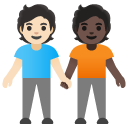
People Holding Hands: Light Skin Tone, Dark Skin Tone
U+1F9D1 U+1F3FB U+200D U+1F91D U+200D U+1F9D1 U+1F3FF · :people_holding_hands_light_skin_tone_dark_skin_tone:
Trend 58
Meaning layers
- interpretation
- Used to signal allyship, interracial friendships or relationships, and solidarity across racial lines. Also used to flex how diverse and open-minded one's social circle is.
- tiktok usage
- Appears in videos about interracial couples, diverse friend groups, anti-racism content, and wholesome 'we are the world' vibes. Sometimes used ironically in performative ally posts.
- irony level
- 3 / 10
Platform meanings
- meaning
- Represents interracial friendship, romantic relationships, or general solidarity across racial backgrounds in video captions and comments.
- trend usage
- Used in diversity and inclusion trends, interracial couple content, anti-racism duets, and wholesome multicultural friend group videos.
- hashtags
- #InterracialCouple#DiverseFriends#Solidarity#UnityVibes#LoveIsColorblind
- virality score
- 62 / 100
Cultural meanings
🇺🇸
Western / Gen-Z
Widely used to signal interracial allyship, celebrate diverse friend groups, and show pride in cross-racial relationships. Sometimes deployed ironically to mock performative diversity.
🇵🇰
Pakistan & India
Used cautiously; skin tone combinations may carry weight in cultural contexts where colorism is prevalent, but younger urban users adopt it to signal progressiveness and unity.
🌍
Middle East
Used mostly in general friendship contexts; the skin tone difference is often overlooked, and the emoji is read as two people holding hands symbolizing friendship or cooperation.
🌐
Global Neutral
Broadly understood as a symbol of human unity and cross-cultural friendship, carrying a universally positive connotation in most international contexts.
🇧🇩
Bangladesh
Primarily used in general friendship or unity contexts, with little specific attention paid to the skin tone contrast; colorism awareness is present but the emoji is seen as friendly.
🇱🇰
Sri Lanka
Used in social media to represent friendship or solidarity; the skin tone detail is recognized by younger users familiar with global emoji culture.
🇨🇳
China
Generally interpreted as a friendship or cooperation symbol; the skin tone nuance is less culturally loaded but recognized by internationally connected users.
🇯🇵
Japan
Read as a symbol of friendship or togetherness; Japanese users may note the skin tone contrast but the emoji is generally used in positive, inclusive contexts.
🇰🇷
South Korea
Younger Korean users familiar with global social media recognize the diversity symbolism; used in ally content and multicultural appreciation posts.
🇹🇼
Taiwan
Used in progressive circles to signal support for multiculturalism and cross-racial solidarity, particularly among internationally educated youth.
🇭🇰
Hong Kong
Adopted in diversity and solidarity contexts, particularly among young activists and those with international exposure; carries a positive, inclusive connotation.
🇵🇭
Philippines
Used warmly to represent friendships and unity, especially in OFW (overseas Filipino worker) communities bridging multiple cultures.
🇮🇩
Indonesia
Seen as a symbol of persatuan (unity) in a diverse archipelago context; used in content celebrating the country's multicultural identity.
🇹🇭
Thailand
Used in friendly and cooperative contexts; the skin tone difference may subtly reflect Thailand's own conversations around colorism and skin preferences.
🇻🇳
Vietnam
Primarily read as a friendship symbol; younger, internationally connected Vietnamese users understand the diversity dimension.
🇲🇾
Malaysia
Resonates strongly in Malaysia's multiracial society context; used to celebrate unity among Malay, Chinese, Indian, and other communities.
🇸🇦
Saudi Arabia
Used in general friendship contexts; the cross-skin-tone element is noted but not heavily emphasized in typical usage.
🇦🇪
UAE
Highly relevant in the UAE's diverse expatriate society; used to celebrate multicultural friendships and the cosmopolitan nature of life there.
🇪🇬
Egypt
Used in friendship and unity contexts; the skin tone distinction connects to broader African and Arab identity conversations among younger users.
🇹🇷
Turkey
Used to signal diversity and friendship, particularly in urban progressive communities; resonates with Turkey's position as a cultural crossroads.
🇮🇷
Iran
Used primarily as a friendship symbol; younger social media users recognize the diversity symbolism but it is not a dominant cultural focus.
🇳🇬
Nigeria
Meaningful in the context of Afro-diaspora unity and pan-African solidarity; the dark skin tone representation is noticed and appreciated.
🇿🇦
South Africa
Carries significant resonance in the post-apartheid context; used to represent rainbow nation unity and cross-racial friendship.
🇬🇧
UK & Ireland
Commonly used to signal multicultural friendship, allyship, and inclusivity in the diverse social landscape of modern Britain and Ireland.
🇫🇷
France
Used to represent fraternité across racial lines; sits within ongoing public debates about race, identity, and republicanism in France.
🇩🇪
Germany
Used in diversity and inclusion contexts, particularly relevant in Germany's increasingly multicultural society; popular in anti-discrimination content.
🇪🇸
Spain & Italy
Used in friendship and multicultural contexts; resonates with younger generations navigating increasing immigration and cultural diversity.
🇧🇷
Brazil
Highly culturally relevant given Brazil's mixed-race identity; used to celebrate the country's diversity and challenge racial inequality simultaneously.
🇲🇽
Mexico
Used in contexts celebrating indigenous-mestizo unity and broader multicultural solidarity; resonates with younger progressive communities.
🌎
Latin America
Broadly used across Latin America to symbolize mestizo cultural identity and unity across the region's diverse racial and ethnic makeup.
🇦🇺
Australia & NZ
Used in allyship, reconciliation, and multicultural friendship contexts; particularly meaningful in conversations about Indigenous and settler relationships.
How its meaning shifted
- 2010
This specific emoji combination did not exist; generic yellow holding-hands emoji or simple couple emoji were used without skin tone modifiers.
- 2015
Skin tone modifiers were introduced in Unicode 8.0 but multi-person skin tone combinations were not yet widely supported; usage was limited.
- 2020
Gained significant cultural traction during the Black Lives Matter protests and global racial justice reckoning; widely shared as a symbol of interracial solidarity.
- 2026
Widely embedded in diversity and inclusion content, interracial relationship representation, and allyship signaling across all major platforms; still carries both sincere and ironic usage dimensions.
See it on every platform
Adjacent emojis
Share & embed
Frequently asked
01What does the 🧑🏻🤝🧑🏿 People Holding Hands: Light Skin Tone, Dark Skin Tone emoji mean?
Two people holding hands, depicted with a light skin tone on the left figure and a dark skin tone on the right figure, representing unity, partnership, and human connection across skin tones.
02What does 🧑🏻🤝🧑🏿 mean on TikTok?
Represents interracial friendship, romantic relationships, or general solidarity across racial backgrounds in video captions and comments.
03What does 🧑🏻🤝🧑🏿 mean on WhatsApp?
Sent between friends of different backgrounds to express closeness, or by interracial couples as a casual relationship symbol.
04What does 🧑🏻🤝🧑🏿 mean in Gen-Z slang?
Used to signal allyship, interracial friendships or relationships, and solidarity across racial lines. Also used to flex how diverse and open-minded one's social circle is.
05Is the 🧑🏻🤝🧑🏿 emoji safe to use?
A warm, inclusive symbol of interracial friendship, partnership, and human unity across skin tones.
06What does 🧑🏻🤝🧑🏿 mean in texting?
Psychologically signals a desire to bridge social divides and celebrate diversity. Can evoke feelings of hope and human connection, but may also trigger skepticism if perceived as performative virtue signaling.
07What is the shortcode for 🧑🏻🤝🧑🏿?
The shortcode for People Holding Hands: Light Skin Tone, Dark Skin Tone is :people_holding_hands_light_skin_tone_dark_skin_tone:
08What does 🧑🏻🤝🧑🏿 mean in dating?
Used by people in or interested in interracial relationships to signal openness, pride, or attraction across racial backgrounds. Sometimes added to bios on dating apps.
Safety & usage
- Safe meaning
- A warm, inclusive symbol of interracial friendship, partnership, and human unity across skin tones.
- Caution
- Occasionally weaponized sarcastically to mock performative allyship, forced diversity, or in bad-faith arguments about race.
Generally safe, but context matters; in politically charged or racist online spaces, it can be used mockingly. Not inherently NSFW but may appear in racially provocative content.
How it looks across platforms


Appearance varies by platform and device. Google Noto, Twemoji, and OpenMoji are open-source.