🧑🏼🤝🧑🏿
The Emoji
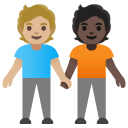
People Holding Hands: Medium-light Skin Tone, Dark Skin Tone
U+1F9D1 U+1F3FC U+200D U+1F91D U+200D U+1F9D1 U+1F3FF · :people_holding_hands_mediumlight_skin_tone_dark_skin_tone:
Trend 58
Meaning layers
- interpretation
- Used to show unity, interracial friendship or relationship, allyship, or simply two friends holding hands. Often deployed as a symbol of inclusion or to caption diverse squads.
- tiktok usage
- Appears in videos celebrating interracial couples, diverse friendships, and anti-racism content. Also used casually in friendship appreciation posts.
- irony level
- 2 / 10
Platform meanings
- meaning
- Represents interracial friendships, couples, or the celebration of diverse bonds. Frequently used in duet videos between creators of different backgrounds.
- trend usage
- Appears in #interracialcouple, #diversefriendship, and unity challenge videos. Content creators use it to signal allyship or to celebrate cultural exchange.
- hashtags
- #InterracialCouple#DiverseFriends#UnityVibes#LoveHasNoColor#InclusiveTok
- virality score
- 62 / 100
Cultural meanings
🇺🇸
Western / Gen-Z
Widely used as a symbol of interracial friendship or romance and a signal of personal values around diversity and inclusion. Often seen as a genuine expression of allyship or lived experience.
🇵🇰
Pakistan & India
May be used to represent cross-religious or cross-caste friendship and unity, carrying a powerful social message in contexts where such divisions are prominent. Also used simply for friendship.
🌍
Middle East
Used cautiously, primarily to represent friendship and unity. The skin tone element may be less prominent in interpretation; generally read as two people holding hands in friendship or solidarity.
🌐
Global Neutral
Universally interpreted as two people holding hands, symbolizing friendship, partnership, or unity. The skin tone combination adds a layer of diversity representation that is broadly positive.
🇧🇩
Bangladesh
Interpreted as a symbol of friendship and solidarity. The cross-tone element may highlight cross-community or cross-religious unity in a socially diverse context.
🇱🇰
Sri Lanka
Used to represent friendship across ethnic or religious lines, a meaningful gesture in a country with a history of ethnic diversity and conflict. Generally a positive symbol of unity.
🇨🇳
China
Primarily interpreted as a friendship or partnership emoji. Skin tone diversity is noted but the core meaning of togetherness and cooperation is the dominant reading.
🇯🇵
Japan
Read as a symbol of close friendship or partnership. The different skin tones may be appreciated as a representation of international or cross-cultural friendship, aligning with global connectivity values.
🇰🇷
South Korea
Used to represent close friendship or a couple. The diversity aspect resonates with younger Koreans interested in multiculturalism and global culture.
🇹🇼
Taiwan
Interpreted as a symbol of friendship and inclusivity. Younger users in Taiwan's progressive social climate may specifically appreciate the cross-tone element as a diversity signal.
🇭🇰
Hong Kong
Used to express friendship and solidarity, with the cross-skin-tone element resonating in Hong Kong's cosmopolitan, multicultural environment.
🇵🇭
Philippines
Commonly used for friendship and unity. Overseas Filipino workers may use it to represent bonds formed across cultural and racial lines in diverse work environments.
🇮🇩
Indonesia
Interpreted as friendship and togetherness. In Indonesia's diverse ethnic landscape, the emoji can symbolize unity across the country's many ethnic groups.
🇹🇭
Thailand
Used to express friendship and partnership. The skin tone detail is generally appreciated as a diversity symbol among younger, globally connected Thai users.
🇻🇳
Vietnam
Read as a friendship or partnership symbol. The diversity aspect may be used by younger Vietnamese users engaged with global culture to signal openness.
🇲🇾
Malaysia
Strongly resonates in Malaysia's multiracial society as a symbol of inter-ethnic friendship and national unity. The different skin tones are a meaningful visual metaphor for Malaysian diversity.
🇸🇦
Saudi Arabia
Generally interpreted as friendship or partnership. Skin tone nuances may be less emphasized; the primary reading is of two people together in a supportive relationship.
🇦🇪
UAE
Highly relevant in the UAE's diverse expatriate society, used to represent cross-cultural friendship and the multicultural nature of life in the Emirates.
🇪🇬
Egypt
Interpreted as a symbol of friendship and solidarity. May carry particular meaning in contexts of interfaith or cross-cultural dialogue and unity.
🇹🇷
Turkey
Used to express friendship and togetherness. The cross-skin-tone element may be appreciated in urban, cosmopolitan contexts as a diversity symbol.
🇮🇷
Iran
Primarily read as friendship or partnership. Among younger, globally connected Iranians, the diversity element may be used to signal open-mindedness.
🇳🇬
Nigeria
Widely resonant as a symbol of unity across Nigeria's hundreds of ethnic groups. The different skin tones can represent cross-tribal or cross-regional friendship and solidarity.
🇿🇦
South Africa
Deeply meaningful in South Africa's post-apartheid context, where it can represent the Rainbow Nation ideal of cross-racial friendship and unity. Often used with genuine emotional weight.
🇬🇧
UK & Ireland
Used to represent interracial friendship or relationships in the UK's diverse society. Also used more broadly for unity and togetherness in a multicultural context.
🇫🇷
France
Interpreted as a symbol of friendship and unity. In France's diverse society, it can represent the Republican ideal of fraternity across different communities.
🇩🇪
Germany
Used to express cross-cultural friendship and solidarity. Particularly resonant in Germany's increasingly diverse immigrant society as a symbol of integration and mutual respect.
🇪🇸
Spain & Italy
Interpreted as friendship and unity. Increasingly used to represent cross-cultural connections in Southern Europe's growing diversity.
🇧🇷
Brazil
Very resonant in Brazil's highly mixed-race society, where it can represent the celebrated mestiçagem cultural ideal. Used to express pride in diverse friendships and relationships.
🇲🇽
Mexico
Used to express cross-cultural friendship and solidarity. Resonates in contexts of indigenous-mestizo unity or US-Mexico cross-border relationships.
🌎
Latin America
Broadly used across Latin America to represent unity and friendship across the region's diverse racial and ethnic communities.
🇦🇺
Australia & NZ
Used to represent interracial friendship and solidarity, particularly in the context of Indigenous-settler reconciliation and multicultural society.
How its meaning shifted
- 2010
This specific skin tone combination emoji did not exist. The concept of skin tone modifiers for human emojis had not yet been implemented by Unicode.
- 2015
Skin tone modifiers were introduced to Unicode in 2015, but multi-person skin tone combinations were not yet available. Single-person emoji skin tones were new and generating significant cultural discussion.
- 2020
By 2020, multi-person skin tone combination emojis had been released and were gaining traction, particularly in the context of the Black Lives Matter movement and global conversations about racial equity, where interracial unity emojis took on heightened significance.
- 2026
Widely used and normalized as a representation of interracial relationships, diverse friendships, and cross-cultural solidarity. Appears regularly in DEI content, personal bios, and casual friendship expressions without requiring explicit explanation.
See it on every platform
Adjacent emojis
Share & embed
Frequently asked
01What does the 🧑🏼🤝🧑🏿 People Holding Hands: Medium-light Skin Tone, Dark Skin Tone emoji mean?
Two people holding hands, with the left figure having a medium-light skin tone and the right figure having a dark skin tone, representing human connection, partnership, and solidarity across different skin tones.
02What does 🧑🏼🤝🧑🏿 mean on TikTok?
Represents interracial friendships, couples, or the celebration of diverse bonds. Frequently used in duet videos between creators of different backgrounds.
03What does 🧑🏼🤝🧑🏿 mean on WhatsApp?
Sent between friends of different ethnic backgrounds as a symbol of their bond, or used in group chats to express solidarity and togetherness.
04What does 🧑🏼🤝🧑🏿 mean in Gen-Z slang?
Used to show unity, interracial friendship or relationship, allyship, or simply two friends holding hands. Often deployed as a symbol of inclusion or to caption diverse squads.
05Is the 🧑🏼🤝🧑🏿 emoji safe to use?
Represents interracial friendship, partnership, love, and unity. A positive symbol of human connection across different backgrounds.
06What does 🧑🏼🤝🧑🏿 mean in texting?
Holding hands is one of the most universal human gestures of connection and trust. The cross-skin-tone pairing amplifies the emotional message of unity and acceptance beyond differences.
07What is the shortcode for 🧑🏼🤝🧑🏿?
The shortcode for People Holding Hands: Medium-light Skin Tone, Dark Skin Tone is :people_holding_hands_mediumlight_skin_tone_dark_skin_tone:
08What does 🧑🏼🤝🧑🏿 mean in dating?
Used by people in or interested in interracial relationships to signal openness or to celebrate their pairing. Can be a subtle way to hint at a relationship without explicitly stating it.
Safety & usage
- Safe meaning
- Represents interracial friendship, partnership, love, and unity. A positive symbol of human connection across different backgrounds.
- Caution
- Can be co-opted in performative allyship contexts or used sarcastically to mock diversity initiatives. Extremely rarely used negatively.
Generally very safe to use across contexts. Users should be aware that in some ultra-conservative communities, the interracial element may attract unwanted negative attention. Not a concern on mainstream platforms.
How it looks across platforms


Appearance varies by platform and device. Google Noto, Twemoji, and OpenMoji are open-source.