🧑🏾🤝🧑🏽
The Emoji
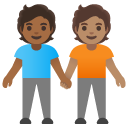
People Holding Hands: Medium-dark Skin Tone, Medium Skin Tone
U+1F9D1 U+1F3FE U+200D U+1F91D U+200D U+1F9D1 U+1F3FD · :people_holding_hands_mediumdark_skin_tone_medium_skin_tone:
Trend 58
Meaning layers
- interpretation
- Used to signal friendship goals, allyship, interracial or multicultural bonds, and unity between people of different backgrounds. Also used casually to represent 'we're together' without implying romance.
- tiktok usage
- Appears in videos celebrating diverse friendships, multicultural relationships, or solidarity moments. Often paired with affirmations about representation and inclusion.
- irony level
- 2 / 10
Platform meanings
- meaning
- Represents diverse partnerships, multicultural friendships, and solidarity in TikTok captions and video descriptions.
- trend usage
- Featured in 'friendship reveal' videos, multicultural couple content, interracial bestie showcases, and diversity celebration trends.
- hashtags
- #diversefriends#multiculturalcouple#friendshipgoals#inclusionmatters#togetherness
- virality score
- 62 / 100
Cultural meanings
🇺🇸
Western / Gen-Z
Widely used to celebrate multicultural friendships and interracial relationships, seen as a positive symbol of modern diversity and inclusion values.
🇵🇰
Pakistan & India
Interpreted as a symbol of friendship or partnership; in cross-border contexts, it can carry a hopeful message of unity between the two nations' people, though rarely used that way explicitly.
🌍
Middle East
Generally represents friendship or partnership; the skin tone variation may be noted but the primary read is simple human connection and solidarity.
🌐
Global Neutral
Universally understood as two people holding hands in friendship or partnership, with the skin tone variation signaling diversity and cross-cultural connection.
🇧🇩
Bangladesh
Used to express close friendship and togetherness, with the skin tone diversity aspect often appreciated as a sign of global connectivity.
🇱🇰
Sri Lanka
Interpreted as a symbol of friendship and unity, sometimes used in multicultural community contexts to signal inclusion and togetherness.
🇨🇳
China
Used to represent partnership or friendship; the diversity aspect may be less emphasized culturally, with the focus on the cooperative gesture itself.
🇯🇵
Japan
Seen as a symbol of friendship and closeness; the skin tone variation is acknowledged in international or diversity-focused contexts but the handholding gesture is the primary focus.
🇰🇷
South Korea
Popular in contexts celebrating multicultural friendships and K-culture's growing global reach; used to signal cross-cultural bonds with international fans or friends.
🇹🇼
Taiwan
Used to express warm friendship and solidarity, particularly in multicultural or international community settings where diversity is celebrated.
🇭🇰
Hong Kong
Interpreted as a symbol of unity and partnership, sometimes used in contexts emphasizing solidarity across different communities and backgrounds.
🇵🇭
Philippines
Widely used to express friendship and closeness; Filipinos often use it to represent their multicultural social circles or connections with people of different backgrounds.
🇮🇩
Indonesia
Represents friendship and togetherness; in the context of Indonesia's diverse population, it can also signal inter-ethnic harmony and unity.
🇹🇭
Thailand
Used to express warm friendship and togetherness, with the skin tone combination sometimes appreciated in contexts celebrating multicultural relationships.
🇻🇳
Vietnam
Interpreted as a symbol of close friendship or partnership; the diversity aspect is noted in international contexts but the primary meaning is warm human connection.
🇲🇾
Malaysia
Particularly resonant given Malaysia's multicultural society; used to celebrate cross-ethnic friendships and the country's diversity narrative.
🇸🇦
Saudi Arabia
Primarily interpreted as a friendship or partnership symbol; gender-neutral framing is generally accepted, though context around who is holding hands matters culturally.
🇦🇪
UAE
Given the UAE's highly multicultural population, this emoji resonates strongly as a symbol of the nation's diverse social fabric and international friendships.
🇪🇬
Egypt
Used to represent friendship and solidarity; in contexts of social advocacy, it can signal cross-cultural or cross-community unity.
🇹🇷
Turkey
Interpreted as a symbol of friendship and togetherness; in multicultural or international contexts, the skin tone variation adds a layer of global connection.
🇮🇷
Iran
Generally read as a symbol of friendship and human warmth; less emphasis on the skin tone diversity aspect and more on the universal gesture of connection.
🇳🇬
Nigeria
Used enthusiastically to represent cross-cultural or inter-ethnic friendships, resonating with Nigeria's diverse ethnic makeup and growing global connections.
🇿🇦
South Africa
Carries particular resonance as a symbol of cross-racial friendship and unity, echoing the country's history of reconciliation and its rainbow nation identity.
🇬🇧
UK & Ireland
Used to celebrate multicultural friendships and diverse social circles, fitting naturally into the UK and Ireland's multicultural urban culture.
🇫🇷
France
Used in the spirit of fraternité to represent cross-cultural bonds; in political contexts, it can signal solidarity across ethnic and cultural divides.
🇩🇪
Germany
Often used in diversity and inclusion contexts, representing multicultural friendships and the integration of different communities in German society.
🇪🇸
Spain & Italy
Represents warm friendship and cross-cultural connection; in the context of these countries' growing multicultural societies, it signals inclusive and diverse bonds.
🇧🇷
Brazil
Resonates strongly in Brazil's racially diverse society as a symbol of mixed friendships and the country's celebrated cultural mixing, known as 'mestiçagem'.
🇲🇽
Mexico
Used to celebrate diverse friendships and cross-cultural connections, fitting into Mexico's rich tapestry of indigenous, European, and global influences.
🌎
Latin America
Broadly interpreted as a symbol of multicultural unity and friendship across Latin America's diverse populations, celebrating the region's mixed heritage.
🇦🇺
Australia & NZ
Used to celebrate multicultural friendships and First Nations and settler relations in a spirit of reconciliation and diverse community building.
How its meaning shifted
- 2010
This specific multi-skin-tone holding hands emoji did not exist yet; general hand-holding emojis were single-tone and primarily used to represent romantic couples.
- 2015
Still pre-introduction; basic emoji skin tone modifiers were being rolled out, but multi-person skin tone combinations were not yet available. Diversity in emoji representation was a growing public conversation.
- 2020
Newly introduced as part of Unicode's diversity expansion; used primarily by diversity advocates, multicultural couples, and representation-focused content creators to celebrate inclusive emoji design.
- 2026
Mainstream adoption across platforms for expressing diverse friendships, multicultural relationships, and cross-cultural solidarity. Regularly used in DEI content, multicultural lifestyle posts, and casual friendship expression.
See it on every platform
Adjacent emojis
- Often confused with
- people with bunny earstwo heartshandshake
- Can replace
- red hearthandshakeraised hands
Share & embed
Frequently asked
01What does the 🧑🏾🤝🧑🏽 People Holding Hands: Medium-dark Skin Tone, Medium Skin Tone emoji mean?
Two people holding hands, with the left figure having a medium-dark skin tone and the right figure having a medium skin tone. Represents partnership, friendship, solidarity, and human connection across diverse backgrounds.
02What does 🧑🏾🤝🧑🏽 mean on TikTok?
Represents diverse partnerships, multicultural friendships, and solidarity in TikTok captions and video descriptions.
03What does 🧑🏾🤝🧑🏽 mean on WhatsApp?
Sent between close friends of different backgrounds to express their bond. Also used in group chats to signal unity and togetherness.
04What does 🧑🏾🤝🧑🏽 mean in Gen-Z slang?
Used to signal friendship goals, allyship, interracial or multicultural bonds, and unity between people of different backgrounds. Also used casually to represent 'we're together' without implying romance.
05Is the 🧑🏾🤝🧑🏽 emoji safe to use?
Friendship, partnership, solidarity, multicultural connection, allyship, togetherness, and human warmth.
06What does 🧑🏾🤝🧑🏽 mean in texting?
Holding hands symbolizes trust and vulnerability in human psychology. The skin tone variation adds a layer of representation and inclusivity, amplifying feelings of acceptance and cross-cultural belonging.
07What is the shortcode for 🧑🏾🤝🧑🏽?
The shortcode for People Holding Hands: Medium-dark Skin Tone, Medium Skin Tone is :people_holding_hands_mediumdark_skin_tone_medium_skin_tone:
08What does 🧑🏾🤝🧑🏽 mean in dating?
Can subtly hint at interest in someone of a different background or signal openness to interracial relationships. Used to express 'I want us to be close' without being overtly romantic.
Safety & usage
- Safe meaning
- Friendship, partnership, solidarity, multicultural connection, allyship, togetherness, and human warmth.
- Caution
- Rarely used in harmful ways; could theoretically be used sarcastically to mock performative allyship or diversity gestures.
Generally a safe and wholesome emoji. Minimal risk of misuse. In rare cases, it may be deployed ironically to call out shallow diversity efforts, but this is not a common or harmful usage pattern.
How it looks across platforms


Appearance varies by platform and device. Google Noto, Twemoji, and OpenMoji are open-source.