🧑🏽🤝🧑🏿
The Emoji
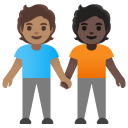
People Holding Hands: Medium Skin Tone, Dark Skin Tone
U+1F9D1 U+1F3FD U+200D U+1F91D U+200D U+1F9D1 U+1F3FF · :people_holding_hands_medium_skin_tone_dark_skin_tone:
Trend 48
Meaning layers
- interpretation
- Used to express solidarity, friendship goals, or a supportive relationship between two people of different backgrounds. Often signals allyship or inclusive vibes without needing words.
- tiktok usage
- Appears in videos about interracial friendships, diversity advocacy, and wholesome duo content. Frequently paired with 'bestie' energy captions.
- irony level
- 1 / 10
Platform meanings
- meaning
- Represents diverse friendship pairs, solidarity, and inclusive duo energy in short-form video captions and comments.
- trend usage
- Used in 'my bestie and I' type content, interracial relationship reveal videos, and diversity appreciation trends.
- hashtags
- #DiverseFriendship#InclusiveVibes#InterracialCouple#BestieGoals#Unity
- virality score
- 52 / 100
Cultural meanings
🇺🇸
Western / Gen-Z
Seen as a natural, positive symbol of diverse friendship and allyship. Widely used without overthinking in casual and advocacy contexts.
🇵🇰
Pakistan & India
Interpreted as a symbol of friendship or unity, though interracial romantic connotations may be downplayed. Used in diaspora communities to celebrate multicultural identity.
🌍
Middle East
Generally read as a symbol of friendship or solidarity. In conservative contexts, same-gender reading is preferred; romantic interpretations vary by country.
🌐
Global Neutral
Universally understood as representing human togetherness and cooperation across different backgrounds.
🇧🇩
Bangladesh
Seen primarily as a friendship or solidarity emoji. Used in contexts of national unity or cross-community harmony.
🇱🇰
Sri Lanka
Interpreted as a sign of friendship across ethnic or cultural lines, resonating in a country with diverse ethnic communities.
🇨🇳
China
Used to represent friendship and partnership, with skin tone diversity noted but not heavily emphasized in everyday usage.
🇯🇵
Japan
Appreciated for its inclusive design, often used in international friendship contexts or by globally-minded youth.
🇰🇷
South Korea
Used in K-pop fan communities to celebrate international fan friendships and diversity within global fanbases.
🇹🇼
Taiwan
Seen positively as a representation of multicultural friendship, embraced by younger, globally-connected users.
🇭🇰
Hong Kong
Used in diverse urban social contexts to represent cross-cultural connections and cosmopolitan identity.
🇵🇭
Philippines
Embraced warmly, often used to celebrate the Philippines' diverse relationships with other cultures and OFW community bonds.
🇮🇩
Indonesia
Interpreted as a symbol of unity and diversity, resonating with the nation's motto of 'Bhinneka Tunggal Ika' (Unity in Diversity).
🇹🇭
Thailand
Used to express warm friendship and cross-cultural connection, particularly in international tourism and exchange student contexts.
🇻🇳
Vietnam
Seen as a symbol of friendship and solidarity, used by younger generations engaging with global diversity conversations.
🇲🇾
Malaysia
Strongly resonates as a symbol of multiracial harmony, reflecting Malaysia's own multicultural national identity.
🇸🇦
Saudi Arabia
Interpreted cautiously; more acceptable as a friendship symbol. Romantic interpretations are less common in conservative contexts.
🇦🇪
UAE
Used positively in the UAE's diverse expat context to represent multicultural friendships and workplace solidarity.
🇪🇬
Egypt
Seen as a symbol of friendship and goodwill. Romantic interracial connotations are less commonly inferred.
🇹🇷
Turkey
Used to represent cross-cultural friendship and unity, particularly relevant in Turkey's diverse cultural landscape.
🇮🇷
Iran
Interpreted primarily as a symbol of friendship and human solidarity, with romantic meanings less explicitly read.
🇳🇬
Nigeria
Used to celebrate diverse friendships and unity across tribal and regional lines, resonating with Nigeria's multicultural identity.
🇿🇦
South Africa
Carries particular resonance as a symbol of post-apartheid rainbow nation values and cross-racial solidarity.
🇬🇧
UK & Ireland
Used casually to represent diverse friendships and multicultural relationships in one of Europe's most diverse societies.
🇫🇷
France
Used in contexts of fraternité and multicultural friendship, though French universalism sometimes de-emphasizes the skin tone specificity.
🇩🇪
Germany
Appreciated in multicultural and integration-focused conversations, used positively in diversity advocacy contexts.
🇪🇸
Spain & Italy
Used to represent diverse friendships and cross-cultural connections, gaining more prominence as societies become more multicultural.
🇧🇷
Brazil
Resonates strongly in Brazil's racially diverse society, used to celebrate mestiçagem culture and cross-racial friendship.
🇲🇽
Mexico
Used to represent diverse friendships and solidarity, resonating in contexts of mestizo cultural identity and cross-border relationships.
🌎
Latin America
Broadly used across Latin America to celebrate cultural diversity and solidarity between people of different backgrounds.
🇦🇺
Australia & NZ
Used widely to celebrate multicultural friendships and First Nations solidarity in increasingly diverse societies.
How its meaning shifted
- 2010
Did not exist; skin tone modifiers and multi-person holding hands emojis were not yet part of the Unicode standard.
- 2015
Basic people holding hands emoji existed but skin tone combination variants were not yet widely supported or used.
- 2020
Gained significant usage following the Black Lives Matter movement surge, becoming a symbol of interracial solidarity and allyship.
- 2026
Normalized as a casual representation of diverse relationships and friendships, used broadly without always carrying explicit activist connotations.
See it on every platform
Adjacent emojis
- Opposite
- broken heartcollisionprohibited
- Often confused with
- people wrestlingcouple with hearthugging face
- Can replace
- handshakered hearttwo hearts
Share & embed
Frequently asked
01What does the 🧑🏽🤝🧑🏿 People Holding Hands: Medium Skin Tone, Dark Skin Tone emoji mean?
Two people holding hands with medium skin tone and dark skin tone modifier, representing togetherness, partnership, and human connection across different skin tones.
02What does 🧑🏽🤝🧑🏿 mean on TikTok?
Represents diverse friendship pairs, solidarity, and inclusive duo energy in short-form video captions and comments.
03What does 🧑🏽🤝🧑🏿 mean on WhatsApp?
Sent between friends of different backgrounds to express closeness and solidarity in private or group chats.
04What does 🧑🏽🤝🧑🏿 mean in Gen-Z slang?
Used to express solidarity, friendship goals, or a supportive relationship between two people of different backgrounds. Often signals allyship or inclusive vibes without needing words.
05Is the 🧑🏽🤝🧑🏿 emoji safe to use?
Represents diverse friendship, solidarity, partnership, and inclusive human connection.
06What does 🧑🏽🤝🧑🏿 mean in texting?
Evokes feelings of safety, acceptance, and cross-cultural connection. Psychologically resonates as an affirmation of inclusive love and human unity.
07What is the shortcode for 🧑🏽🤝🧑🏿?
The shortcode for People Holding Hands: Medium Skin Tone, Dark Skin Tone is :people_holding_hands_medium_skin_tone_dark_skin_tone:
08What does 🧑🏽🤝🧑🏿 mean in dating?
Can subtly hint at interracial romantic interest or signal openness to dating across racial lines without being explicit.
Safety & usage
- Safe meaning
- Represents diverse friendship, solidarity, partnership, and inclusive human connection.
- Caution
- Occasionally weaponized sarcastically against performative diversity messaging by bad-faith actors.
Generally safe and positive. Rarely misused, though some trolls may use it ironically in discussions about racial politics.
How it looks across platforms

Appearance varies by platform and device. Google Noto, Twemoji, and OpenMoji are open-source.