🤼
The Emoji
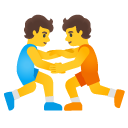
People Wrestling
U+1F93C · :people_wrestling:
Trend 52
Meaning layers
- interpretation
- Used to represent conflict, beef, competition, or two people going at it — either literally or metaphorically. Also used humorously when two ideas, groups, or fandoms are clashing.
- tiktok usage
- Appears in drama videos, fandom wars, and 'who would win' debates. Often dropped in comments when two things are being compared or fighting for dominance.
- irony level
- 6 / 10
Platform meanings
- meaning
- Represents drama, beef, or competition between two entities — used in duet videos, reaction content, and comparison battles.
- trend usage
- Used in 'X vs Y' trend videos, comment section fights, and sports highlight compilations. Also appears in WWE and combat sports fan content.
- hashtags
- #wrestlingcheck#beefseason#whowouldwin#dramawatch#grapple
- virality score
- 55 / 100
Cultural meanings
🇺🇸
Western / Gen-Z
Primarily used ironically to represent two abstract concepts or people clashing, heavily integrated into 'X vs Y' meme culture and online drama commentary.
🇵🇰
Pakistan & India
Used to reference kabaddi, kushti (traditional wrestling), or playful sibling rivalry; also appears in cricket rivalry banter between the two nations.
🌍
Middle East
Associated with traditional wrestling like varzesh-e bastani or general competitive sports; used in sports group chats and rivalry banter.
🌐
Global Neutral
Universally understood as a sports/competition emoji, used to signify any form of conflict, rivalry, or competitive matchup.
🇧🇩
Bangladesh
Used in sports contexts and friendly banter, often referencing traditional rural wrestling festivals (boli khela) or cricket match rivalries.
🇱🇰
Sri Lanka
Connected to cricket rivalries and traditional village sports; used casually in competitive group chats and sports discussions.
🇨🇳
China
Associated with shuai jiao (Chinese wrestling) and Olympic sports; used in patriotic sports content and competitive gaming commentary.
🇯🇵
Japan
Strongly associated with sumo wrestling and professional puroresu (Japanese wrestling); carries cultural weight and is used reverently in sports content.
🇰🇷
South Korea
Tied to ssireum (traditional Korean wrestling) and e-sports rivalry culture; used heavily in competitive gaming and idol fandom battle contexts.
🇹🇼
Taiwan
Used in sports commentary and friendly online debates; also appears in gaming rivalry content and meme formats borrowed from Western internet culture.
🇭🇰
Hong Kong
Used in sports and competitive contexts, and occasionally in political metaphor to represent ongoing societal tensions or power struggles.
🇵🇭
Philippines
Associated with competitive sports culture and used in banter between basketball team fans; also used in wrestling entertainment (WWE is very popular).
🇮🇩
Indonesia
Connected to pencak silat and traditional martial arts pride; used in sports rivalry content and playful competitive group chat moments.
🇹🇭
Thailand
Strongly associated with Muay Thai culture and physical competition; used in combat sports communities and as a marker of national athletic pride.
🇻🇳
Vietnam
Used in sports rivalry contexts, particularly football/soccer debates; also appears in gaming communities during competitive match commentary.
🇲🇾
Malaysia
Used in sports banter and competitive contexts; appears in gaming group chats and when referencing traditional silat or regional sports competitions.
🇸🇦
Saudi Arabia
Used in sports contexts including wrestling entertainment (WWE has a large fanbase); also deployed in metaphorical banter about competition or debate.
🇦🇪
UAE
Associated with wrestling entertainment events hosted in the region and used in cosmopolitan sports banter; appears in expat community group chats during rivalry discussions.
🇪🇬
Egypt
Used in sports and competitive contexts, with a nod to Egyptian wrestling traditions; also deployed in heated online debates and political commentary as metaphor.
🇹🇷
Turkey
Strongly tied to yağlı güreş (oil wrestling), a source of immense national pride; used earnestly in cultural content and sports community discussions.
🇮🇷
Iran
Connected to traditional varzesh-e bastani wrestling and national sports pride; used in sports forums and competitive discussion groups.
🇳🇬
Nigeria
Used in competitive banter, especially in football contexts and Afrobeat music rivalry debates; also appears in Nollywood fan communities during drama discussions.
🇿🇦
South Africa
Associated with rugby rivalry culture and competitive banter; used casually in sports group chats and social media to signal competition or conflict.
🇬🇧
UK & Ireland
Used in sports rivalry contexts (football, rugby) and political debate metaphors; also picked up by British meme culture to signal two sides going at it.
🇫🇷
France
Used in sports contexts and occasionally in political debate metaphors; French internet culture uses it to signal a clash of ideas in a dramatic, theatrical way.
🇩🇪
Germany
Associated with sports competition and discipline; used straightforwardly in sports contexts and occasionally in business/competitive metaphors on professional platforms.
🇪🇸
Spain & Italy
Used during football rivalries (El Clásico, Derby della Madonnina) and in dramatic interpersonal conflict references; very popular in heated sports fan chats.
🇧🇷
Brazil
Associated with capoeira culture and football rivalries (Flamengo vs Fluminense, etc.); used energetically in sports and banter-heavy social media content.
🇲🇽
Mexico
Connected to lucha libre culture, which is deeply embedded in national identity; used enthusiastically in sports content, meme culture, and entertainment discussions.
🌎
Latin America
Generally associated with football rivalries, lucha libre influence, and competitive banter; used across social platforms to signal drama or sports competition.
🇦🇺
Australia & NZ
Used in rugby rivalry contexts (The Bledisloe Cup etc.) and general competitive banter; also appears in casual meme culture to signal two things clashing.
How its meaning shifted
- 2010
Barely used — wrestling emojis didn't exist yet, and sports emoji culture was extremely limited. Physical sport references relied on generic symbols.
- 2015
Introduced with Unicode 9.0 planning phases; early adoption by sports fans and fitness communities, mostly used literally for wrestling content.
- 2020
Expanded into meme culture — 'X vs Y' format became dominant usage. Surged during COVID lockdown when online drama and debates peaked.
- 2026
Embedded in internet slang as a go-to for any form of conflict, competition, or rivalry — used across platforms for both literal sports and deeply ironic meme contexts.
See it on every platform
Adjacent emojis
- Often confused with
- people holding handsmen wrestlingwomen wrestling
- Can replace
- boxing glovecollisioncrossed swords
Share & embed
Frequently asked
01What does the 🤼 People Wrestling emoji mean?
Two people engaged in wrestling, a competitive sport involving grappling and attempting to pin the opponent to the ground.
02What does 🤼 mean on TikTok?
Represents drama, beef, or competition between two entities — used in duet videos, reaction content, and comparison battles.
03What does 🤼 mean on WhatsApp?
Signals a fight, argument, or friendly competition is happening between two people or groups.
04What does 🤼 mean in Gen-Z slang?
Used to represent conflict, beef, competition, or two people going at it — either literally or metaphorically. Also used humorously when two ideas, groups, or fandoms are clashing.
05Is the 🤼 emoji safe to use?
Represents sports competition, athletic rivalry, playful physical conflict, or metaphorical clashes between two entities.
06What does 🤼 mean in texting?
Evokes competitive drive and the human instinct to dominate or resolve tension through confrontation. Can signal both friendly rivalry and genuine hostility depending on context.
07What is the shortcode for 🤼?
The shortcode for People Wrestling is :people_wrestling:
08What does 🤼 mean in dating?
Occasionally used flirtatiously to suggest rough play or physical closeness, implying a playful physical dynamic in a relationship.
Safety & usage
- Safe meaning
- Represents sports competition, athletic rivalry, playful physical conflict, or metaphorical clashes between two entities.
- Caution
- Can be used to glorify actual violence, bully someone by implying they're about to get beaten, or accompany harassment threads signaling 'attack mode'.
Generally safe but context-dependent — when paired with threatening language or targeted at an individual, it can constitute a veiled threat. Monitor in harassment contexts.
How it looks across platforms


Appearance varies by platform and device. Google Noto, Twemoji, and OpenMoji are open-source.