🚴🏾
The Emoji
Person Biking: Medium-dark Skin Tone
U+1F6B4 U+1F3FE · :person_biking_mediumdark_skin_tone:
Trend 48
Meaning layers
- interpretation
- Used to signal an active, health-conscious, or eco-friendly lifestyle. Also deployed to represent 'being on the move,' grinding toward goals, or staying in one's lane without drama.
- tiktok usage
- Appears in fitness transformation videos, cycling vlogs, and 'main character' energy content where someone is visibly thriving and moving forward in life.
- irony level
- 2 / 10
Platform meanings
- meaning
- Represents an active, healthy lifestyle or someone who is literally a cyclist sharing their journey, training rides, or commuting content.
- trend usage
- Used in fitness challenge videos, cycling POV content, and 'day in my life' videos for people who commute by bike. Also appears in motivational montages.
- hashtags
- #CyclingLife#BikeTok#ActiveLifestyle#CyclistsOfTikTok#BikeCommute
- virality score
- 52 / 100
Cultural meanings
🇺🇸
Western / Gen-Z
Represents an eco-friendly, health-conscious identity. The medium-dark skin tone is intentionally recognized as a statement of representation in predominantly white cycling culture.
🇵🇰
Pakistan & India
Cycling is a common mode of transport in many areas, so this emoji can simply mean commuting or riding. In urban youth contexts, it can also represent fitness culture and aspirational active lifestyles.
🌍
Middle East
Cycling is growing in popularity as a leisure and fitness activity, especially in cities like Dubai and Riyadh. The emoji is used in fitness communities but cycling as daily transport is less culturally prevalent.
🌐
Global Neutral
Universally understood as a person on a bicycle — represents physical activity, transportation, sport, or leisure depending on context.
🇧🇩
Bangladesh
Cycling is deeply embedded in everyday transportation culture. This emoji is broadly understood as commuting or physical labor, though in urban youth circles it also represents fitness and sport.
🇱🇰
Sri Lanka
Bicycles are common for rural and urban commuting. The emoji is used in practical transport contexts as well as increasingly in fitness and tourism cycling content.
🇨🇳
China
Cycling has had a massive cultural resurgence with the bike-sharing boom. This emoji is associated with shared bikes (DiDi, Meituan), commuting, and increasingly with competitive cycling sports.
🇯🇵
Japan
Cycling (jitensha) is a deeply normal everyday activity for commuting and errands. The emoji is seen as completely ordinary and practical, often used without much deeper meaning.
🇰🇷
South Korea
Associated with Han River cycling culture, weekend leisure rides, and the growing K-fitness wave. Frequently used in health and wellness content by younger Koreans.
🇹🇼
Taiwan
Cycling is a beloved leisure and sport activity, with famous cycling routes around the island. This emoji resonates strongly with outdoor recreation and travel culture.
🇭🇰
Hong Kong
While road cycling is challenging in dense Hong Kong, cycling culture exists in parks and outlying areas. The emoji is used in sports and fitness contexts rather than as everyday commuting.
🇵🇭
Philippines
Cycling saw a huge boost post-COVID as a transport and fitness option. This emoji is used widely in cycling advocacy communities, commuter groups, and fitness content on social media.
🇮🇩
Indonesia
Cycling communities (komunitas sepeda) are vibrant in major Indonesian cities. The emoji represents both sport cycling and eco-friendly commuting movements growing among urban youth.
🇹🇭
Thailand
Cycling is popular as weekend leisure and increasingly as urban commuting in Bangkok. The emoji is used in fitness groups and tourism cycling content.
🇻🇳
Vietnam
Traditional cycling culture exists alongside motorbike dominance. The emoji is more associated with sport cycling and younger fitness communities than everyday transport.
🇲🇾
Malaysia
Cycling for recreation and fitness is popular, especially post-pandemic. The emoji is used in community cycling groups, fitness content, and eco-friendly lifestyle discourse.
🇸🇦
Saudi Arabia
Cycling has grown significantly as part of Vision 2030 health initiatives and with major cycling events in the country. The emoji is increasingly used by younger Saudis in fitness and sport contexts.
🇦🇪
UAE
Cycling is a popular early-morning activity due to heat, and the UAE hosts major cycling events. The emoji appears frequently in Dubai/Abu Dhabi fitness community content.
🇪🇬
Egypt
Cycling is used for commuting in many areas but also growing as a sport and recreation activity. The emoji can represent both everyday transport and modern fitness culture.
🇹🇷
Turkey
Cycling culture is growing in Turkish cities with more bike lanes being developed. The emoji is used in fitness communities, urban transportation advocacy, and outdoor recreation content.
🇮🇷
Iran
Cycling exists as both everyday transport and sport, though women cycling in public has been a subject of social and political discourse. The emoji may carry subtle layers of empowerment in that context.
🇳🇬
Nigeria
Cycling is a common form of transport in many Nigerian communities. In urban youth culture, the emoji also represents hustle, grinding, and the determination to keep moving forward.
🇿🇦
South Africa
Cycling has an extremely strong sports culture in South Africa (home of the Cape Argus). The emoji is deeply connected to competitive cycling pride and growing urban cycling communities.
🇬🇧
UK & Ireland
Cycling is a major commuting, leisure, and sport activity. The emoji is associated with eco-friendly commuting, Tour de France viewership, and the strong British cycling sports culture.
🇫🇷
France
France has an iconic relationship with cycling through the Tour de France. This emoji carries strong cultural weight around sports achievement, endurance, and national pride in cycling.
🇩🇪
Germany
Germany has robust cycling infrastructure and a strong cycling culture. The emoji represents practical eco-friendly commuting as much as sport, fitting Germany's sustainability values.
🇪🇸
Spain & Italy
Both countries have rich cycling sport traditions (La Vuelta, Giro d'Italia). The emoji is associated with competitive cycling passion, outdoor recreation, and Mediterranean active lifestyle.
🇧🇷
Brazil
Cycling is growing in urban areas with more bike lanes in cities like São Paulo. The emoji is used in fitness communities and increasingly in urban mobility advocacy content.
🇲🇽
Mexico
Cycling culture is growing rapidly in Mexico City and other urban centers, driven by environmental and health awareness. The emoji appears in cycling advocacy and fitness content.
🌎
Latin America
Across Latin America, cycling represents both everyday transport and a growing fitness/eco-lifestyle movement. The emoji is used broadly across commuting, sport, and wellness contexts.
🇦🇺
Australia & NZ
Cycling is a popular recreational sport and commuting method. The emoji is associated with outdoor adventure, fitness culture, and the growing cycling infrastructure in major cities.
How its meaning shifted
- 2010
The base cycling emoji existed but skin tone variants did not. Used primarily to literally indicate biking or cycling activity with no deeper cultural subtext.
- 2015
Skin tone variants were introduced with Unicode 8.0. The medium-dark tone began appearing as people embraced emoji diversity, though usage remained largely literal for fitness and transport contexts.
- 2020
Gained prominence during the COVID-19 pandemic cycling boom globally. Used extensively in cycling advocacy, fitness challenge content, and eco-friendly commuting discourse. Black fitness community representation became a notable context.
- 2026
Deeply embedded in active lifestyle branding, cycling content creator culture, and representation-conscious self-expression. Serves as both a literal activity marker and a symbol of forward momentum, determination, and diverse athletic identity.
See it on every platform
Adjacent emojis
- Often confused with
- person mountain bikingkick scootermotorcycle
- Can replace
- bicycleperson runningathletic shoe
Share & embed
Frequently asked
01What does the 🚴🏾 Person Biking: Medium-dark Skin Tone emoji mean?
A person riding a bicycle, displayed with a medium-dark skin tone modifier. Represents cycling, biking, physical activity, and active transportation.
02What does 🚴🏾 mean on TikTok?
Represents an active, healthy lifestyle or someone who is literally a cyclist sharing their journey, training rides, or commuting content.
03What does 🚴🏾 mean on WhatsApp?
Indicates the sender is going cycling or is currently on a bike ride. Used as a quick activity status update to friends or family.
04What does 🚴🏾 mean in Gen-Z slang?
Used to signal an active, health-conscious, or eco-friendly lifestyle. Also deployed to represent 'being on the move,' grinding toward goals, or staying in one's lane without drama.
05Is the 🚴🏾 emoji safe to use?
Represents cycling, physical activity, eco-friendly transportation, and an active healthy lifestyle. Completely benign in virtually all contexts.
06What does 🚴🏾 mean in texting?
Cycling imagery is psychologically linked to forward momentum and self-propulsion, evoking a sense of independence and personal agency. The medium-dark skin tone adds a layer of representation and visibility for people of color in active sports contexts.
07What is the shortcode for 🚴🏾?
The shortcode for Person Biking: Medium-dark Skin Tone is :person_biking_mediumdark_skin_tone:
08What does 🚴🏾 mean in dating?
Low flirt value on its own, but can be used to suggest an active date idea — 'let's go biking sometime 🚴🏾' — which implies healthy, outdoorsy energy and a casual vibe.
Safety & usage
- Safe meaning
- Represents cycling, physical activity, eco-friendly transportation, and an active healthy lifestyle. Completely benign in virtually all contexts.
- Caution
- No known toxic or coded harmful meaning. Extremely rare edge case: could theoretically be used mockingly in colorist or racist contexts given the skin tone, but this is not an established pattern.
No significant warning notes. The medium-dark skin tone is a positive representation feature. Users should simply be aware that explicit skin tone selection in professional contexts is a deliberate identity statement.
How it looks across platforms
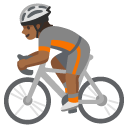


Appearance varies by platform and device. Google Noto, Twemoji, and OpenMoji are open-source.