🤸🏼
The Emoji
Person Cartwheeling: Medium-light Skin Tone
U+1F938 U+1F3FC · :person_cartwheeling_mediumlight_skin_tone:
Trend 55
Meaning layers
- interpretation
- Used to express unbothered energy, carefree vibes, or doing something with extra flair. Often signals 'not caring' about drama or flexing physical/mental agility.
- tiktok usage
- Appears in fitness transformation content, 'living my best life' montages, or ironically when someone is dramatically avoiding a problem.
- irony level
- 5 / 10
Platform meanings
- meaning
- Signals fitness content, carefree lifestyle videos, or ironic unbothered energy
- trend usage
- Frequently paired with 'living my best life' audio trends, gymnastics challenges, and wellness transformation TikToks
- hashtags
- #gymnastics#cartwheel#fitcheck#unbothered#gymlife
- virality score
- 58 / 100
Cultural meanings
🇺🇸
Western / Gen-Z
Widely used for both literal gymnastics/fitness content and as an ironic symbol of unbothered positivity or 'not my problem' energy. Deeply embedded in meme culture.
🇵🇰
Pakistan & India
Primarily used in literal contexts related to physical fitness, yoga, or children's sports. Gaining traction among urban Gen Z fitness influencers on Instagram and Reels.
🌍
Middle East
Generally interpreted as a sports or fitness emoji. Used among youth fitness communities and gymnastics content creators, though less common due to cultural modesty norms around physical display.
🌐
Global Neutral
Universally understood as representing physical activity, gymnastics, or energetic movement. Skin tone variation signals inclusivity.
🇧🇩
Bangladesh
Used mostly in fitness and sports contexts among younger demographics. Less ironic usage; more literal interpretation tied to athletics and exercise.
🇱🇰
Sri Lanka
Primarily literal in meaning, used in sports and fitness chats. Cheerleading and gymnastics communities use it in social media posts.
🇨🇳
China
Used in fitness and dance content on Douyin and WeChat. Associated with energetic youth culture and gymnastic achievements, especially during Olympic seasons.
🇯🇵
Japan
Associated with rhythmic gymnastics and athletic elegance. Used in sports fan communities and wellness content, often with a nuanced appreciation for physical grace.
🇰🇷
South Korea
Common in K-pop fan communities to describe energetic performances, used by fitness influencers and cheerleading content creators on Instagram and KakaoTalk.
🇹🇼
Taiwan
Used in sporty lifestyle content and gym culture posts. Also appears in playful contexts among younger users to signal carefree energy.
🇭🇰
Hong Kong
Appears in fitness and active lifestyle content. Urban youth use it similarly to Western Gen Z — including some ironic unbothered usage.
🇵🇭
Philippines
Popular in cheerleading and dance communities. Used to express enthusiasm, hype, and athletic pride in social media captions and group chats.
🇮🇩
Indonesia
Used in fitness content and youth sports posts. Also appears in playful contexts on Twitter/X and TikTok to signal fun and energy.
🇹🇭
Thailand
Common in gymnastics and aerobics content. Also used in entertainment contexts when discussing choreography or physically impressive performances.
🇻🇳
Vietnam
Primarily used in fitness and sports contexts. Growing use among TikTok creators in Vietnam for energetic lifestyle and workout content.
🇲🇾
Malaysia
Used in fitness communities and among cheerleading enthusiasts. Younger users employ it similarly to Western ironic unbothered meme usage.
🇸🇦
Saudi Arabia
Mainly used in youth sports and gym content within gender-appropriate contexts. Increased usage following Vision 2030 sports culture initiatives.
🇦🇪
UAE
Used in multicultural fitness and wellness communities. Active lifestyle influencers in Dubai use it frequently across platforms.
🇪🇬
Egypt
Appears in sports and fitness communities, particularly among youth. Some ironic usage has emerged among social media-savvy Gen Z Egyptians.
🇹🇷
Turkey
Used in gymnastics fan content and fitness influencer posts. Also seen in casual social media to express playful, energetic emotions.
🇮🇷
Iran
Used in fitness and sports contexts, primarily on Instagram by health and wellness creators. Interpretation stays largely literal.
🇳🇬
Nigeria
Common in fitness motivation posts and among youth influencers. Increasingly used with ironic unbothered energy in Nigerian Twitter/X culture.
🇿🇦
South Africa
Used across fitness, dance, and sports communities. Gen Z users on TikTok and Twitter/X also adopt ironic/unbothered usage patterns.
🇬🇧
UK & Ireland
Used both literally for sports/gym content and sarcastically for dry humor situations. Common in ironic tweets about navigating stressful life events cheerfully.
🇫🇷
France
Primarily used in sports and active lifestyle contexts. Occasionally used with French dry humor to signal performative indifference.
🇩🇪
Germany
Mostly literal usage in fitness, sports, and gymnastics content. Less ironic adoption compared to English-speaking markets.
🇪🇸
Spain & Italy
Used in energetic and celebratory contexts alongside fitness content. Also appears in casual expressive messaging to convey enthusiasm or playfulness.
🇧🇷
Brazil
Frequently used in capoeira, gymnastics, and dance communities. Also common in vibrant social media posts expressing joy and physical exuberance.
🇲🇽
Mexico
Used in sports and fitness content, as well as in playful, expressive messaging. Cheerleading and dance communities are primary adopters.
🌎
Latin America
Broadly used across Latin American platforms for fitness, dance, and celebration. Conveys energy, freedom, and youthful exuberance.
🇦🇺
Australia & NZ
Used in active outdoor lifestyle content and gym posts. Ironic usage aligns closely with UK/US Gen Z patterns — common in 'everything is fine' humor.
How its meaning shifted
- 2010
Emoji did not exist in this form yet; gymnastics-related expression relied on text descriptions or basic smiley faces.
- 2015
Introduced as part of Unicode's diversity push; primarily used literally for gymnastics, cheerleading, and physical fitness content.
- 2020
Expanded into ironic and meme usage, particularly on Twitter and TikTok, as a symbol of unbothered positivity amid global stress and the pandemic.
- 2026
Fully embedded in both literal athletic/fitness contexts and ironic Gen Z communication. Skin tone variants are widely used to reflect personal representation.
See it on every platform
Adjacent emojis
Share & embed
Frequently asked
01What does the 🤸🏼 Person Cartwheeling: Medium-light Skin Tone emoji mean?
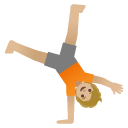
A person performing a cartwheel, shown mid-motion with arms and legs extended. Displayed with a medium-light skin tone modifier.
02What does 🤸🏼 mean on TikTok?
Signals fitness content, carefree lifestyle videos, or ironic unbothered energy
03What does 🤸🏼 mean on WhatsApp?
Signals excitement, playfulness, or sharing news about physical activity
04What does 🤸🏼 mean in Gen-Z slang?
Used to express unbothered energy, carefree vibes, or doing something with extra flair. Often signals 'not caring' about drama or flexing physical/mental agility.
05Is the 🤸🏼 emoji safe to use?
A wholesome, active emoji representing gymnastics, fitness, and energetic movement. Widely appropriate for all audiences.
06What does 🤸🏼 mean in texting?
The cartwheel symbolizes uninhibited physical expression and childhood freedom, evoking nostalgia and a sense of liberating oneself from constraints. It suggests emotional lightness and resilience.
07What is the shortcode for 🤸🏼?
The shortcode for Person Cartwheeling: Medium-light Skin Tone is :person_cartwheeling_mediumlight_skin_tone:
08What does 🤸🏼 mean in dating?
Occasionally used to show off physical fitness or playfulness, hinting at flexibility and energy in a flirtatious context.
Safety & usage
- Safe meaning
- A wholesome, active emoji representing gymnastics, fitness, and energetic movement. Widely appropriate for all audiences.
- Caution
- Occasionally weaponized in passive-aggressive contexts to dismiss someone's concerns with forced positivity, implying 'I don't care about your problem.'
No significant NSFW risk. In rare edge cases, 'flexibility' undertones may be exploited in adult contexts, but this is uncommon and not a primary concern.
How it looks across platforms


Appearance varies by platform and device. Google Noto, Twemoji, and OpenMoji are open-source.