🧗🏻
The Emoji
Person Climbing: Light Skin Tone
U+1F9D7 U+1F3FB · :person_climbing_light_skin_tone:
Trend 58
Meaning layers
- interpretation
- Used metaphorically to represent grinding, hustling, leveling up, or overcoming obstacles. Also used literally when talking about climbing gyms, which are extremely popular with Gen Z as a social activity and sport.
- tiktok usage
- Appears in gym-tok content, climbing gym date videos, 'climbing my way out of my comfort zone' narratives, and motivational self-improvement posts. Often paired with POV captions about progress.
- irony level
- 3 / 10
Platform meanings
- meaning
- Represents climbing gym culture, fitness progress, overcoming adversity, or metaphorical self-improvement journeys. Very tied to the bouldering gym aesthetic on the platform.
- trend usage
- Frequently used in gym-tok, adventure-tok, and self-improvement-tok. Appears in 'first time climbing' videos, climbing date POVs, and motivational montages.
- hashtags
- #climbinggym#bouldering#climbingtok#gymdate#levelingup
- virality score
- 62 / 100
Cultural meanings
🇺🇸
Western / Gen-Z
Heavily associated with the bouldering gym trend that exploded in the 2020s as a social and fitness activity. Used both literally and as a hustle/grind metaphor in everyday digital communication.
🇵🇰
Pakistan & India
Primarily used literally in urban contexts where rock climbing and gym culture is growing among youth. Metaphorically used to represent social or professional upward mobility in aspirational contexts.
🌍
Middle East
Used among urban youth interested in adventure sports, which are growing in popularity across the region. Also carries metaphorical connotations of ambition and hard work valued in the culture.
🌐
Global Neutral
Universally recognized as representing physical climbing activity or the metaphorical concept of striving upward and overcoming challenges.
🇧🇩
Bangladesh
Mostly used in its literal sense by the small but growing urban adventure sports community. Occasionally used metaphorically for ambition among digitally connected younger generations.
🇱🇰
Sri Lanka
Used within fitness and outdoor adventure circles in urban areas. The metaphorical hustle connotation resonates with younger professionals navigating competitive career environments.
🇨🇳
China
Popular on platforms like WeChat and Douyin among fitness enthusiasts and urban youth. The concept of climbing aligns well with cultural narratives around diligence and upward progress.
🇯🇵
Japan
Used within the growing rock climbing community in Japan, particularly following the sport's prominence in the Tokyo 2020 Olympics. Also used to represent steady, disciplined effort in personal development contexts.
🇰🇷
South Korea
Strongly associated with the growing indoor climbing gym culture popular among young Koreans, often used in fitness content and date-related posts. The competitive climbing scene post-Tokyo Olympics boosted its use.
🇹🇼
Taiwan
Used in outdoor adventure and fitness communities, with Taiwan's excellent natural climbing environments adding literal cultural resonance. Metaphorically used in career and self-improvement contexts.
🇭🇰
Hong Kong
Popular in the vibrant urban fitness culture of Hong Kong where climbing gyms have proliferated. Used both literally in sports contexts and metaphorically in aspirational, hustle-oriented messaging.
🇵🇭
Philippines
Used primarily within urban fitness and adventure communities. The metaphorical meaning of striving and resilience resonates strongly given cultural narratives around perseverance.
🇮🇩
Indonesia
Associated with outdoor adventure culture which is significant in Indonesia given the country's mountainous terrain. Used by youth in fitness, travel, and motivational content.
🇹🇭
Thailand
Used in fitness and outdoor adventure communities. Bangkok's growing climbing gym scene has made it more relevant to urban youth as both a literal and aspirational symbol.
🇻🇳
Vietnam
Gaining traction with the growing urban climbing gym trend among Vietnamese youth. Also used metaphorically in the context of career ambition and self-improvement narratives.
🇲🇾
Malaysia
Used in the active outdoor and fitness communities that are well-developed in Malaysia. Appears in social media content about climbing gyms, outdoor activities, and motivational life content.
🇸🇦
Saudi Arabia
Used among youth in fitness and adventure sports communities, which are growing significantly with social reform initiatives. Represents both literal athletic activity and metaphorical ambition.
🇦🇪
UAE
Very relevant in Dubai and Abu Dhabi's thriving fitness and adventure sports culture. Appears in content from climbing gyms and used metaphorically in the UAE's highly aspirational, achievement-oriented social media culture.
🇪🇬
Egypt
Used within the smaller but growing adventure sports and fitness communities in urban Egypt. Carries metaphorical weight in aspirational discourse among Egyptian youth online.
🇹🇷
Turkey
Associated with outdoor adventure culture and the growing fitness community in Turkish cities. Used metaphorically to represent personal ambition and overcoming challenges.
🇮🇷
Iran
Used within the active mountaineering and climbing culture for which Iran has a strong tradition. Both literal use in sports contexts and metaphorical use for perseverance are common.
🇳🇬
Nigeria
Used in aspirational and hustle-culture content that dominates Nigerian social media. The 'climbing' metaphor aligns well with narratives of self-made success and rising above circumstances.
🇿🇦
South Africa
Resonates with the outdoor and adventure sports culture popular in South Africa given the country's natural terrain. Used both literally and as a metaphor for striving and overcoming adversity.
🇬🇧
UK & Ireland
Used by the very active climbing and outdoor community in the UK and Ireland. Also appears in motivational content and is associated with the trendy bouldering gym social scene popular among young professionals.
🇫🇷
France
France's strong climbing and outdoor sports culture, combined with the prominence of French climbers in international competition, makes this emoji resonate literally. Used metaphorically in career and life progression contexts.
🇩🇪
Germany
Associated with Germany's strong outdoor sports and fitness culture. Used practically by the climbing community and metaphorically in goal-oriented and self-improvement content.
🇪🇸
Spain & Italy
Used in the context of the rich outdoor climbing culture in both countries with their iconic natural rock climbing destinations. Also used in motivational and self-improvement social media content.
🇧🇷
Brazil
Associated with Brazil's vibrant outdoor adventure culture and the growing urban climbing gym scene. Used metaphorically in content about ambition and hustle, which resonates with Brazilian youth culture.
🇲🇽
Mexico
Used within the active outdoor and fitness community in Mexico. Metaphorically deployed in aspirational content about overcoming economic and social challenges, which resonates strongly.
🌎
Latin America
Broadly used across Latin America in fitness and outdoor adventure content. The metaphorical meaning of climbing upward toward goals aligns with widely shared narratives of ambition and perseverance in the region.
🇦🇺
Australia & NZ
Extremely relevant given Australia and New Zealand's deeply ingrained outdoor adventure culture. Used literally in climbing content and metaphorically in casual but aspirational everyday communication.
How its meaning shifted
- 2010
Emoji did not yet exist. Climbing was represented through text descriptions or basic emoticons. The concept of skin tone modifiers was not part of emoji culture.
- 2015
The base climbing emoji was introduced around this period. Used almost exclusively in literal contexts to indicate rock climbing, mountaineering, or gym climbing activities.
- 2020
Saw significant growth in metaphorical usage as hustle culture and self-improvement content exploded online. The COVID-19 pandemic paradoxically increased awareness of climbing gyms as people anticipated returning to social fitness activities.
- 2026
Deeply embedded in both literal bouldering gym culture and metaphorical self-improvement discourse. One of the go-to emojis for Gen Z and Millennials to express grinding, leveling up, or literal climbing gym social activities. The skin tone variant specifically reflects increasing normalization of personalized emoji use.
See it on every platform
Adjacent emojis
- Often confused with
- person hikingmountainconstruction worker
- Can replace
- flexed bicepsperson hikingfire
Share & embed
Frequently asked
01What does the 🧗🏻 Person Climbing: Light Skin Tone emoji mean?
A person climbing a rock face or wall, shown with light skin tone. The figure is depicted gripping a surface and scaling upward.
02What does 🧗🏻 mean on TikTok?
Represents climbing gym culture, fitness progress, overcoming adversity, or metaphorical self-improvement journeys. Very tied to the bouldering gym aesthetic on the platform.
03What does 🧗🏻 mean on WhatsApp?
Sent when talking about going to a climbing gym, doing an outdoor climb, or when expressing that you're working hard to achieve something.
04What does 🧗🏻 mean in Gen-Z slang?
Used metaphorically to represent grinding, hustling, leveling up, or overcoming obstacles. Also used literally when talking about climbing gyms, which are extremely popular with Gen Z as a social activity and sport.
05Is the 🧗🏻 emoji safe to use?
Represents rock climbing, bouldering, fitness, physical activity, ambition, and personal growth. Entirely benign and positive in standard usage.
06What does 🧗🏻 mean in texting?
The upward movement of climbing psychologically symbolizes progress and goal-oriented behavior. It taps into the human desire for self-improvement and conquest of challenges, making it emotionally resonant for people in growth mindsets or transitional life phases.
07What is the shortcode for 🧗🏻?
The shortcode for Person Climbing: Light Skin Tone is :person_climbing_light_skin_tone:
08What does 🧗🏻 mean in dating?
Often used to suggest a climbing gym date, which is a trendy, active, and slightly intimate date format because it involves physical proximity and spotting each other. Sent as a subtle flirty invitation.
Safety & usage
- Safe meaning
- Represents rock climbing, bouldering, fitness, physical activity, ambition, and personal growth. Entirely benign and positive in standard usage.
- Caution
- Occasionally used with sarcastic or passive-aggressive intent to call out perceived social climbing or clout-chasing behavior, but this is mild and context-dependent.
No significant safety concerns. Not associated with harmful content, hate speech, or coded negative meanings. Safe for all age groups and professional contexts.
How it looks across platforms
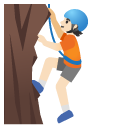


Appearance varies by platform and device. Google Noto, Twemoji, and OpenMoji are open-source.